



In detail
Discover Tanzania.
Geography and landscape
Tanzania is East Africa’s largest country with its mainland stretching from the shores of Lake Victoria and Lake Tanganyika in the west to the Indian Ocean coast and the Zanzibar archipelago in the east. Its landscape holds several of Africa’s defining natural features within one country:
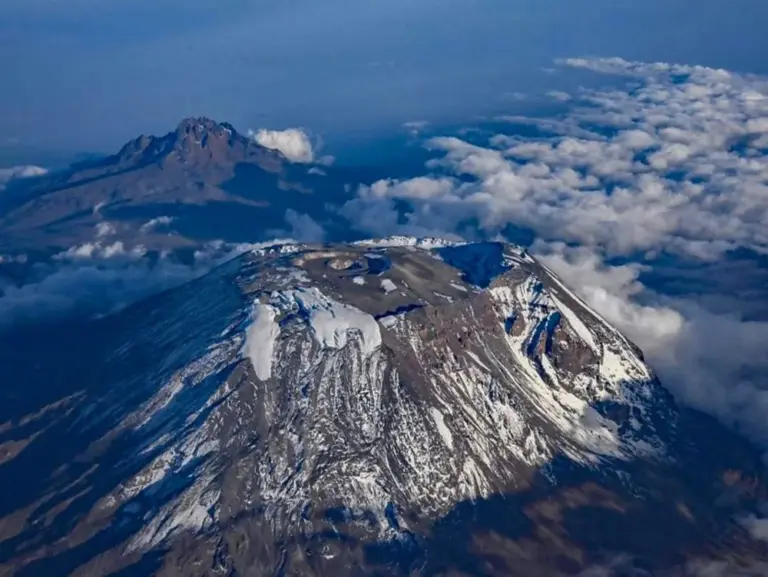
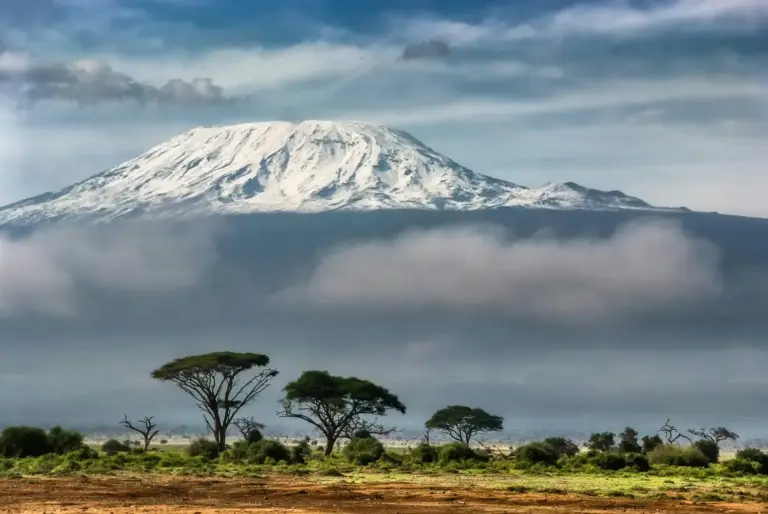
1. Mount Kilimanjaro, the continent’s highest peak at 5,895 metres rising near the Kenyan border in the northeast.
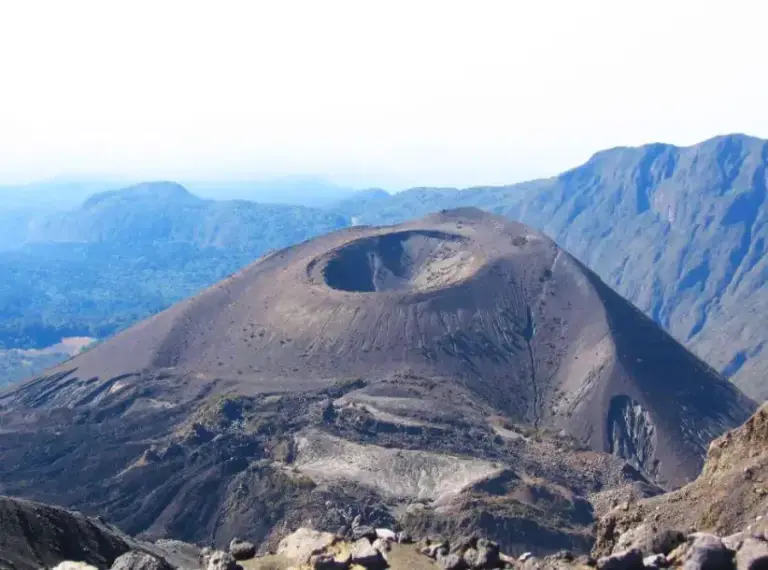
2. The Great Rift Valley cuts through the country’s north, its walls forming the rim of the Ngorongoro Crater the world’s largest inactive intact volcanic caldera.
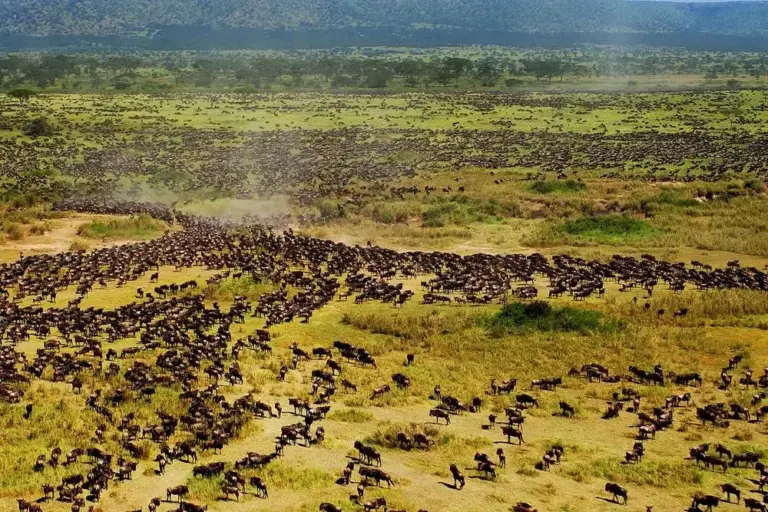
3. The Serengeti’s endless plains extend north across the border into Kenya’s Maasai Mara, forming a single connected ecosystem that the annual wildebeest migration moves across.
National parks and protected areas
Tanzania protects its landscapes across more than twenty national parks, alongside conservation areas and game reserves that together cover roughly a third of the country’s total area. This is one of the highest proportions of protected land of any country in the world.
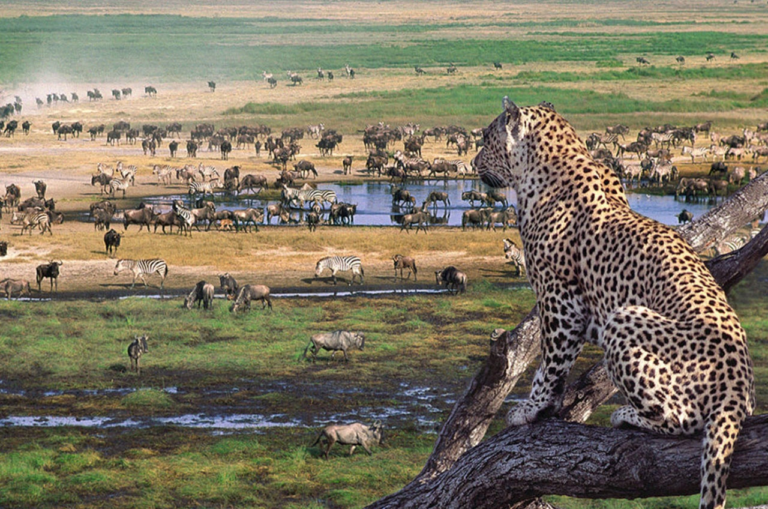
Serengeti National Park is the best known with its open plains hosting the wildebeest migration for much of the year.
The Ngorongoro Conservation Area adjoining the Serengeti, holds the Ngorongoro Crater. The crater’s enclosed floor concentrates wildlife density unlike almost anywhere else in Africa.
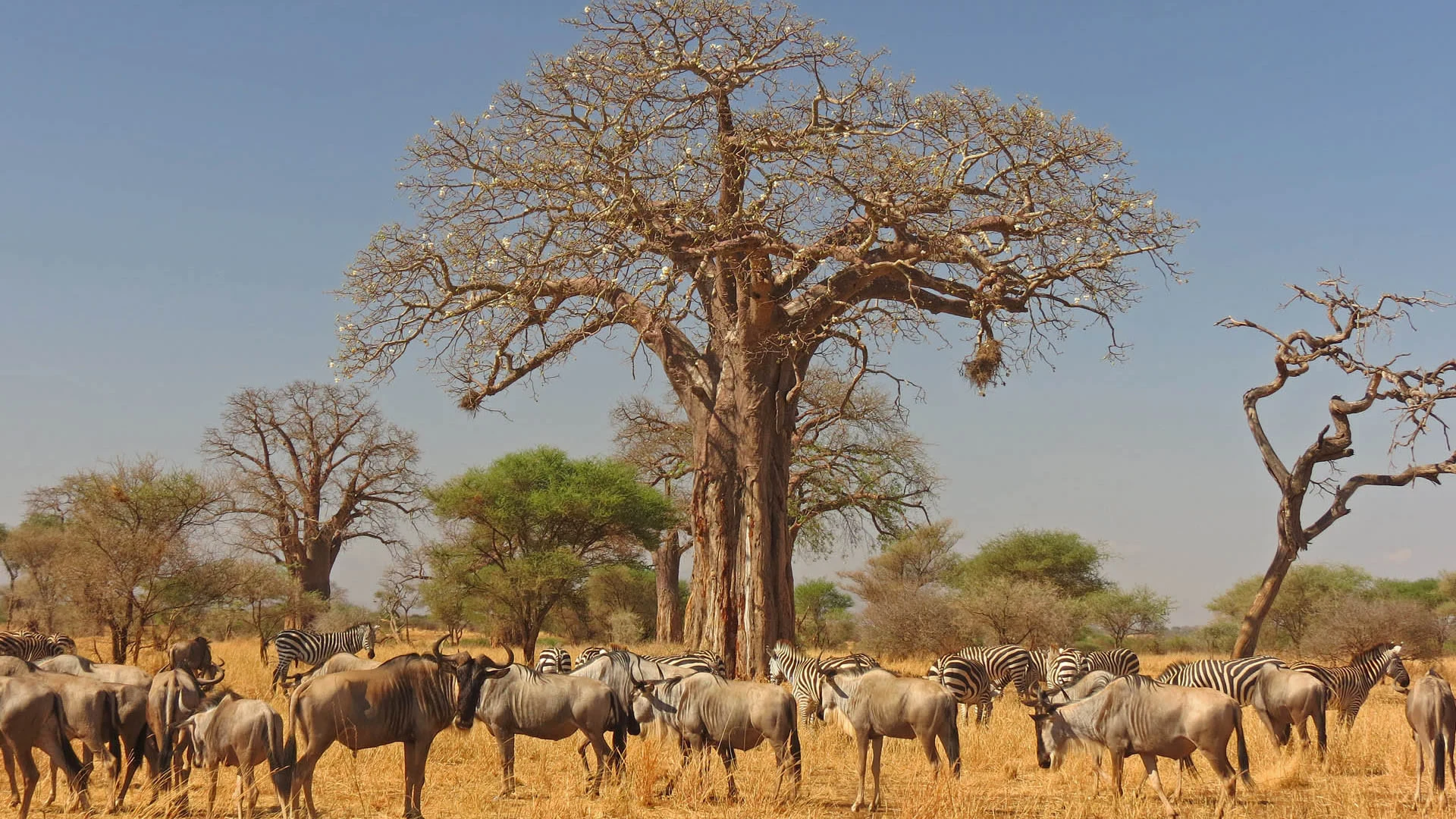
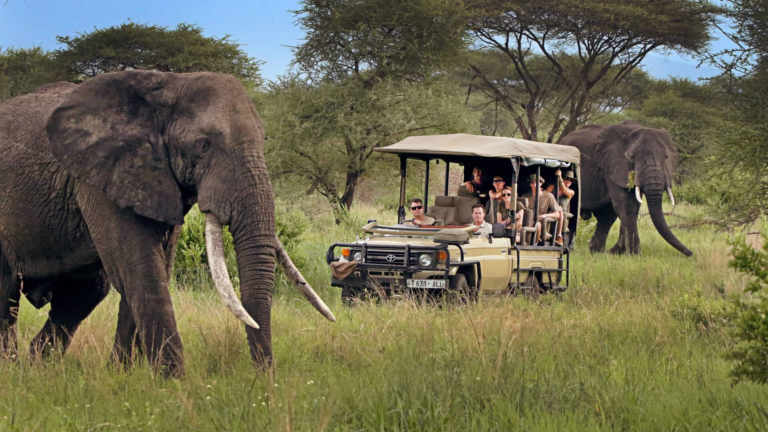
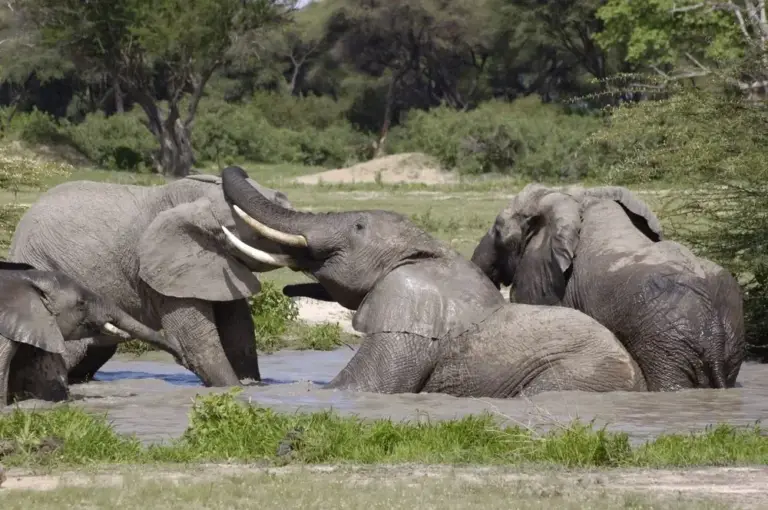
Tarangire National Park, closer to Arusha is known for its ancient baobab trees and large elephant herds.
Further south, the Selous (now largely Nyerere National Park) and Ruaha protect vast, less-visited wilderness.
Kilimanjaro National Park protects the mountain itself, and Zanzibar’s own marine parks protect its coral reefs.
Wildlife
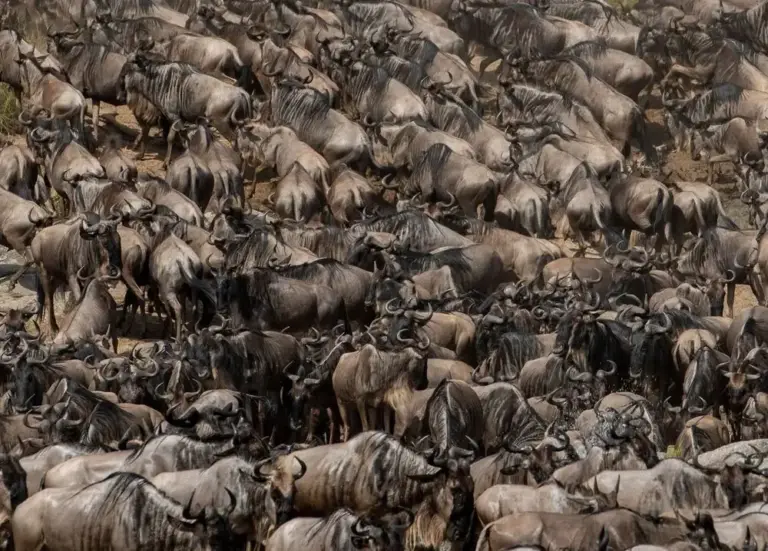
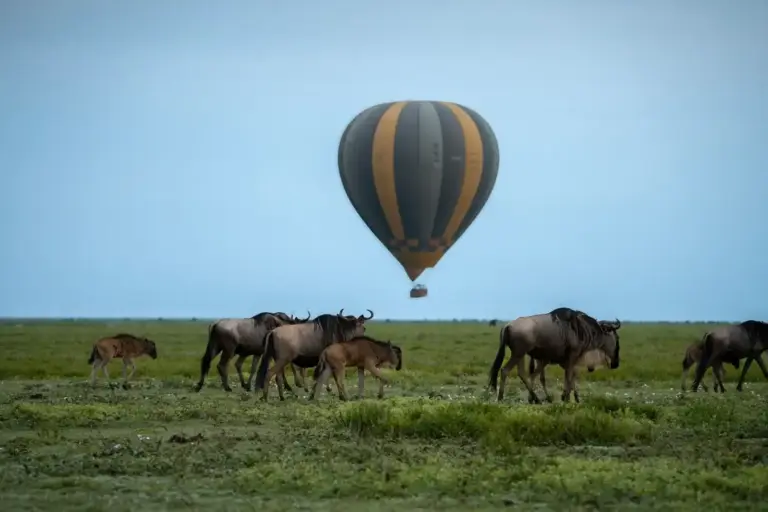
Tanzania’s standout wildlife event is the Great Migration with over a million wildebeest, alongside large numbers of zebra and gazelle moving in a roughly circular pattern across the Serengeti ecosystem each year. These move while following the rains in search of fresh grazing.
Calving season where hundreds of thousands of wildebeest calves are born within a few weeks. This typically occurs from January to March on the southern Serengeti plains, drawing significant predator activity.
The Ngorongoro Crater offers exceptional wildlife density year-round, including some of Tanzania’s best remaining odds of seeing black rhinos, thanks to its unusual enclosed geography.
The migration and calving season in detail
The Serengeti holds the wildebeest migration for more of the year than any other single park in the ecosystem. The herds’ circular route through Tanzania and Kenya spends more time on the Tanzanian side overall. Calving season, roughly January to March on the short-grass plains of the southern Serengeti.
In the Ndutu section, the greatest concentration of wildlife gathers in one place with over hundreds of thousands of wildebeest calves born within a few weeks drawing correspondingly heavy predator activity.
For travelers specifically interested in predator behaviour rather than river crossings, this period is often considered the single best window in the whole migration cycle. The herds then move north through the central and western Serengeti before reaching the Mara River and the Kenyan border around June to September.
Beyond the northern circuit: Kilimanjaro and Zanzibar
Mount Kilimanjaro sitting outside the main safari circuit, is usually planned as its own multi-day trek of six to nine days depending on route. Either before or after a separate safari itinerary, since successful summit attempts depend on proper acclimatization rather than fitting around game drive days.
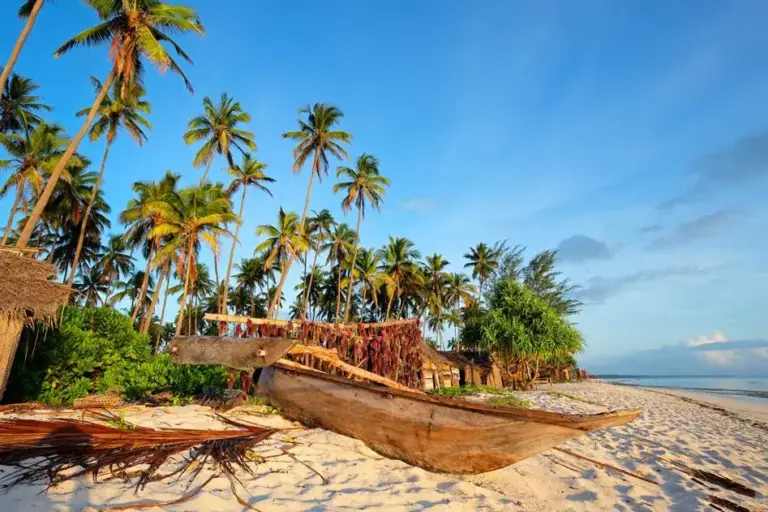
Zanzibar and the smaller islands of the archipelago give a Tanzania safari a natural second half. Reached by a short flight from the northern circuit’s airstrips or from Dar es Salaam, the Stone Town’s centuries of Swahili/Arab and Indian trading history. Alongside the islands’ beaches and reefs, make for a genuinely different second week rather than more time in the bush.
Culture and people
Tanzania is home to well over a hundred ethnic groups, an unusually high degree of diversity that the country’s national language, Swahili, has long helped bridge.
The Maasai communities around the Ngorongoro and Serengeti area maintain a strong, visible cultural presence. Same to the Zanzibar and the coastal towns carry their own distinct Swahili heritage. This is a centuries-old blend of African, Arab, Persian and Indian influence visible in Stone Town’s architecture, cuisine and daily life.
Best time to visit
Tanzania’s parks offer strong wildlife viewing year-round, with timing depending on what you most want to see.
1. The calving season runs roughly January to March in the southern Serengeti.
2. The migration’s dramatic river crossings typically happens from around June to September as the herds move north toward the Kenyan border.
3. The Ngorongoro Crater is a strong choice in any month, thanks to its resident, non-migratory wildlife population.
Getting there
Most international travellers heading to the northern safari circuit arrive at Kilimanjaro International Airport, near Arusha, the gateway town for the Serengeti, Ngorongoro and Tarangire.
Zanzibar has its own international airport which is connected by short flight to both the mainland safari circuit and international routes, making a safari-then-beach itinerary straightforward to arrange.
Practical travel tips
- The Tanzanian shilling is the local currency; US dollars are widely accepted for tourism payments including park and conservation area fees, generally expected in good condition and printed after 2009.
- Swahili and English are both widely used, with English common in tourism and business contexts.
- Domestic flights connect Kilimanjaro International Airport and Arusha with the northern safari circuit’s airstrips and with Zanzibar, making multi-stop itineraries straightforward without long road transfers.
- The Ngorongoro Conservation Area sits at higher altitude than the surrounding plains so mornings and evenings there can be notably cool even in the dry season.