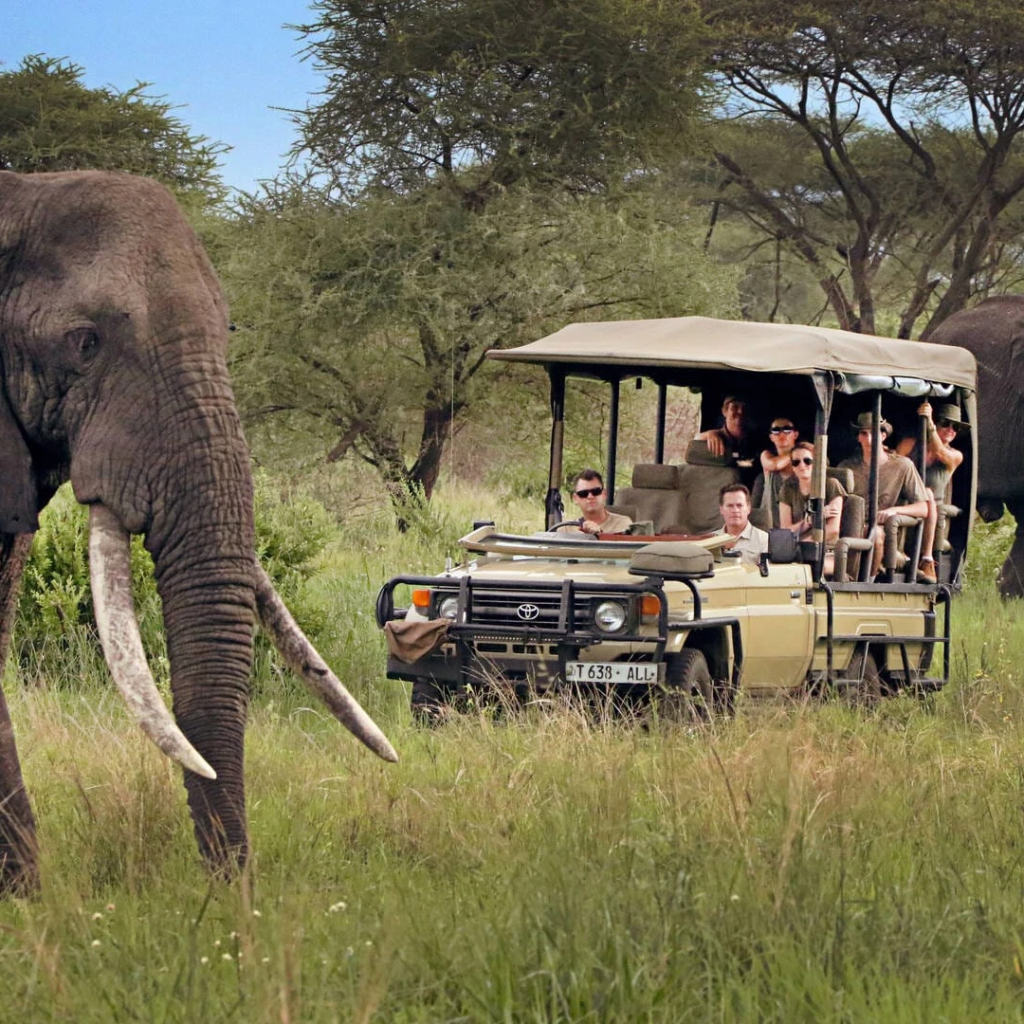
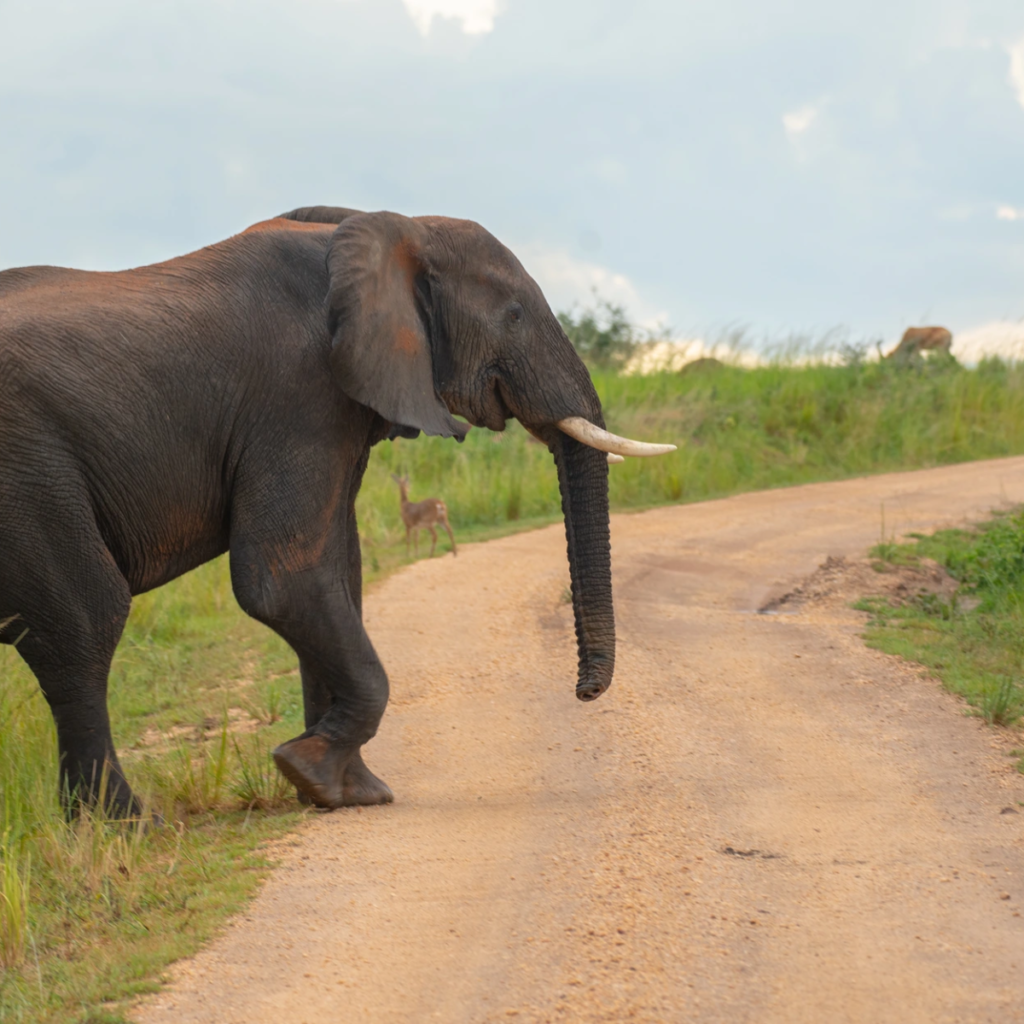
Elephants are the largest land animals on Earth and one of the most rewarding animals to watch on safari. An elephant safari in East Africa puts you beside family herds in some of the most famous landscapes on the continent, from Amboseli beneath Kilimanjaro to the Nile in Murchison Falls. This guide covers how elephant herds live, where to see elephants in Kenya, Tanzania and Uganda, the best time to go and how to watch elephants respectfully.
How elephants live
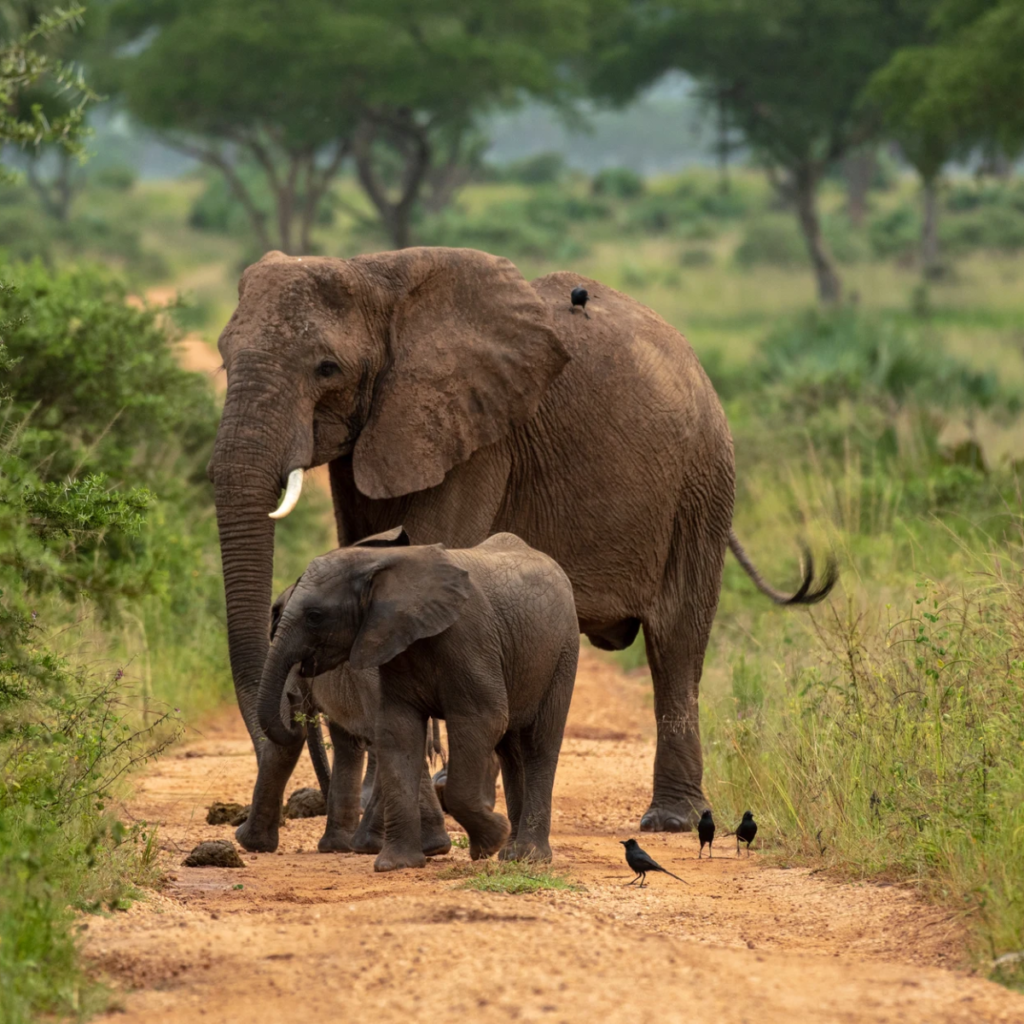
Elephants live in family herds of related females and their young, led by an older female called the matriarch. Her memory of water and routes can keep the group alive through drought. Adult males live more alone or in loose bachelor groups and come to herds to breed. A calf is carried for about 22 months and is raised with the help of the whole herd. Elephants eat up to around 150 kilograms of vegetation a day and spend much of their time feeding.
Elephants in Kenya: Amboseli and Tsavo
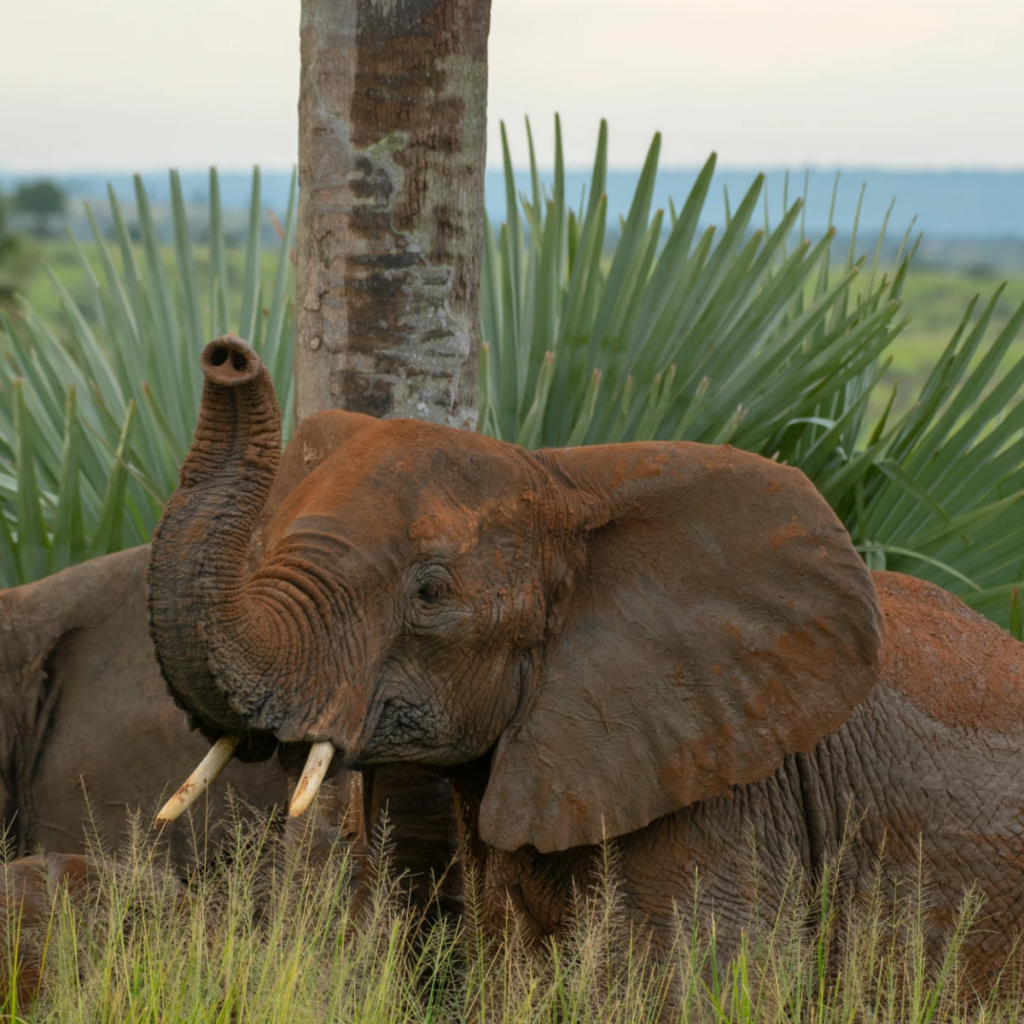
Amboseli National Park is famous for large elephant herds walking against the backdrop of Kilimanjaro, with open plains and swamps that make photography easy. Tsavo East and Tsavo West are known for red elephants, coloured by the local soil, in vast landscapes that feel wild and remote. The Maasai Mara, Samburu and Laikipia also hold elephants.
Elephants in Tanzania: Tarangire and beyond
Tarangire National Park is among the best elephant parks in Africa during the dry season, when large herds gather along the river, with baobab trees dotting the landscape. The Serengeti, Ngorongoro Crater and Lake Manyara also have elephants, and the crater is known for large old bulls.
Elephants in Uganda: Murchison Falls and Queen Elizabeth
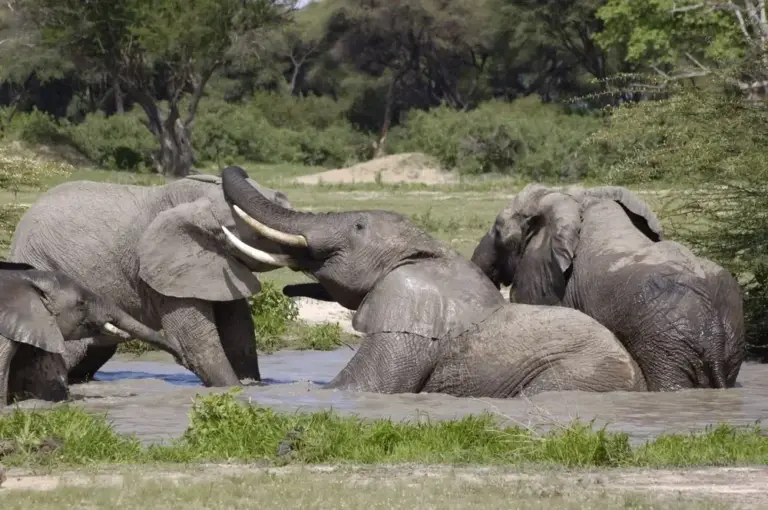
Murchison Falls National Park has large savanna elephant herds along the Nile and open plains, and a boat trip to the falls often shows elephants at the water's edge. Queen Elizabeth National Park offers elephants, including on the Kazinga Channel, where herds come to drink and bathe. Kidepo Valley adds a remote setting with big herds and dramatic mountains.
Elephants in Rwanda
Akagera National Park has a small, resident elephant population and offers excellent savanna scenery. It is not the main reason to visit Rwanda, but it fits well with gorilla trekking and adds elephants to a primate safari.
Elephants and boat safaris
Some of the best elephant views come from the water. On the Kazinga Channel in Queen Elizabeth National Park and on the Victoria Nile at Murchison Falls, boat trips pass herds drinking, bathing and crossing the shallows. The slow pace and eye-level angle make photography easier, and you can watch hippos, buffalo and birds in the same trip. A boat safari is a relaxing break from long game drives and suits all ages.
Elephant behaviour to look for
Watch for mothers shepherding calves between the legs of the herd, young males testing their strength in play, and herds bathing and dust-bathing at rivers. A rumble that you feel in your chest is the low-frequency communication elephants use to keep in touch across long distances. At a waterhole you can often see the whole social order of a herd in half an hour, from the matriarch's calm confidence to a calf's first attempts to use its trunk.
Best time to see elephants
The dry season is best, roughly June to October and January to February, because herds gather near rivers and waterholes. The wetter months bring greener landscapes and baby animals, with fewer visitors. Elephants can be seen all year in most parks, but the best months depend on the park.
Watching elephants respectfully
Keep a respectful distance, stay in the vehicle and let the animals set the pace. Avoid sudden noise and never get between a mother and her calf. Elephants are generally calm when treated with patience, and the best sightings come from waiting quietly by a river or waterhole.
Elephants and conservation
Elephants face pressure from habitat loss, human wildlife conflict and, in some areas, poaching. East Africa has strong conservation programmes, including long-term research in Amboseli and community conservancies around Tsavo and Laikipia. Visiting well-run parks helps fund rangers and monitoring and gives communities a reason to protect elephants. Ask us about operators and camps that support conservation work in the areas you will visit.
Planning an elephant safari
We pair elephant areas with other highlights, such as lions, giraffes and birdlife, and with experiences like boat trips and walking safaris where they are allowed. Tell us your dates and we will suggest the best parks for elephants in that season.
Elephant safari: a sample route
A classic elephant route in Kenya and Tanzania begins in Amboseli for herds beneath Kilimanjaro, then moves to Tarangire for dry-season gatherings and the Serengeti for lions and the Great Migration. In Uganda, a route can combine Murchison Falls for river elephants with Queen Elizabeth for the Kazinga Channel and gorillas in Bwindi. We tailor each route to your dates, interests and budget.
At a glance
- Amboseli for the Kilimanjaro backdrop
- Tarangire for dry-season herds
- Murchison Falls for river and savanna elephants
- Tsavo for red elephants
Keep exploring
- Amboseli National Park
- Tsavo East National Park
- Murchison Falls National Park
- Queen Elizabeth National Park
- The Big Five
- Lions
- Wildlife safaris
- Kenya safaris
Plan a safari around Elephants in East Africa: Where to See Elephants on Safari
Tell us your dates and what you most want to see, and we’ll time your safari to match it as closely as nature allows. Talk to us, or browse our safari packages to see how a migration-timed itinerary is put together.
Elephants in East Africa: Where to See Elephants on Safari