
Lake Bunyonyi’s dugout canoes
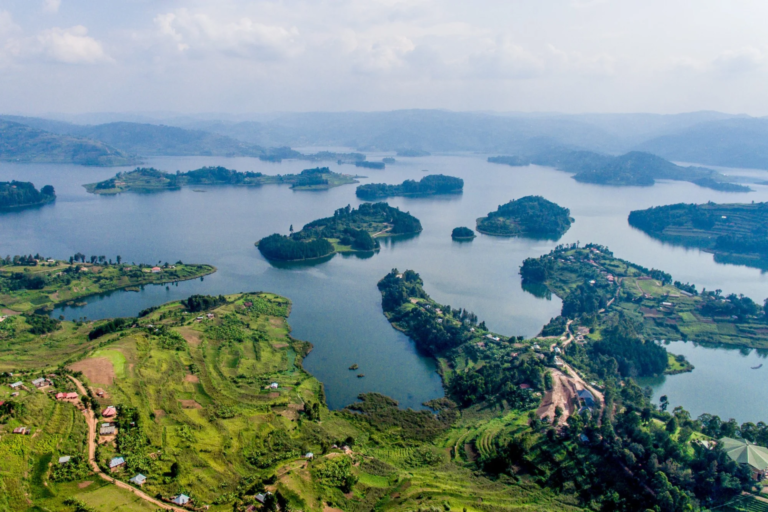
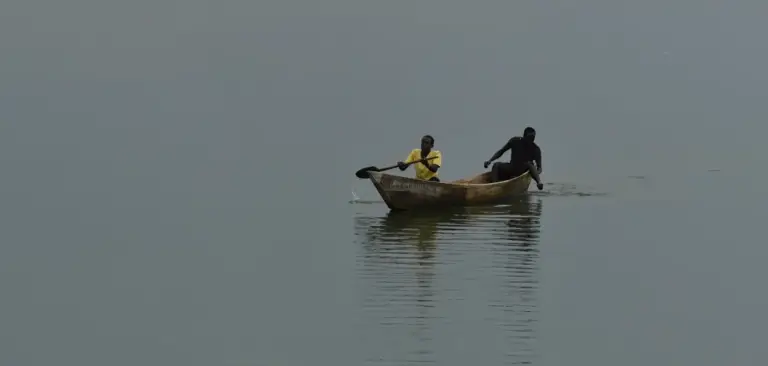
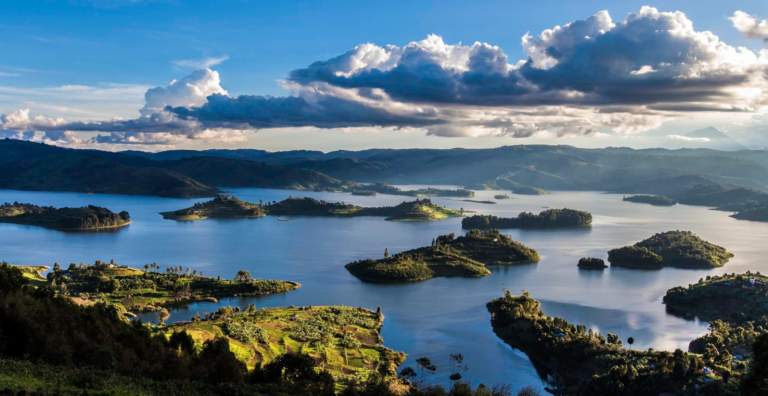
Lake Bunyonyi, one of Uganda’s deepest lakes and dotted with more than a dozen islands, is the region’s best-known canoeing destination, paddled in traditional hollowed-out dugout canoes rather than imported kayaks. Outings here range from a two-hour paddle between the nearest islands to a full day linking several, visiting sites such as Bushara Island, the sombre history of Punishment Island, and Bwama Island’s former leper colony, often finishing with a stop at the Edirisa cultural centre.
Why Bunyonyi suits canoeing specifically
Unlike most of East Africa’s larger lakes, Bunyonyi has no resident hippo or crocodile population, a rare combination that makes swimming and close-shore paddling considerably more relaxed here than on Lake Victoria, Lake Albert or Lake Edward, where those animals are a real and constant consideration. That safety margin, combined with the lake’s calm, sheltered water between islands, is a large part of why Bunyonyi has become the region’s signature canoeing spot rather than simply one option among many.
Canoeing on Lake Kivu
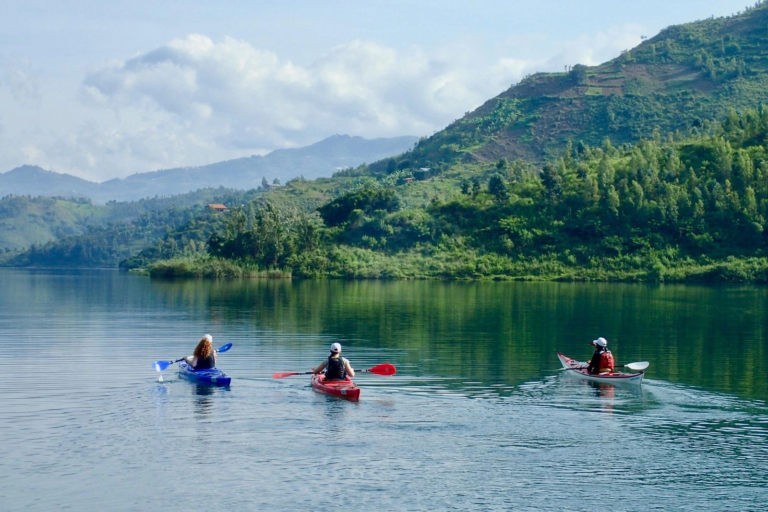
Lake Kivu, straddling the Rwanda-DR Congo border, offers a different, larger-scale canoeing experience, its open water and lakeside terraced hills giving longer, more scenic paddles than Bunyonyi’s tighter island-hopping routes, usually arranged through lodges along the Rwandan shore near Rubavu or Rusizi.
Canoeing versus kayaking
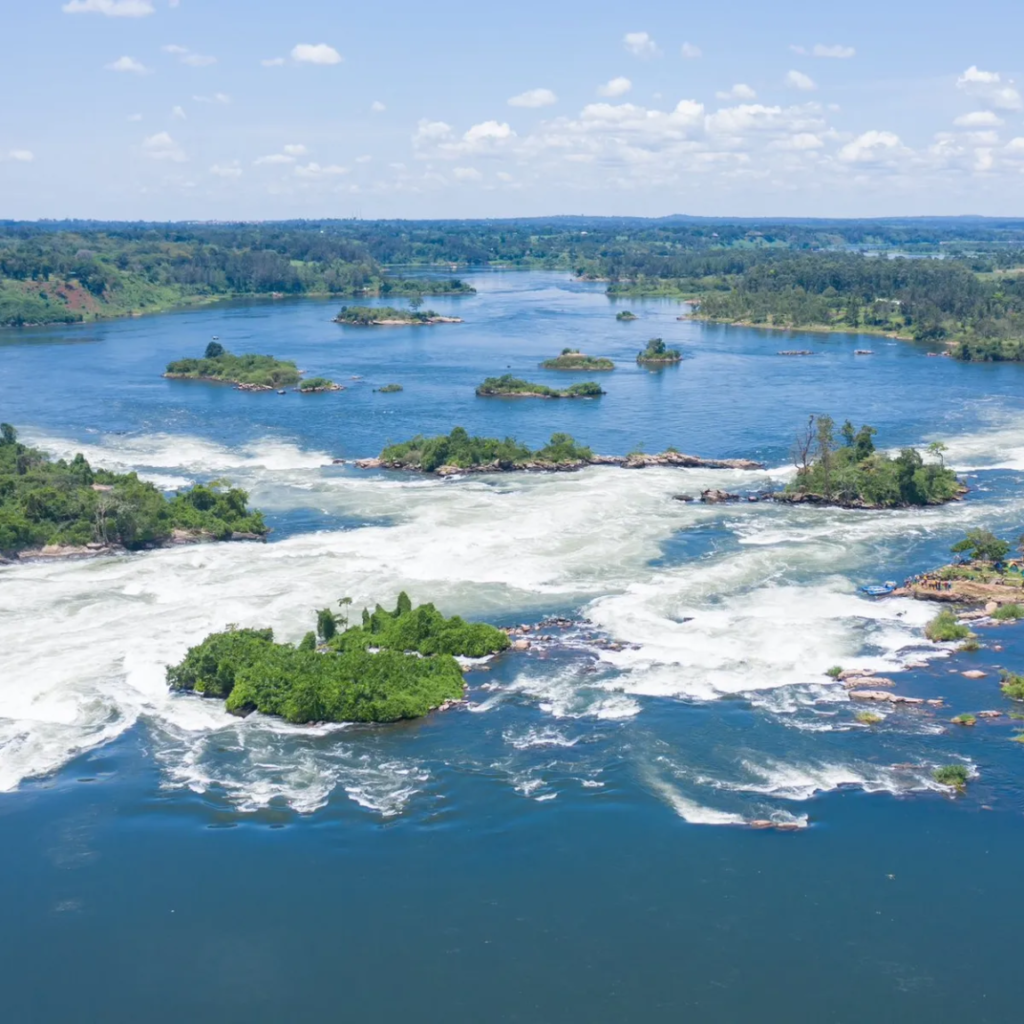
Canoeing and kayaking are often used interchangeably, but the region’s operators generally mean different things by each: canoeing here means calm, flat-water paddling in an open or dugout craft, largely for sightseeing and access rather than sport, while kayaking refers to closed, sit-in craft used on the Nile’s whitewater near Jinja, built for handling rapids rather than gliding across still water. Choosing between them is really a choice between a relaxed lake outing and an active whitewater sport.
What a canoeing day looks like
Most Bunyonyi outings run two to five hours, paddled with a local guide who knows the lake’s history and can point out specific islands and their stories along the way, though longer full-day and even multi-day itineraries combining canoeing with village walks and homestays are available for travellers wanting more time on the water. No prior paddling experience is needed, since dugout canoes are stable and guides set the pace throughout.
Combining canoeing with a longer Bunyonyi stay
Several island lodges on Lake Bunyonyi build canoeing into multi-day stays rather than treating it as a single add-on activity, offering extended itineraries that combine island-hopping paddles with village walks, terraced farmland hikes and homestays on islands like Bushara. Travellers with more time available often find these longer, mixed-activity stays a more rewarding way to experience the lake than a single afternoon paddle, since the lake’s character shifts noticeably from one island to another.
Guides and local knowledge
Canoeing guides on Bunyonyi are generally drawn from lakeside communities and paddle the same routes daily, giving them detailed knowledge of each island’s history, from Punishment Island’s difficult past to the ongoing work of the Edirisa cultural centre. That local knowledge is a large part of what separates a guided canoeing outing from simply renting a canoe and paddling independently, and it’s worth choosing an operator specifically for the quality of their guiding rather than price alone.
What to bring
- Sun protection, since there is little shade once out on open water
- A change of clothes in case of splashing, though capsizing on Bunyonyi’s calm water is uncommon
- A light jacket for early morning starts, when temperatures on the water can feel cooler than on land
- A camera or phone in a waterproof bag or case
Best time to visit
Bunyonyi and Kivu can both be paddled year-round, since the water stays calm regardless of season, though a dry-season visit gives the clearest views of the surrounding terraced hillsides without rain interrupting a longer route.
Reading the lake: islands, birds and light
Bunyonyi is often translated as place of little birds, and the name fits. From a canoe at sunrise you can expect herons, kingfishers, cormorants and, with luck, a grey crowned crane on a shoreline terrace. The lake sits at about 1,950 metres so mornings are cool and the air is clear, and the terraced hills reflect in water that is usually still before the wind rises.
Early paddles give the best light and the calmest water. Afternoons can bring a breeze across the open stretches, and a guide will choose sheltered routes between islands when it does.
Paddling technique and comfort
A dugout canoe is narrow and sits low so the main skill is staying relaxed. Sit centrally, keep your weight low and use short, steady strokes while your guide or boatman handles direction. Life jackets are provided and worn on every outing, and children who are comfortable around water can join with an adult.
Carry a dry bag for phones and cameras, wear a hat and sunscreen and bring a light layer for the first hour. We brief you before the lake, not on it.
Paddling with respect for the people of the lake
Bunyonyi’s canoes are made and used by local families, and a good outing supports them directly. We book canoes and guides from community operators, allow time to stop at island homes or a craft stall if you wish and ask you to leave no litter. Ask before photographing people and avoid feeding birds or fish.
For travellers who like a slow pace, a canoe outing is a good rest day after gorilla trekking in Bwindi, which sits a short drive away.
Planning your canoeing outing
Tell us whether Lake Bunyonyi or Lake Kivu fits your route better, and how much time you want on the water, and we will arrange a canoeing stop that matches your pace.