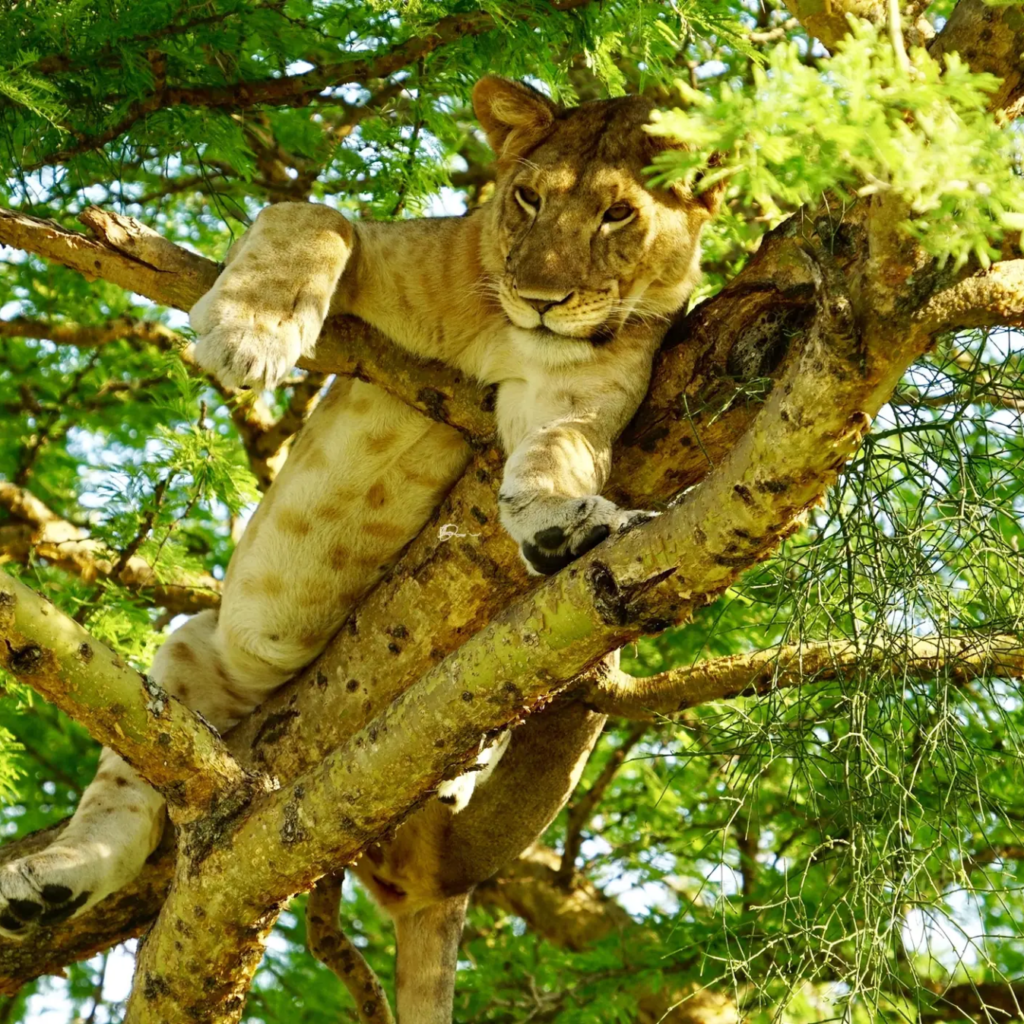
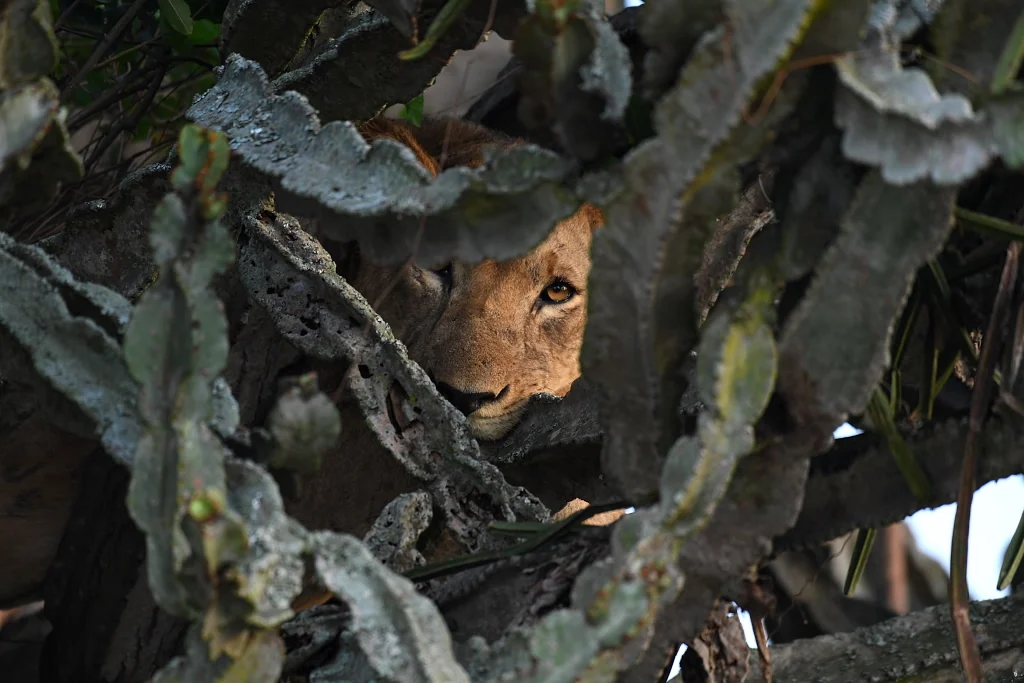
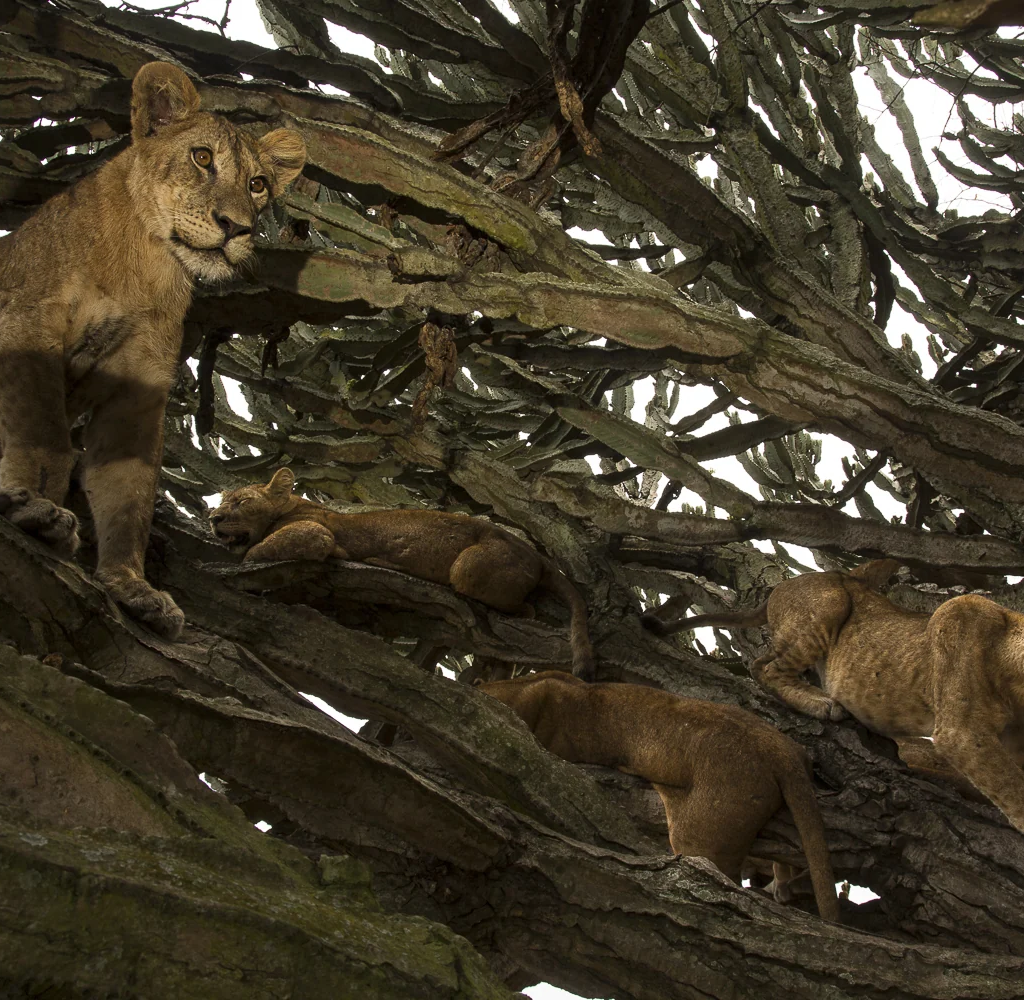
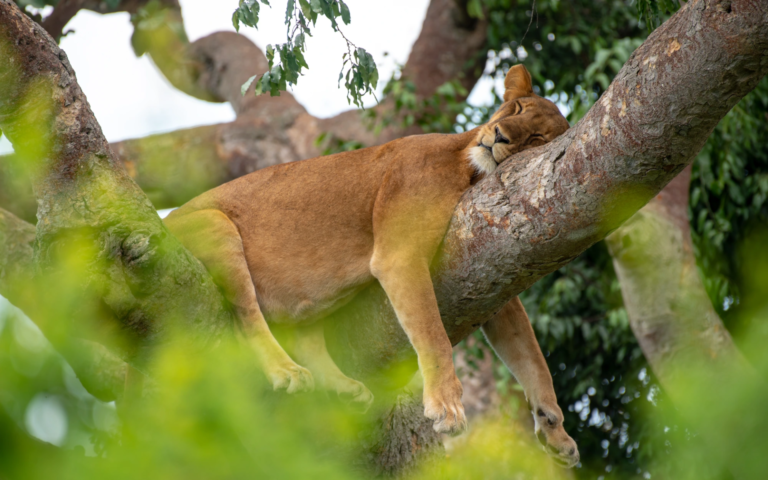
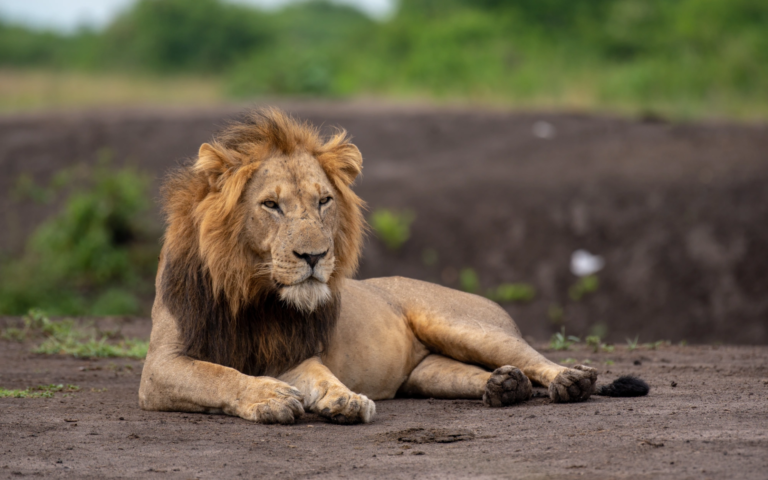
Lions climbing trees is unusual behaviour seen reliably in only a handful of places in Africa, and East Africa holds two of the best: the Ishasha sector of Uganda’s Queen Elizabeth National Park and Tanzania’s Lake Manyara National Park. Seeing a pride draped along the branches of a fig or sausage tree, legs dangling, is one of the more surprising and sought-after sights on safari.
Why these lions climb
Lions are not natural climbers, and the behaviour isn’t fully explained, though the leading theories point to escaping biting insects and the heat of the savanna floor, getting a better vantage point to scan for prey, or simply comfort; the behaviour appears to be a learned, local habit passed down within specific prides rather than a trait of the species generally, which is part of why it is so geographically limited.
Ishasha, Queen Elizabeth National Park
The Ishasha sector, in the remote southern part of Queen Elizabeth National Park, is Uganda’s best-known location for tree-climbing lions, where resident prides regularly rest in the broad fig trees scattered across the open plains. Sightings are good but not guaranteed on any single visit, since it depends on the pride’s mood and the heat of the day as much as anything: lions are more likely to be up in the trees during the warmer midday hours.
Lake Manyara, Tanzania
Lake Manyara National Park, along the base of the Rift Valley escarpment, is the other well-known site for this behaviour, with its groundwater forest and acacia woodland providing the same kind of climbable trees found at Ishasha. Manyara combines well with a northern Tanzania circuit alongside the Serengeti and Ngorongoro Crater.
Best chances of a sighting
A patient, unhurried game drive through known pride territory with an experienced guide gives the best odds, since local guides generally know which trees and areas a resident pride favours. Neither location guarantees a sighting on a single visit, so building in time for more than one drive through the area meaningfully improves the chances.
The Ishasha sector in detail
The Ishasha sector lies in the south of Queen Elizabeth National Park, near the border with the Democratic Republic of Congo. It is open savanna dotted with large fig trees and acacia woodland, with topi, Uganda kob and buffalo on the plains, which keeps the lions well fed. The road between Queen Elizabeth and Bwindi passes through Ishasha, so it is easy to include on a gorilla safari. Read more in our Queen Elizabeth National Park guide.
How to find tree-climbing lions
Guides check the large fig trees in the sector, particularly in the late morning and midday, when the lions are most likely to be resting in the branches. A pride often numbers several animals, with cubs, and you may find them lounging with their legs hanging down. Sightings are never guaranteed, because the lions do not always climb, but a few days in the sector gives a strong chance.
Lake Manyara and other places
At Lake Manyara National Park in Tanzania, lions climb the park's acacia trees and mahogany branches, often high above the ground. In the Serengeti, lions occasionally rest in trees and on kopjes, particularly around Seronera, though it is not a regular habit. Both Ishasha and Manyara are more reliable than random chance elsewhere.
Photographing tree-climbing lions
Bring a long lens and shoot from below, framing the lions against leaf and sky. A fast shutter speed helps if a cub moves, and a beanbag supports the camera in the vehicle. Keep a respectful distance and stay quiet, because noisy visitors can push lions from their branches.
Best time for tree-climbing lions
The Ishasha lions can be seen year round. The dry months, roughly June to September and December to February, are easiest for roads and game viewing, and the heat of midday encourages lions to seek shade in the trees. Our lions guide covers the wider lion story across East Africa.
Combining tree-climbing lions with gorillas and chimpanzees
Ishasha is on the natural route between Queen Elizabeth National Park and the southern sectors of Bwindi, so a gorilla safari can include tree-climbing lions with almost no extra driving. Many travellers add the Kazinga Channel boat trip, a chimpanzee tracking day in Kibale and a visit to the crater lakes. We build the route so you see a mix of primates, big cats and scenery in a comfortable number of days.
What else lives in Ishasha
Beyond lions, the Ishasha plains hold topi, Uganda kob, buffalo, elephants and a rich birdlife, including raptors that perch along the river. Leopards also live in the sector, though they are seen less often. The quiet, open atmosphere and the lack of crowds make the sector a rewarding stop even beyond the lions.
Tree-climbing lions safari tips
Spend at least two nights in or near Ishasha so you can check the fig trees at different times of day. Ask your guide to prioritise the trees where lions have been seen recently, bring binoculars and keep your voice low. Combine Ishasha with a morning in Queen Elizabeth's northern sector for the Kasenyi plains and the Kazinga Channel, and you will see lions, elephants, hippos and birds in a short, varied loop.
When to visit for tree-climbing lions
Sightings are possible all year, but the dry months give the best odds because lions rest in the shade of fig and acacia trees when the ground is hot or the grass is tall and wet. Early morning and late afternoon drives are best, and a guide who knows each pride's favourite trees makes the difference. Pair the Ishasha sector with Queen Elizabeth National Park and a gorilla trek in Bwindi for a classic southern Uganda route.
Plan a safari to see tree-climbing lions
Ishasha fits naturally into a Queen Elizabeth National Park itinerary, and Lake Manyara into a northern Tanzania circuit. Visit Plan My African Safari, message us on WhatsApp at +256 701 243 304, or email [email protected].
Tree-Climbing Lions: Photos