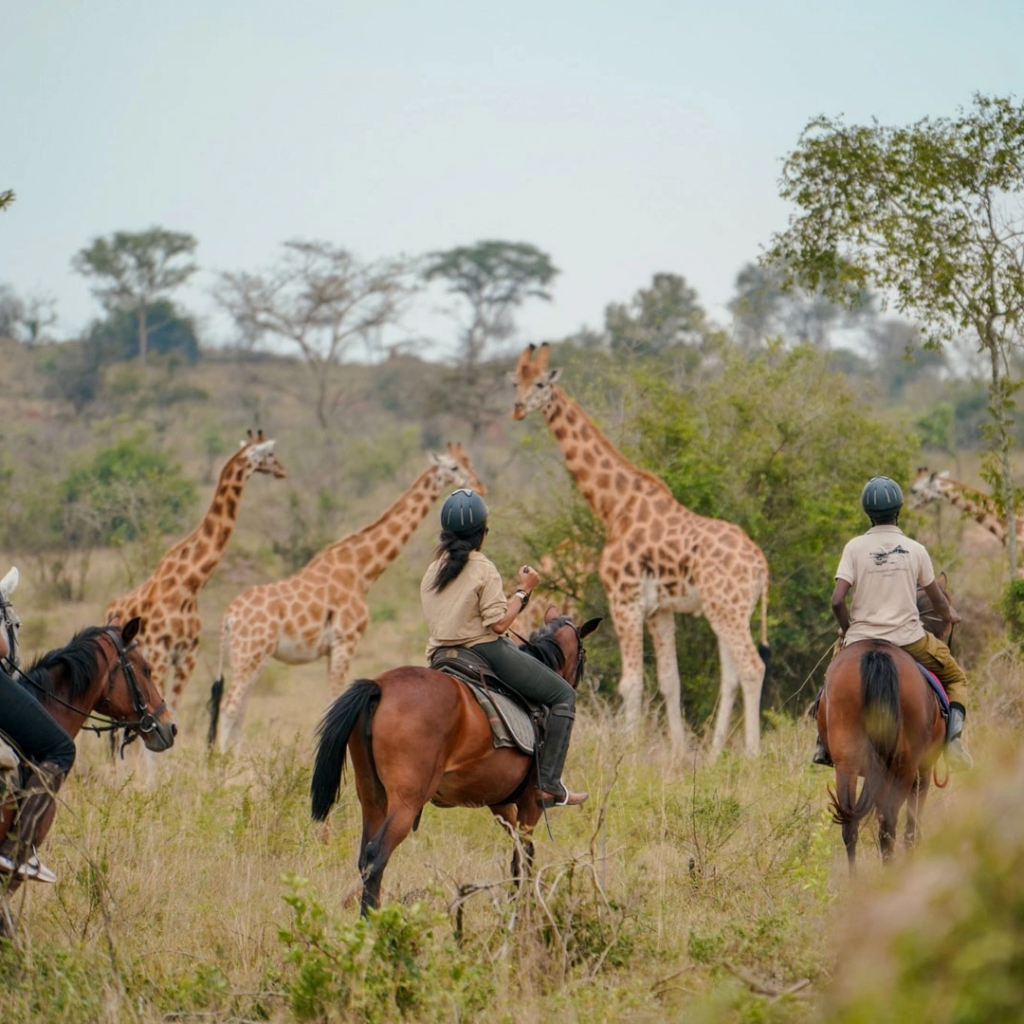
Lake Naivasha’s horseback safaris
Around Lake Naivasha, several farms and sanctuaries offer horseback rides among giraffe, zebra and antelope grazing freely on their land, an unusual combination of working farmland and open-range wildlife viewing. Rides here typically run one to three hours, suited to riders of most experience levels, and are often paired with a boat outing on the lake itself or a wider Naivasha stay on the same visit.
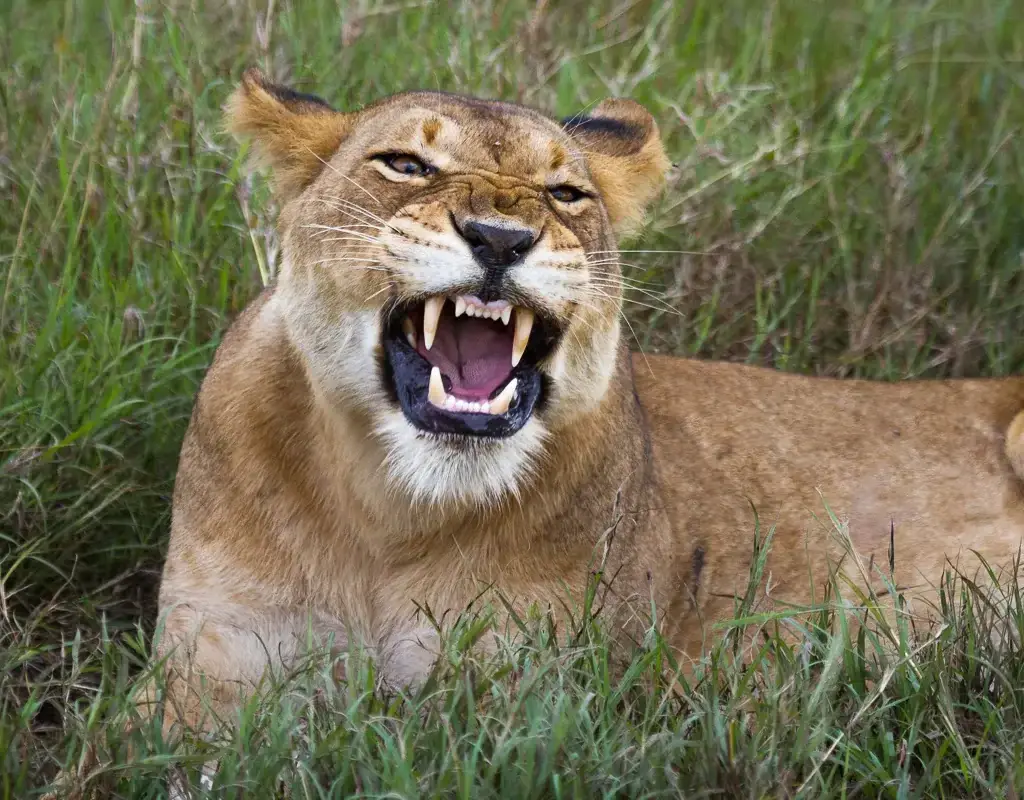
Hell’s Gate: riding among wildlife on foot and horseback
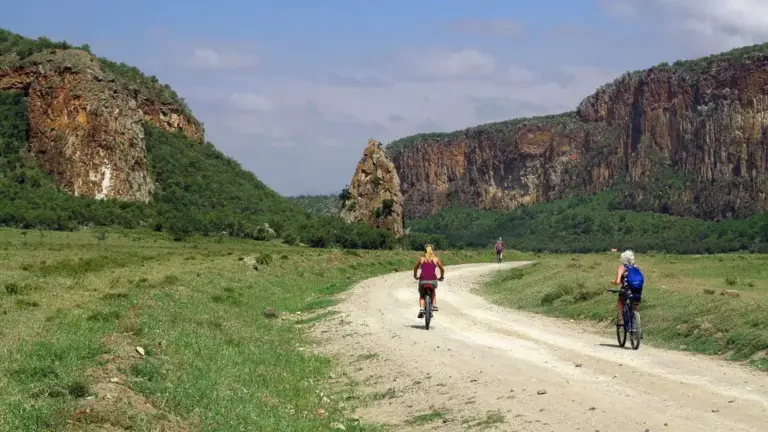
Hell’s Gate National Park, already known for allowing visitors to walk and cycle freely among its wildlife, extends the same freedom to horseback riding, since the park holds no large predators dangerous enough to require a vehicle for protection. Riding beneath the park’s dramatic red-rock gorges and towers, with zebra and giraffe grazing unconcerned nearby, gives horseback riding here a different character from a conventional trail ride.
Maasai Mara horseback safaris
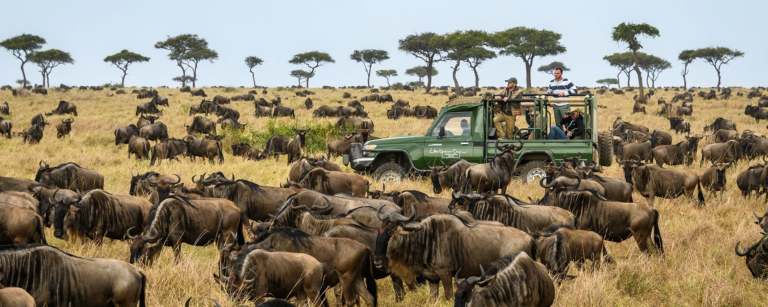
Several private conservancies bordering the Maasai Mara National Reserve, including areas around Olare Motorogi and the wider Mara ecosystem, run guided horseback safaris that can last from a two-hour outing to a multi-day riding safari covering considerable ground between mobile camps. These rides bring riders considerably closer to plains game than a vehicle typically allows, since animals often react differently and generally more calmly, to a horse and rider than to a vehicle.
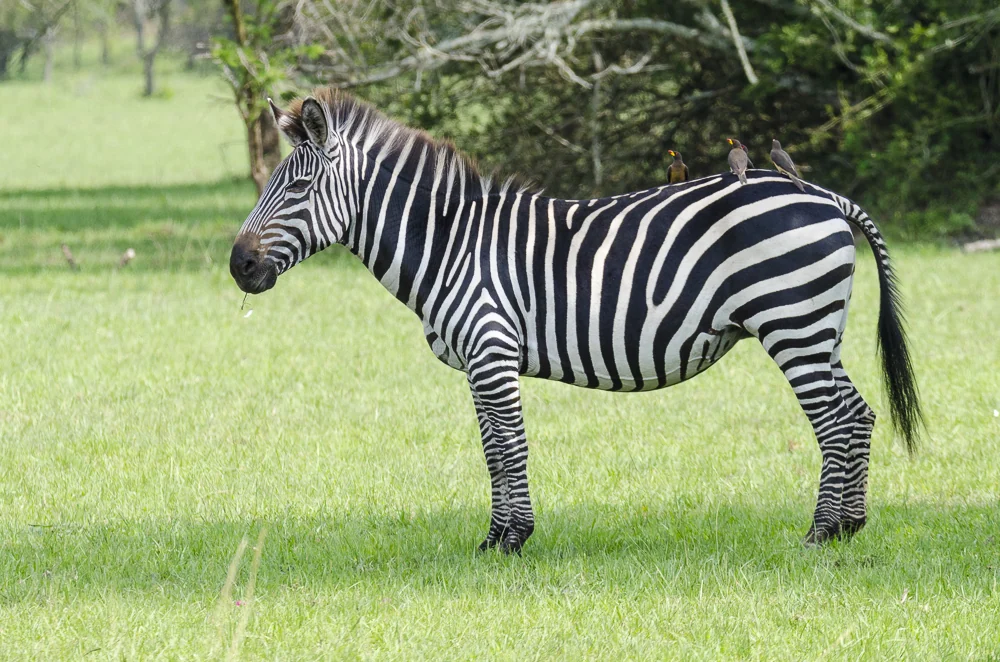
Experience levels required
Naivasha’s shorter farm-based rides suit riders of most experience levels, including complete beginners paired with a calm, well-trained horse. Maasai Mara’s multi-day riding safaris, by contrast, generally require genuine riding competence, since routes can cover considerable daily distances at a trot or canter through open country, and operators typically ask about riding experience directly when booking a multi-day safari.
How a riding safari works
Multi-day Mara riding safaris typically move riders and a support team, including grooms and often a separate vehicle for luggage, between a series of mobile camps, covering ground during the day that would otherwise be driven, then camping overnight before continuing the following morning. Shorter rides, by contrast, are simple out-and-back or loop outings from a single base, requiring no overnight logistics at all.
Why animals react differently to horses
Guides and researchers who work with horseback safaris often note that plains game reacts noticeably more calmly to a horse and rider than to a vehicle, likely because grazing animals have coexisted with large herbivores on the same landscape for far longer than they have with engines and exhaust. This can allow horseback riders to approach certain species, particularly zebra and antelope, at closer range than a vehicle safely could, though guides remain cautious and species-specific about exactly how close is appropriate.
Safety around wildlife on horseback
- Experienced guides accompany every ride and are trained to read animal behaviour and maintain safe distances
- Certain species, particularly buffalo and elephant, require a wider berth on horseback than a vehicle would, and guides will redirect a route accordingly
- Riding helmets are provided and should always be worn, regardless of a rider’s experience level
- Multi-day safaris generally require a signed liability waiver and a realistic assessment of a rider’s fitness and experience beforehand
What to bring
- Long trousers and closed-toe boots or sturdy shoes with a small heel, to protect against stirrups and vegetation
- Sunscreen and a hat, given the open exposure of most riding routes
- A change of clothes for multi-day safaris, since laundry facilities at mobile camps are typically limited
- Any personal riding gear, such as gloves or a preferred saddle pad, if you have strong preferences beyond what operators supply
Combining riding with the rest of a safari
A short Naivasha or Hell’s Gate ride fits easily into a day already built around other activities, while a multi-day Mara riding safari is more often built as its own dedicated stretch within a longer Kenya itinerary, given the logistics involved in moving camp each day.
A different pace for wildlife viewing
Beyond the novelty, horseback riding changes the pace at which a safari unfolds. Vehicles cover ground quickly and stop abruptly at a sighting; a horse moves slowly and continuously, giving riders a more gradual, immersive sense of the landscape passing by, closer to how the terrain would have been experienced on foot or horseback for most of human history in these places, before vehicles existed at all.
Choosing the right ride
Riding safaris vary widely, from a gentle hour at walking pace to a full day at canter. We ask about your riding experience and fitness, then match you with a horse and route. Beginners are welcome on short rides with a guide leading while confident riders can join longer outings across open conservancy land.
Weight limits apply for the horses’ welfare. Tell us your approximate weight when you book.
What to wear and bring
Riding trousers or comfortable long trousers, closed shoes with a small heel or riding boots, a hat or riding helmet, sunscreen and a light jacket for early starts. Helmets are provided by most operators and are worth wearing. Pack a small day bag with water and camera.
If you ride regularly at home, bring your own gloves and half chaps for a better fit.
Riders of all levels should arrive a little before the start so that the team can fit stirrups and adjust the saddle. Ask about the horses’ names and temperaments, since guides know each animal well and will choose a calm mount for nervous riders.
Planning your horseback safari
Tell us your riding experience and whether you want a short outing or a multi-day riding safari, and we will match you with the right location and operator, from a gentle Naivasha farm ride to a demanding multi-day crossing of the Mara ecosystem.