Giraffes are the tallest animals on Earth and one of the calmest and most photogenic animals on safari. East Africa has more than one type of giraffe, each with its own pattern and range, and seeing the differences is part of the fun of a giraffe safari. This guide explains the Rothschild's, Masai and reticulated giraffes, where to see each one in Uganda, Kenya and Tanzania, how giraffes live and feed, and how to photograph them well.
The giraffe types of East Africa
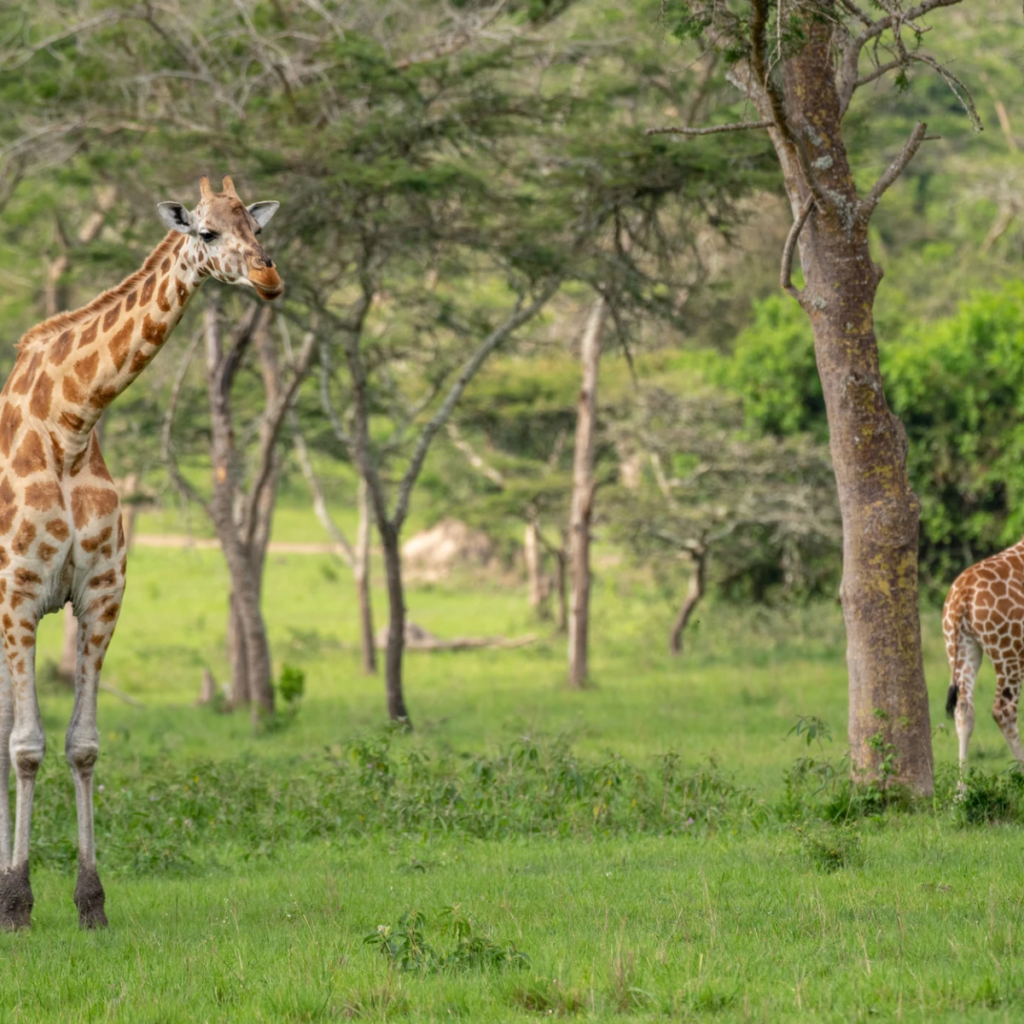
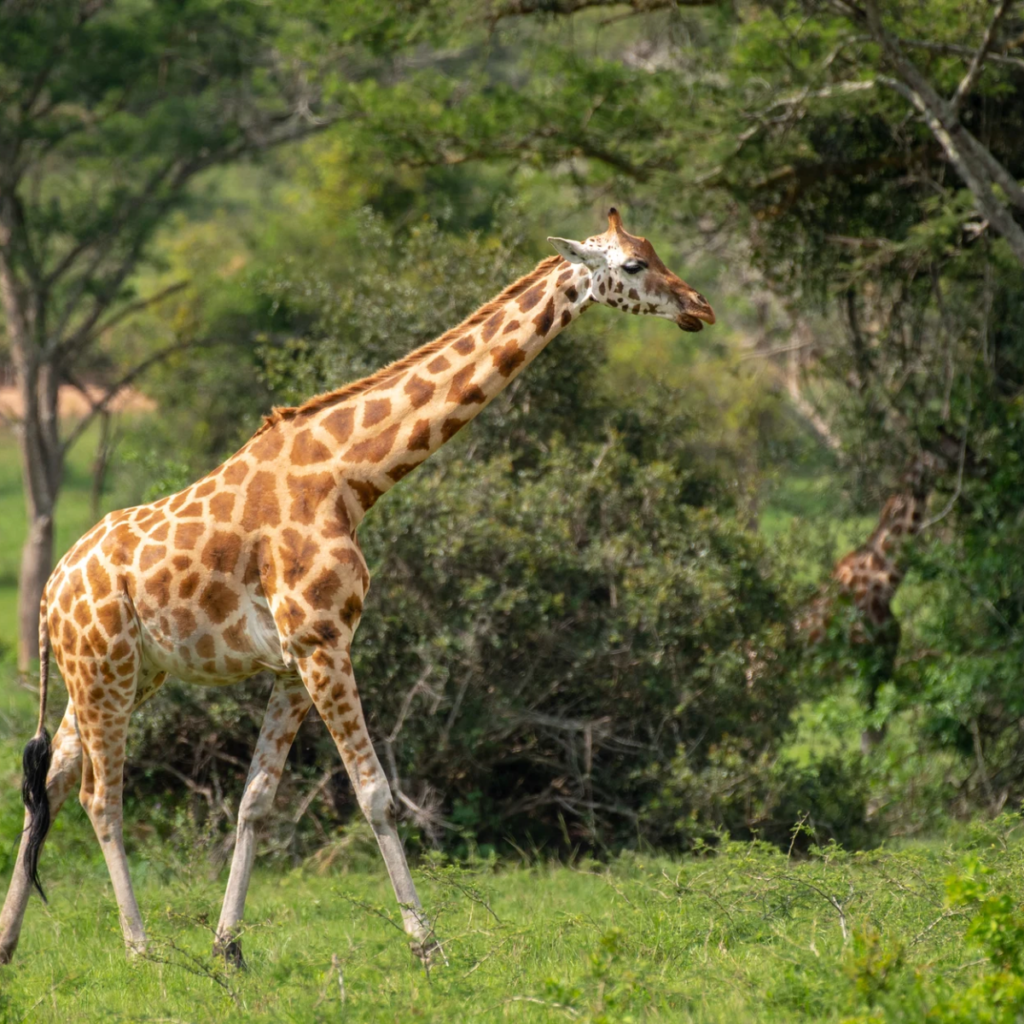
The Rothschild's giraffe lives in Uganda and Kenya, with pale legs and large, irregular patches. The Masai giraffe is found across southern Kenya and Tanzania, with a jagged, leaf-like pattern. The reticulated giraffe lives in northern Kenya, with a neat network of sharp-edged patches divided by thin white lines. Scientists still debate how many species and subspecies exist, but the patterns make them easy to tell apart.
Giraffes in Uganda
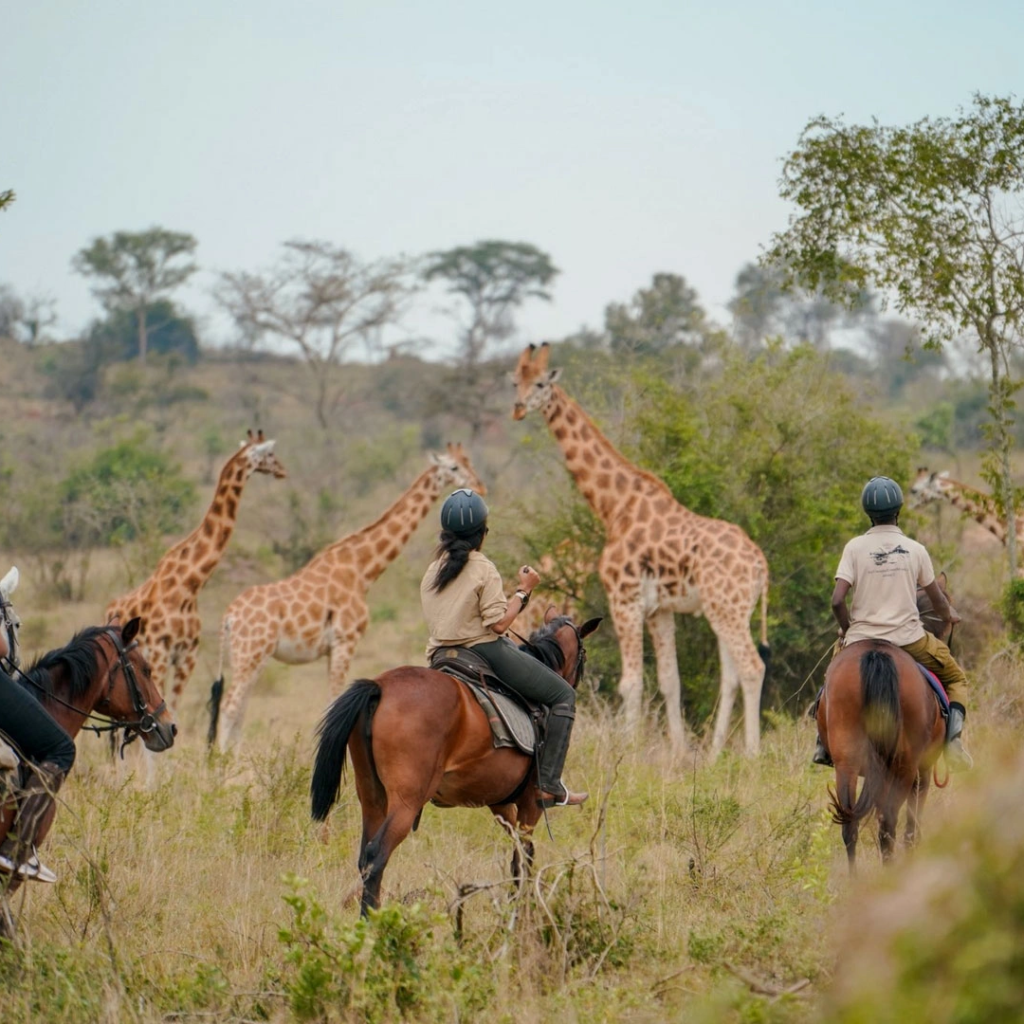
Murchison Falls National Park holds Uganda's largest giraffe population, and Rothschild's giraffes are easy to see on the open plains north of the Nile. Kidepo Valley National Park also has Rothschild's giraffes in a remote, dramatic landscape. Uganda has worked to protect and grow its giraffe numbers, so a visit supports a conservation success story.
Giraffes in Kenya
Kenya has all three types. Masai giraffes live in the Maasai Mara and Amboseli, reticulated giraffes live in Samburu, Laikipia and the northern reserves, and Rothschild's giraffes can be seen at Lake Nakuru National Park and in some conservancies. In Nairobi, the Giraffe Centre lets visitors meet Rothschild's giraffes up close and learn about their conservation.
Giraffes in Tanzania
The Masai giraffe is Tanzania's national animal and lives across the Serengeti, Tarangire, Lake Manyara and Ngorongoro. Tarangire and the Serengeti plains offer especially good sightings, with giraffes feeding against acacia trees and big skies.
Giraffes and acacia woodland
Giraffes depend on acacia and other browse trees, and the landscapes that suit them are some of the most beautiful in East Africa: flat-topped acacias in the Serengeti, riverine woodland at Samburu and baobab-studded plains at Tarangire. When you plan a giraffe safari, think of the landscape as much as the animal, because the best photographs often come from a giraffe framed against its habitat.
Giraffe conservation
Giraffe numbers have fallen across Africa in recent decades, and giraffes are now listed as vulnerable. Researchers call the decline a silent extinction because it received little attention compared with other large animals. In East Africa, conservation programmes work on habitat protection, translocations, monitoring and community engagement. Uganda's Rothschild's giraffes have recovered from a very low population thanks to protection and translocations, and visiting parks that hold them helps fund the work.
Giraffe facts that surprise visitors
Giraffes have the same number of neck bones as humans, seven, but each one is greatly elongated. Their tongues are around 45 centimetres long and dark in colour, which protects them from sunburn while feeding. A giraffe's heart is large and powerful to pump blood up to the head, and special valves in the neck help control blood flow when the animal lowers its head to drink. Giraffes sleep very little, often resting in short bursts and sometimes standing.
How giraffes live
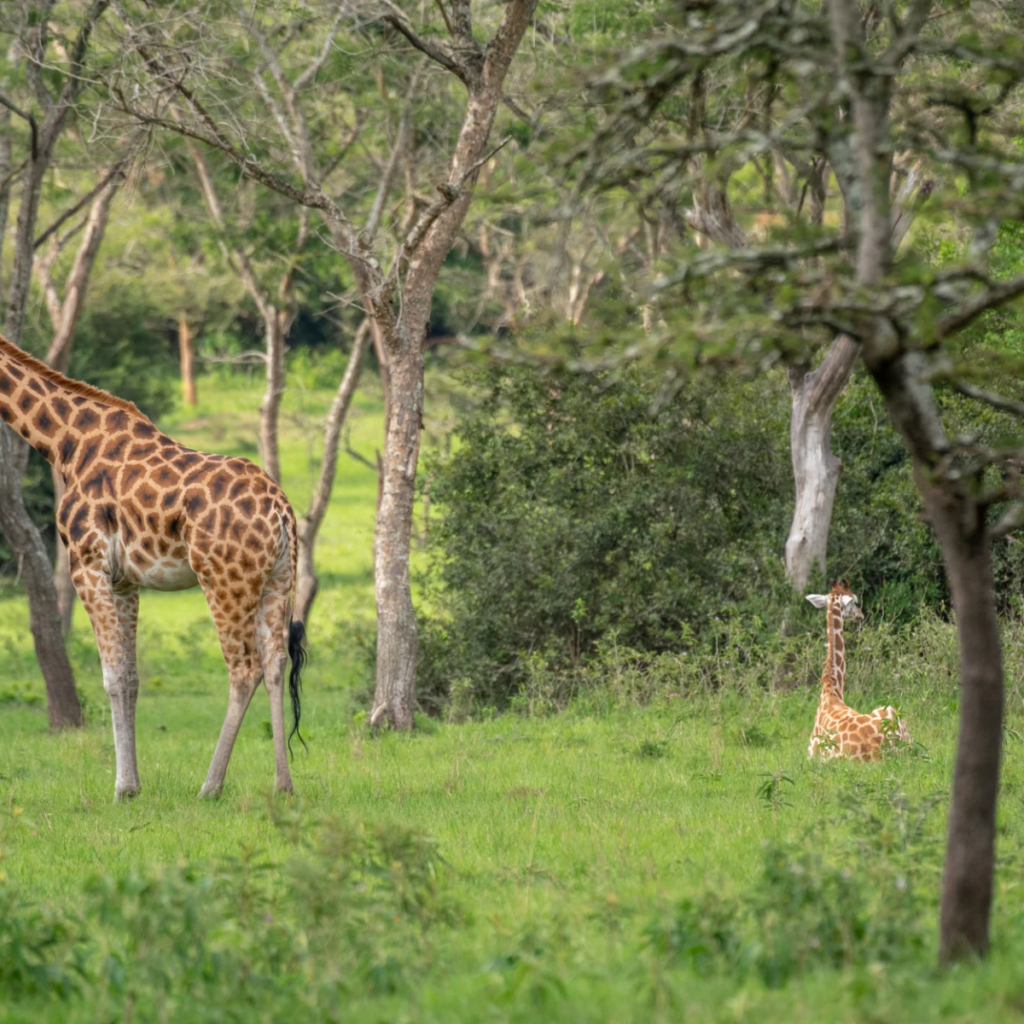
Giraffes feed on acacia leaves and other browse, using a long tongue and tough lips to avoid thorns. They drink only occasionally, spreading their legs or kneeling to reach the water. Calves are born standing, around 1.8 metres tall, after a pregnancy of around 15 months. Giraffes live in loose groups and keep watch for predators, particularly lions.
Behaviour worth watching
Look for necking, where males swing their necks at each other in slow, powerful spars to establish dominance. Watch the way a herd moves in a graceful, rolling gait and the way giraffes stand together at a waterhole, each taking turns to drink while others scan the horizon.
Photographing giraffes
Go in the soft light of morning or evening, keep the whole animal in the frame and look for giraffes against open sky, acacia silhouettes or a sunset. A medium zoom works well because giraffes are often close to the vehicle, and a long lens helps for details of the pattern and face.
Giraffe safari: how we plan it
We include giraffe areas in wildlife routes across Uganda, Kenya and Tanzania, often combined with elephants, lions and birdlife. A visit to Murchison Falls pairs giraffes with a boat trip to the falls, while a Kenyan route can include the Giraffe Centre in Nairobi, Samburu and the Maasai Mara. Tell us which giraffe type you most want to see and we will plan around it.
Best time to see giraffes
Giraffes can be seen all year. In the dry season, they gather near water and acacia woodland and are easier to find. In the green season, they spread out but the scenery is lush, and calves are often visible. We plan around the species you most want to see and the parks you will visit.
At a glance
- Murchison Falls for Rothschild's giraffe
- Mara and Serengeti for Masai giraffe
- Samburu for reticulated giraffe
- Visit the Giraffe Centre in Nairobi
Keep exploring
- Murchison Falls National Park
- Kidepo Valley National Park
- Samburu National Reserve
- Maasai Mara National Reserve
- Wildlife safaris
- Photography safaris
- Uganda safaris
Plan a safari around Giraffes in East Africa: Rothschild's, Masai and Reticulated Giraffes
Tell us your dates and what you most want to see, and we’ll time your safari to match it as closely as nature allows. Talk to us, or browse our safari packages to see how a migration-timed itinerary is put together.
Giraffes in East Africa: Rothschild's, Masai and Reticulated Giraffes