
The kingdom is still alive. It has a king, the Kabaka; a parliament, the Lukiiko; a prime minister, the Katikkiro; an official language, Luganda; more than fifty clans; and a calendar of ceremonies that draws millions of people. Its royal tombs, palaces, coronation ground, sacred falls and islands form a trail of heritage sites that can be visited in a day or over a week.
A short history
Buganda’s own tradition traces the kingdom to Kintu, the first Kabaka, who is said to have founded it around the fourteenth century after defeating a rival, Bemba. Over the following centuries Buganda grew from a small state on the northern shore of Lake Victoria into a powerful, well-organised kingdom, with a system of chiefs, a strong army, a fleet of war canoes on the lake and a capital that moved with each new king.
By the mid-nineteenth century the court of Kabaka Mutesa I was famous across the region. In 1862 the explorer John Hanning Speke visited it, and in 1875 Henry Morton Stanley followed. Arab traders, and then Christian missionaries, arrived at court, bringing new religions and new politics. In the 1880s, under Kabaka Mwanga II, a conflict between the old faith and the new produced the martyrdoms commemorated at Namugongo, one of Africa’s great pilgrimage sites.
The British formed a protectorate over Buganda in the 1890s, and the 1900 Buganda Agreement shaped the land system, the mailo system, that still governs much of central Uganda. When Uganda became independent in 1962, Kabaka Edward Mutesa II served as its first president. In 1966 government forces stormed the royal palace, Mutesa II fled to Britain, and he died in exile in 1969. In 1967 all Uganda’s kingdoms were abolished. They were restored in 1993 as cultural institutions, and on 31 July of that year Ronald Muwenda Mutebi II was crowned Kabaka at Buddo. His wife is the Nnabagereka, Queen Sylvia Nagginda.
How the kingdom works
- The Kabaka is the cultural head of the Baganda and the symbol of their unity. Under Uganda’s constitution he holds a cultural role and no political or executive power.
- The Lukiiko is the kingdom’s parliament, which sits at the Bulange in Mengo, Kampala.
- The clans (ebika) are central to identity. Each Muganda belongs to a clan, each clan has a totem (omuziro) and each has a role in ceremonies, including the building of the royal tombs.
- Language and craft: Luganda is spoken across central Uganda. Buganda’s bark-cloth making, from the bark of the mutuba fig tree, has been recognised by UNESCO as an intangible cultural heritage.
The heritage sites
Travellers often call the route between the sites the Kabaka’s Trail. Each place tells a different part of the story.
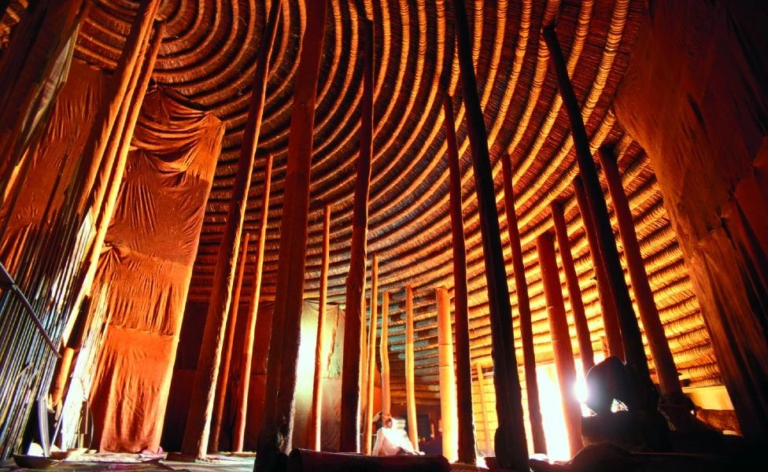
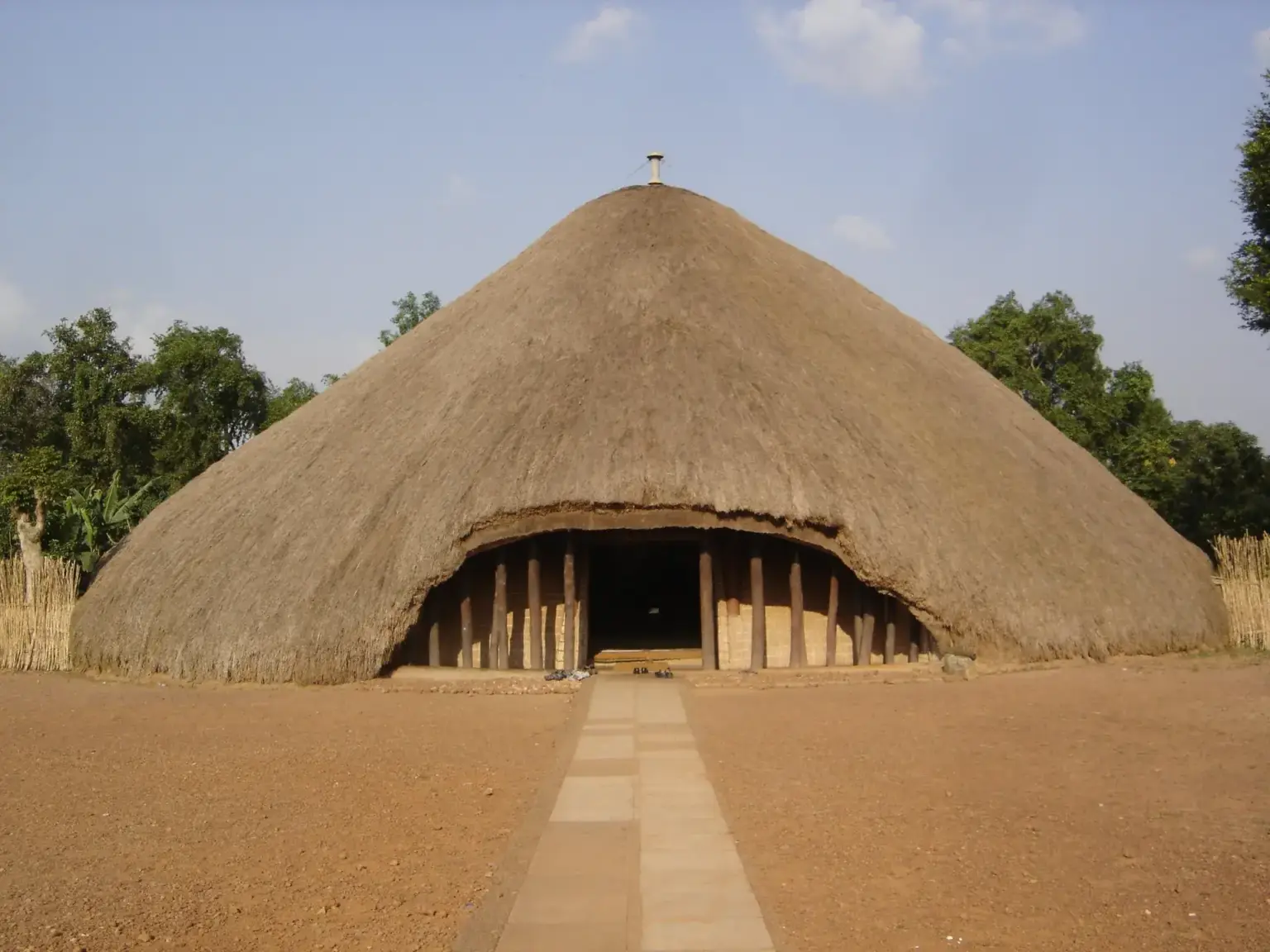
- Kasubi Tombs: the UNESCO World Heritage Site where four kabakas are buried, in the great thatched Muzibu Azaala Mpanga.
- Bulange: the parliament building of Buganda, at the foot of Mengo Hill.
- Mengo Palace (Lubiri): the royal compound, its Royal Mile, the Kabaka’s Lake and the old torture chambers of the Amin years.
- Naggalabi Buddo: the coronation ground where kabakas are enthroned.
- Wamala Tombs: the burial place of Kabaka Suuna II, at Nsangi.
- Ssezibwa Falls: a sacred waterfall east of Kampala, associated with twins.
- The Ssese Islands: the Islands of the Gods on Lake Victoria, home to the shrines of the great balubaale.
- Other places on the trail include Nnamasole (queen mother) tombs, the Katereke prison ditch, Kalagala Falls on the Nile, and the Uganda Museum and Namugongo Martyrs Shrine in and near Kampala.
What you will experience
A visit to Buganda is not a tour of ruins. At Kasubi and Wamala, guides explain how a king’s spirit is believed to live on in the royal enclosure, and the elders who care for the tombs are members of families that have done so for generations. At the Bulange, the debates of a living parliament are tied to real questions of culture, land and social affairs. At the palace, you walk through a compound that has seen coronations, coups and restoration.
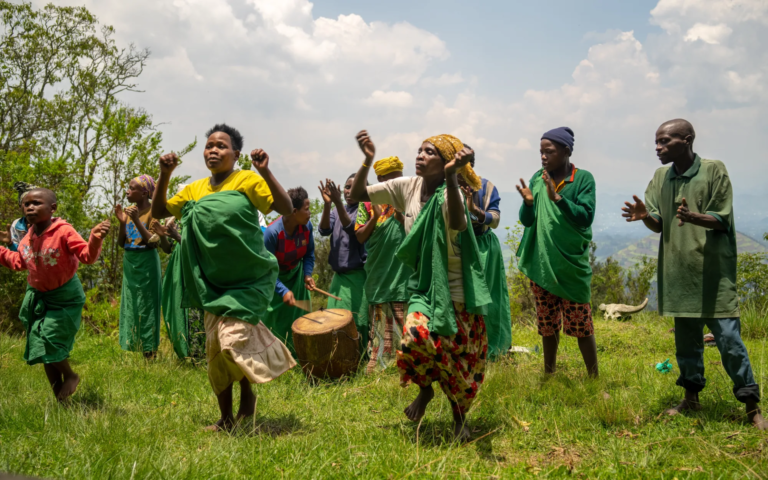
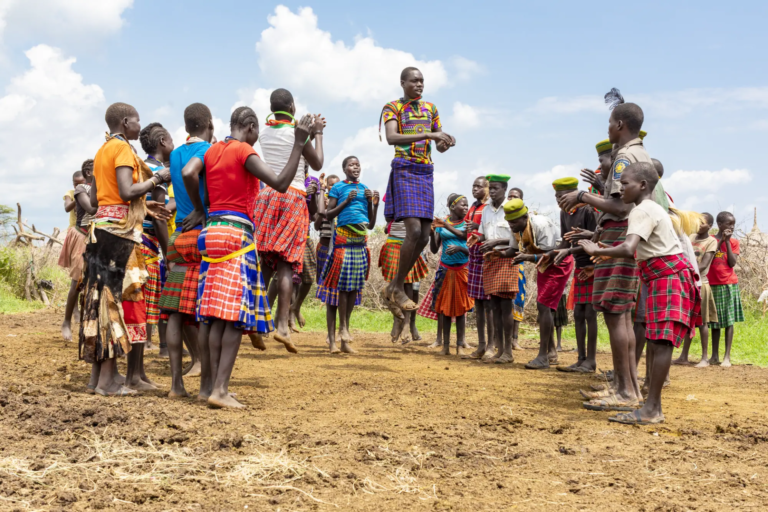
The best visits combine the sites with everyday Kampala: a bark-cloth workshop, drumming and dance at a cultural centre, a taste of luwombo (steamed stew in banana leaves) and matoke, and a walk between the cathedrals on the neighbouring hills of Namirembe and Rubaga.
Etiquette and respect
- Dress modestly at the tombs and the palace: covered shoulders and knees. Wraps are sometimes provided.
- Follow the guide’s instructions about where you can walk where photography is allowed and which areas are sacred. Some parts of the tombs are strictly off-limits.
- Greet respectfully. A quiet greeting in Luganda (“Oli otya?”) is warmly received.
- Ask before photographing people.
- Remember that these are working cultural sites, not museums. Ceremonies may close areas to visitors.
Practical information
- Time needed: a half-day for Kasubi and the Mengo area; a full day to add Wamala and Naggalabi Buddo; two days to include Ssezibwa Falls and the Uganda Museum.
- Getting around: Kampala traffic can be heavy so we plan the order of the sites to avoid rush hours. Sites outside the city, like Wamala and Buddo, are best reached with a private vehicle and a guide.
- Fees and opening: each site charges a modest entrance fee, and opening days and hours can change, especially around ceremonies. We confirm them before you go.
- Combining: Buganda pairs naturally with Entebbe, the Ssese Islands and Jinja.
Buganda with Offmap Safaris
We build Buganda visits as a cultural day or two at the start or end of a Ugandan safari, or as a stand-alone heritage safari of three to five days. Every itinerary is private and tailor-made. Plan your safari, message us on WhatsApp +256 701 243 304 or email [email protected]. See our Responsible Travel page for how to visit cultural sites well.
Plan a safari that includes Buganda Kingdom
Our team plans private, tailor-made safaris, so we can build a trip around Buganda Kingdom and adjust the days, lodges and pace to suit you.