The Maasai adamu (jumping dance)
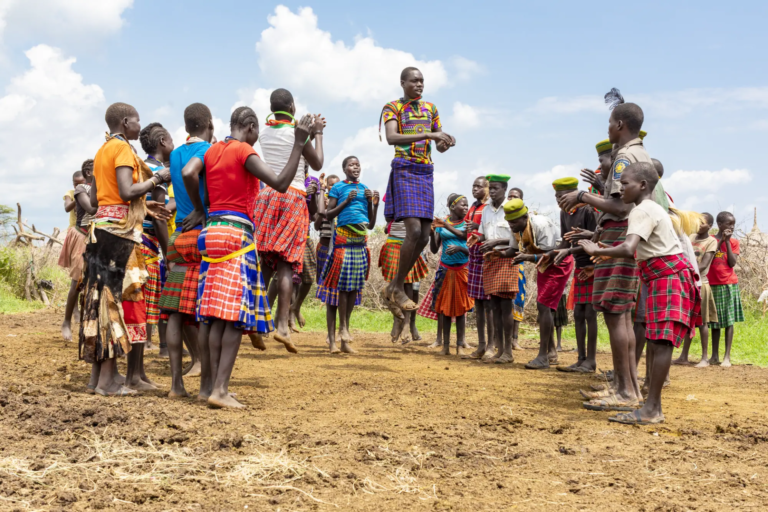
The Maasai adamu, often called the jumping dance, is performed by young warriors who jump vertically from a standing position, competing to reach the greatest height while other warriors chant and sing in a circle around them. It traditionally forms part of coming-of-age ceremonies and is one of the most recognisable dance forms in East Africa, performed at Maasai Mara and Ngorongoro-area villages as part of a broader Maasai cultural visit.
Rwandan intore dance
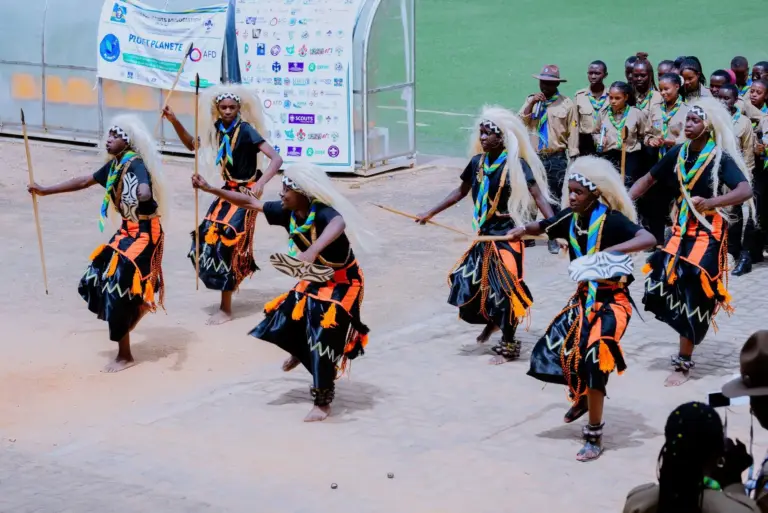
Rwanda’s intore dance, meaning “the chosen ones,” dates to the royal court and traditionally celebrated warriors returning from battle, combining vigorous, high-stepping movements with flowing headdresses and precise, drilled choreography performed in unison by a full troupe. It’s a centrepiece performance at Iby’Iwacu Cultural Village and several other Rwandan cultural venues, generally considered one of the country’s most visually striking cultural performances.
Batwa dance and song
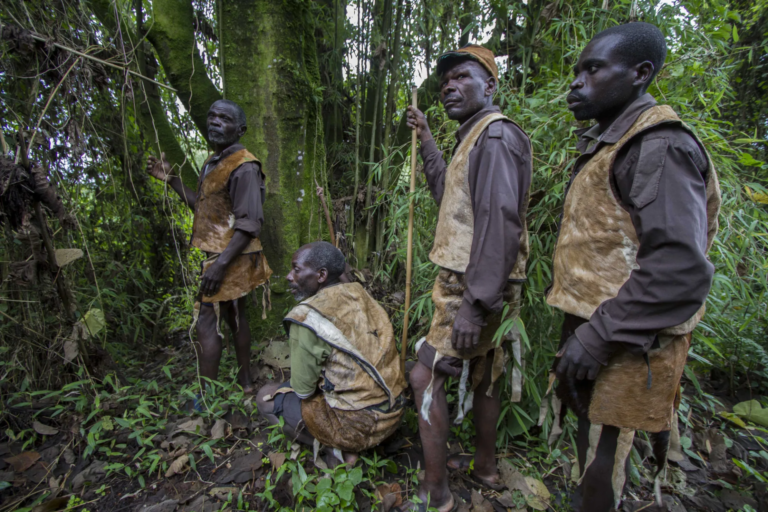
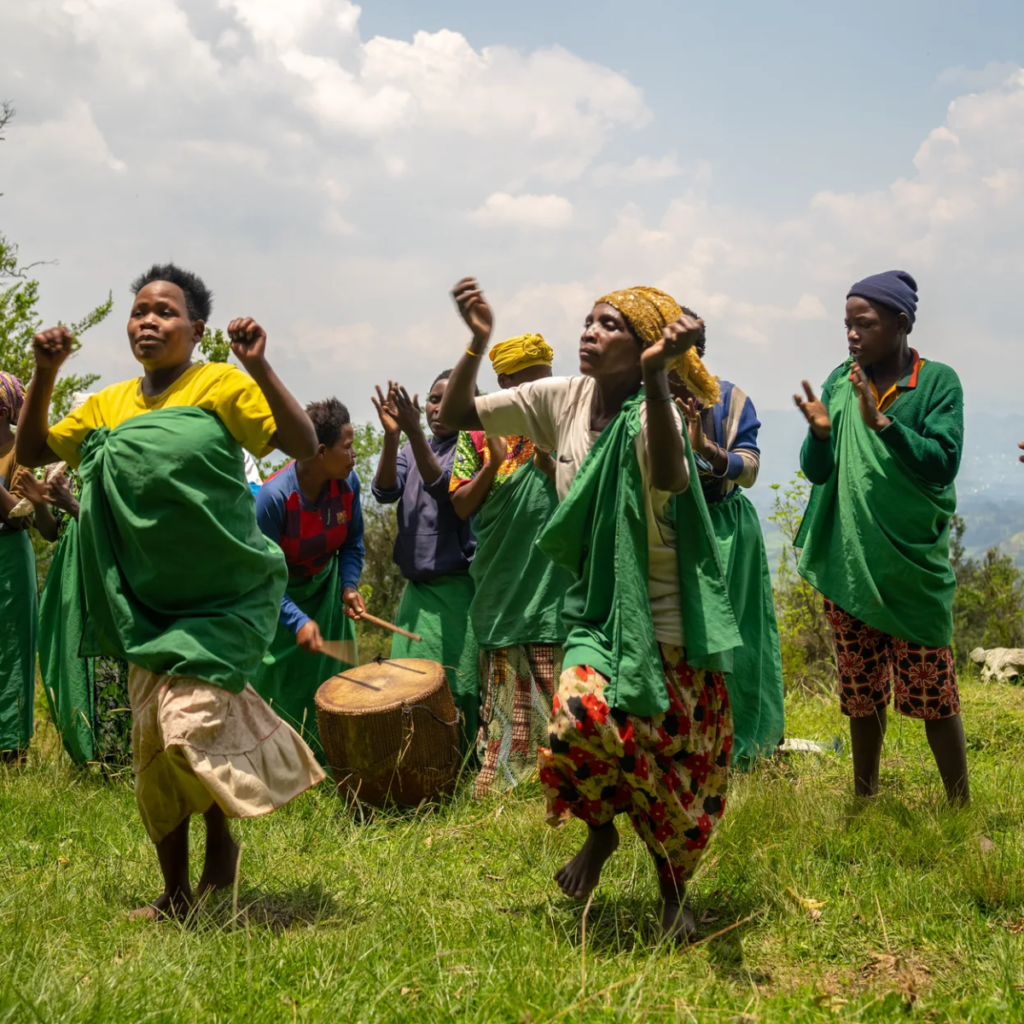
The Batwa Cultural Experience near Bwindi includes traditional song and dance drawn from the community’s forest-dwelling history, performed alongside demonstrations of the hunting, foraging and building skills covered in a broader Batwa cultural visit, giving dance a specific context within the community’s wider story rather than standing alone.
Karamojong and Samburu dance
Karamojong dance, seen as part of a cultural visit in Uganda’s northeast or at the Karamoja Cultural Festival, and Samburu dance in northern Kenya both centre heavily on rhythmic jumping and chanting similar in spirit to the Maasai adamu, reflecting the shared pastoralist heritage these communities carry despite their distinct languages and customs. Samburu culture visits near Samburu National Reserve typically include a dance performance alongside beadwork and homestead demonstrations.
Watching respectfully
Traditional dance performed for visitors is real, learned technique and genuine cultural practice, not a diluted imitation, and treating it with the same attentiveness you’d bring to any performance, rather than as background colour for photographs, generally makes for a better experience on both sides. Asking before joining in, where invited, and before photographing performers individually up close is good practice at any of these visits.
What a dance performance involves
Most performances run 20 to 45 minutes as part of a broader cultural or community visit rather than as a standalone booking, often followed by a chance to ask questions of performers or try a simplified version of the dance yourself under their guidance.
What dance reveals about a community
Beyond the visual spectacle, most traditional dances encode specific meaning: the adamu’s jumping height traditionally signalled a warrior’s strength and marriageability, the intore’s precise unison movement reflected the discipline expected of royal court warriors, and Batwa song often carries forest-based imagery drawn directly from a way of life the community can no longer practise inside protected park land. A guide who can explain this layer of meaning generally makes a performance considerably more rewarding than watching it purely as spectacle.
Live music alongside dance
Traditional dance in the region is almost never performed in silence, accompanied instead by drumming, chanting or, in some communities, string and wind instruments made from local materials, and the music itself often carries as much cultural weight as the movement it accompanies. Several cultural villages let visitors try basic drumming alongside a dance performance, extending the visit beyond passive watching.
Best time to visit
Dance performances at established cultural villages run year-round on a regular schedule while larger festivals such as the Karamoja Cultural Festival happen on their own annual calendar, worth checking specifically if timing your visit around one matters to you.
Costume and preparation
The elaborate headdresses, body paint and dress worn for performances like the intore or Karamojong dance take considerable time to prepare, and performers often begin dressing and applying paint or adornment well before a scheduled performance, a preparation process some cultural villages let visitors briefly observe. Seeing that preparation adds useful context to the performance itself, showing the effort behind what can otherwise look effortless once underway.
Rhythm, instruments and voices
Traditional dance is a combination of rhythm, song and movement. Drums, xylophones, harps, lyres and rattles provide the beat, and voices carry the story. Learning to recognise the instruments and hearing what each does adds depth to the performance. In many groups, dancers also play, and the audience may be invited to join.
Joining in
Many performances end with an invitation to dance. Accept if you feel comfortable, and follow the steps shown by the dancers. Laughter, effort and mistakes are all welcome, and joining in is the quickest way to feel part of the event. Wear shoes you can move in and keep your belongings safe.
Dance as a link to daily life
Many dances mark life events such as weddings, harvests, coming of age and welcoming guests. Asking about the occasion gives the performance meaning beyond entertainment, and shows that you value the tradition. Look for performances that are part of real celebrations or run by cultural groups where the dance carries its full meaning.
Dance and respect
Dance is cultural property, and performances carry meaning for the people who give them. Applaud warmly, avoid walking in front of dancers and ask before filming or photographing. If a dance is part of a ceremony, follow the guidance of your host on where to stand and how to behave. Showing interest and respect makes your visit welcome and the performance more generous.
Tip performers or buy their music or crafts if you enjoy the show, since this supports the group directly.
Learning a step or two
Many groups are glad to teach a short sequence after the show. Learning even a few steps gives you a sense of the effort and skill involved and often creates laughter on both sides. Watch the feet and the shoulders, copy the rhythm rather than the shape and be patient with yourself. Most guests find these few minutes the happiest part of the evening.
Planning your cultural dance visit
Tell us which community’s traditions interest you most, and we will build a cultural visit with a genuine dance performance into your itinerary at the right point in your route.