Musanze Caves, Rwanda
Musanze Caves, formed by lava flows from Mount Bisoke and Mount Sabyinyo, run roughly two kilometres and are unusually young in geological terms for a cave system, having formed as volcanic gas bubbles collected inside solidifying lava and left behind a network of chambers. Thirty-one separate entrances, most created by roof collapses over time, connect to this single underground network, though guided routes use only a small, safe portion of the full system.
A history layered into the rock
Archaeological evidence places human use of Musanze Caves as far back as the Iron Age, and the caves carry a much more recent, sombre chapter too: they were the site of a massacre during the 1994 genocide, after which local communities came to regard the site as a tomb. Guides address this history directly as part of a visit, giving the caves a weight well beyond their geological interest alone.
What a guided cave visit involves
Visitors are fitted with helmets, rain coats, gum boots and hand lamps before entering, and the route inside follows established trails, stone staircases and railings rather than requiring any technical caving skill or equipment. A safety briefing precedes every visit, and guides lead the group at a pace suited to the least experienced person present.
Elsewhere in the region
Mount Elgon National Park, on the Uganda-Kenya border, holds its own well-known cave system, including Kitum Cave, notable for elephants that dig into the cave walls at night in search of mineral salts, a rare and striking behaviour documented by wildlife researchers over decades. Visiting Elgon’s caves is generally arranged as part of a broader Mount Elgon hiking or wildlife itinerary rather than as a standalone caving outing.
Combining caving with a Volcanoes National Park visit
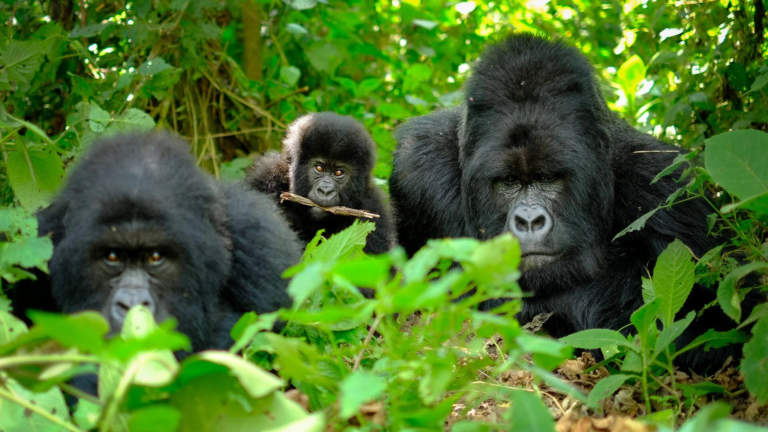
Musanze Caves sit close enough to Volcanoes National Park that most visitors add a cave visit around a gorilla trekking or golden monkey tracking itinerary, using it as a lower-intensity half-day activity on a day not set aside for a permit-based climb.
Caving and the wider Virunga landscape
Musanze town itself has grown around its role as the main gateway to Volcanoes National Park, and the caves’ proximity means a visit can be arranged with minimal extra transit time on a day already built around Musanze as a base. That practical convenience is a large part of why cave exploration has become a popular add-on for Rwanda gorilla trekking itineraries rather than a niche activity only specialist travellers seek out.
Practical notes
- Sturdy, closed shoes are recommended, though gum boots are typically provided at the entrance
- The cave interior stays cool year-round regardless of surface temperature so a light layer is worth bringing
- Photography is generally permitted, though flash can be limited in sections with bat colonies
- The guided route takes roughly one to two hours depending on how far into the system the tour extends
Bat colonies and cave ecology
Sections of Musanze Caves host bat colonies, and guides point these out along the route as part of the broader ecological picture the cave system supports, alongside the insects and other small creatures adapted to living in permanent darkness. The cave’s cool, stable temperature contrasts noticeably with the warmth outside, part of what makes the underground environment feel so distinct from the surrounding volcanic landscape above.
Why the caves matter beyond tourism
Musanze Caves are studied by geologists specifically because blister caves, formed by trapped volcanic gas rather than water erosion, are a unusual formation even by the standards of volcanic cave systems worldwide. That combination of rare geology, layered human history and proximity to one of Africa’s premier gorilla trekking destinations gives the site a depth few single stops on a Rwanda itinerary can match.
Best time to visit
Musanze Caves can be visited year-round, since the experience is entirely underground and unaffected by surface weather, though access roads and the walk to the cave entrance are more comfortable in the drier months.
Lava tubes and how they formed
The caves around Musanze are lava tubes, formed when flowing lava from the Virunga volcanoes cooled on the surface while the molten rock inside kept moving and drained away, leaving hollow tunnels. The result is a cave with a smooth, sometimes curving ceiling and walls marked by flow lines. Understanding this makes a walk through the chambers more rewarding, since you are literally standing inside the plumbing of an ancient eruption.
Fitness, footwear and light
Caving here is not technical, but conditions can be uneven, damp and dark. Wear closed shoes with good grip, carry a head torch with spare batteries, and be ready to duck or climb in places. Some sections involve steps or slippery rock, and the guide will tell you if a passage is too tight or steep for your group. Anyone who is afraid of the dark or enclosed spaces should say so before entering.
Making a day of it
A cave visit takes a couple of hours, which leaves the rest of the day free. Many travellers pair it with a village walk, a visit to a craft cooperative or a view of Lake Ruhondo and Lake Burera. If you are trekking gorillas the next day, the cave is a gentle way to use a rest afternoon, and the short drive from Musanze means no early start is needed.
Questions guides often hear
Visitors often ask whether the caves are home to bats, how old they are and whether they were used for shelter. Guides explain that the caves have been used as hiding places in times of conflict and as places for ritual, and that bats live deep in the passages. Ask about the stories connected to each chamber, because the answers change from guide to guide and add personal colour.
Planning your cave exploration
Tell us where Musanze fits alongside your Volcanoes National Park plans, and we will build in time for a cave visit on a day between permit-based treks.