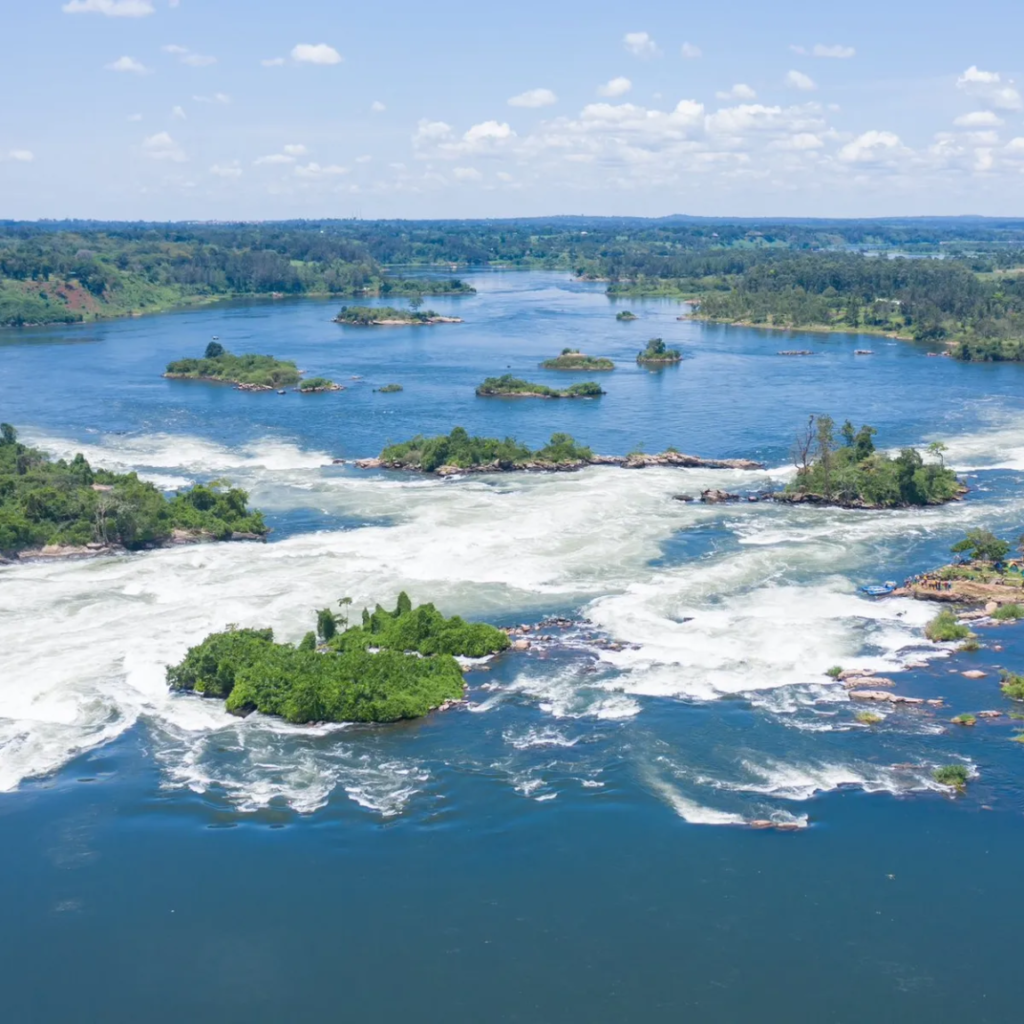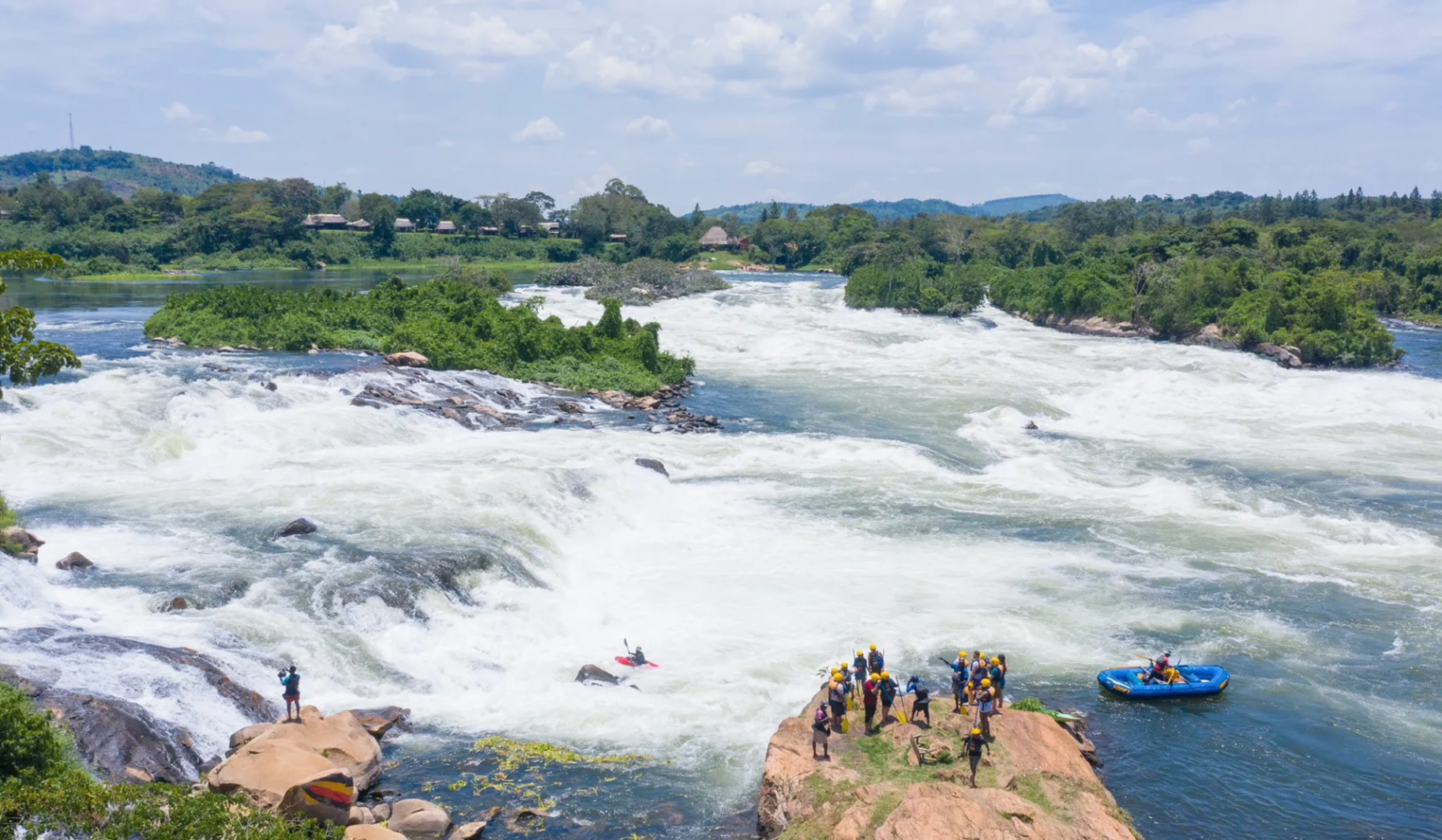
For most of human history the source of the Nile was a mystery. Ancient Greek and Egyptian writers wondered about it, Roman emperors sent expeditions to look for it, and in the nineteenth century it became the greatest geographical puzzle in the world. The answer, or at least the traditional one, lies at Jinja in eastern Uganda, where the water of Lake Victoria slips out of the lake, gathers speed and begins a northward run of some 6,650 kilometres to the Mediterranean.
Today the spot is a quiet, pretty place with a monument, a lakeside garden and a view over the water. It also marks the start of one of East Africa’s liveliest adventure towns. A visit works as a thoughtful half-day of history or as the doorway to a whole stay of rafting, kayaking and river life.
Where the Nile begins
Lake Victoria has one outflow, and it is at Jinja. From here the river is known as the Victoria Nile. It flows north into Lake Kyoga, plunges over Murchison Falls, crosses Lake Albert and continues as the Albert Nile and the White Nile through South Sudan and Sudan into Egypt. The longest possible source of the river, if you measure from the far headwaters, is the Kagera River and its tributaries in Rwanda and Burundi. But the visible point where the great river leaves the great lake is at Jinja, and that is why people have come here for more than 150 years.
The name of the town itself comes from the river. Ejjinja means “the stones” in Luganda and Lusoga, a reference to the flat rocks that once broke the water at the lake’s outlet.
The falls that vanished
The place where the water left the lake was once a set of low cataracts, the Ripon Falls: a drop of about five metres across a wall of rock some 275 metres wide. The British explorer John Hanning Speke reached them in 1862, after first sighting Lake Victoria in 1858, and declared them the source of the Nile. His claim set off a famous quarrel with his former companion Richard Burton, who believed the river began elsewhere, and the argument was only settled after Speke’s death, when Henry Morton Stanley circled the lake in 1875 and 1876 and confirmed the outflow.
The falls themselves no longer exist. In the 1950s the Owen Falls Dam, now the Nalubaale Power Station, was built at the outlet, and the rising reservoir drowned the cataracts. A second station, Kiira, followed in 2002. Much later, the Bujagali Dam, commissioned in 2012, also flooded the celebrated rapids of Bujagali Falls. Uganda’s electricity grid still relies on this stretch of river.
What you can see at the source
- The Source of the Nile monument and gardens: a small memorial marks the outlet, and a viewing area looks over the lake and river. A plaque records the story of Speke’s discovery.
- Speke’s memorial: a monument to the explorer stands nearby.
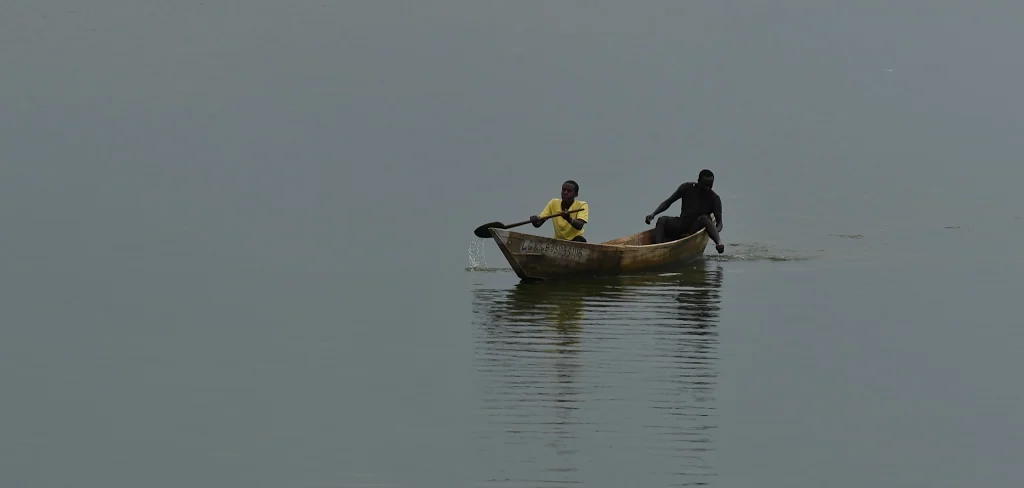
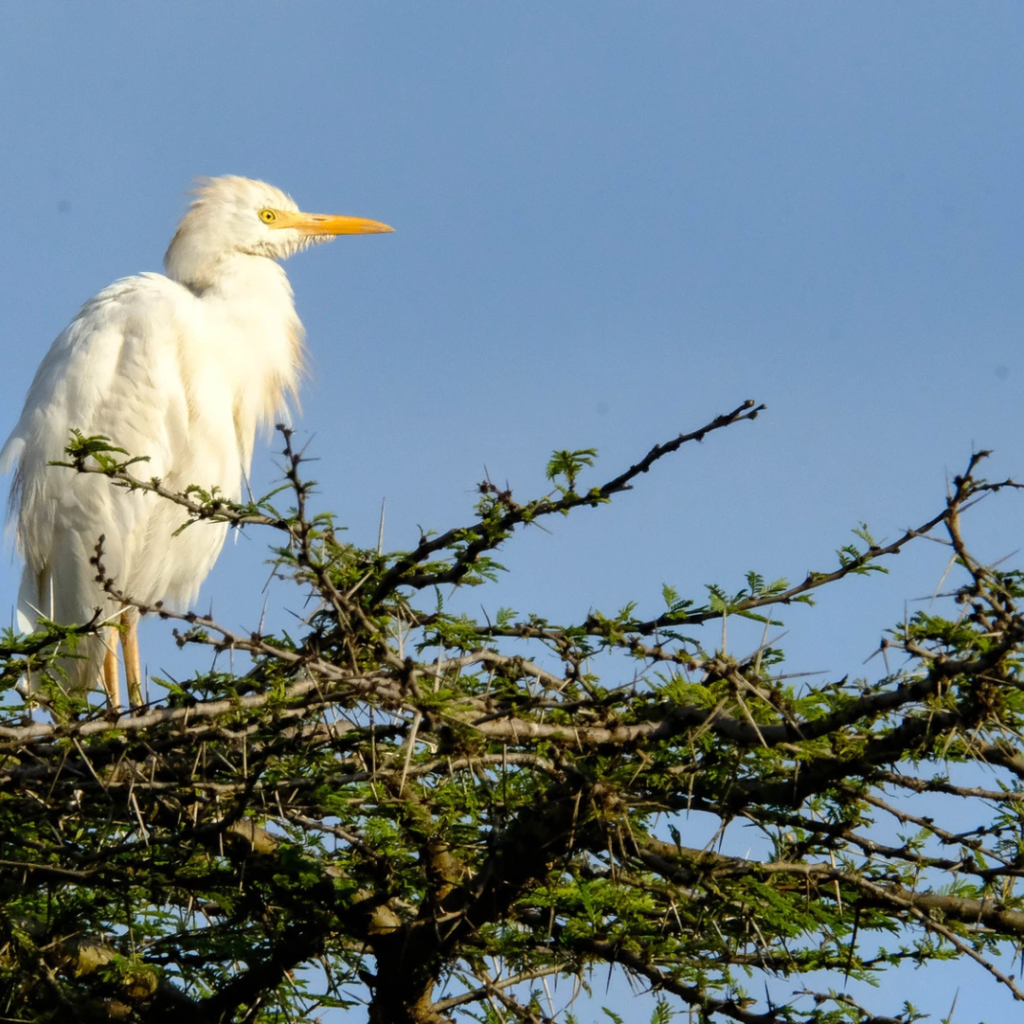
- A boat to the exact spot: local boatmen take visitors out to the point where the water leaves the lake, where you can see the current begin, watch birds and float beside the fishing boats. It is best in the early morning or late afternoon.
- Nalubaale and Kiira dams: the dams can be seen from a distance, and are a reminder of how the source has been reshaped.
- The Nile Bridge: the Source of the Nile Bridge, downstream, gives a good view of the river.
Some visitors are surprised by how modest the site is: a river leaving a lake, without drama. It is the story, and the quiet power of the water, that makes it special. Many people say it is one of the best places in Uganda for a gentle, reflective moment.
Jinja: the adventure capital
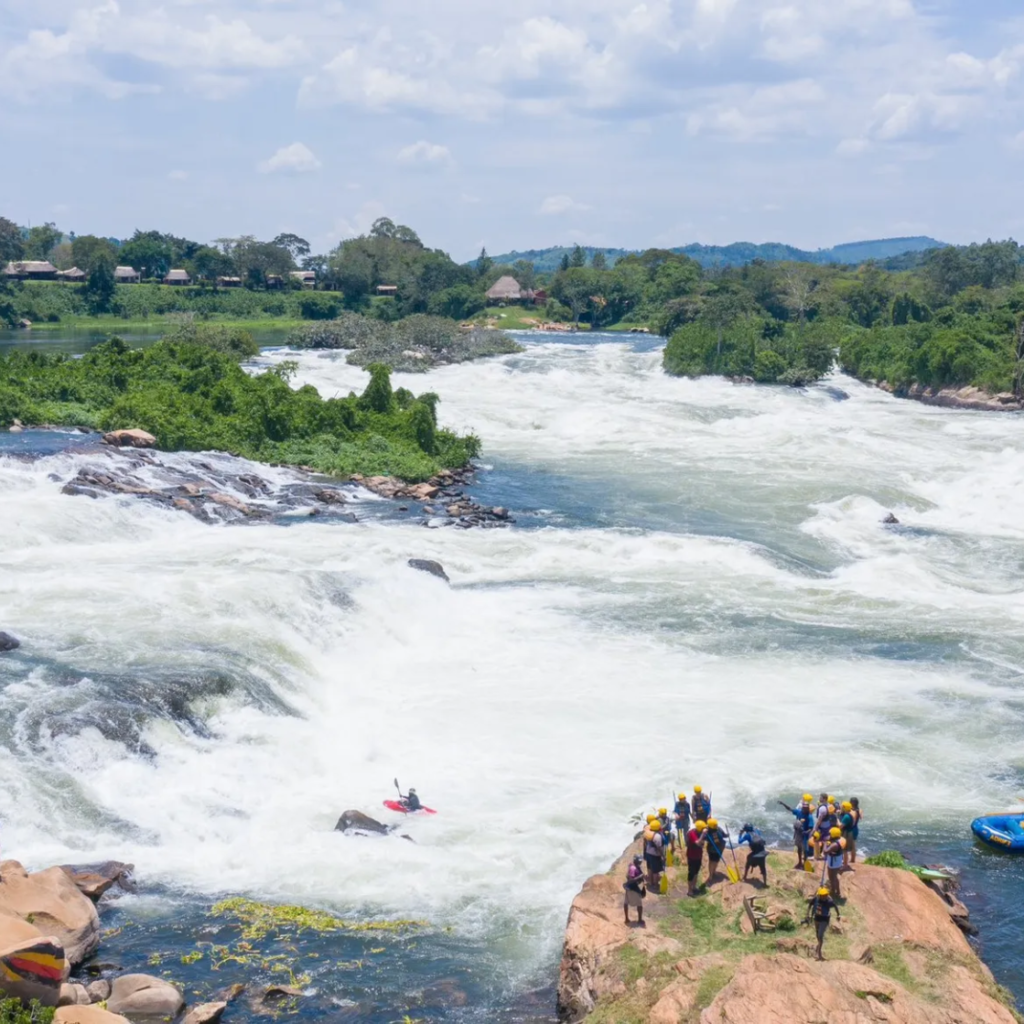
Downstream from the source, the Nile turns into one of the most exciting rivers in Africa, and Jinja has built a reputation on it:
- White-water rafting on some of the biggest commercial rapids in the world, up to Grade 5.
- Kayaking and stand-up paddleboarding, from gentle floats to serious whitewater.
- Bungee jumping over the river.
- Quad biking, horseback riding and cycling through villages and sugar plantations.
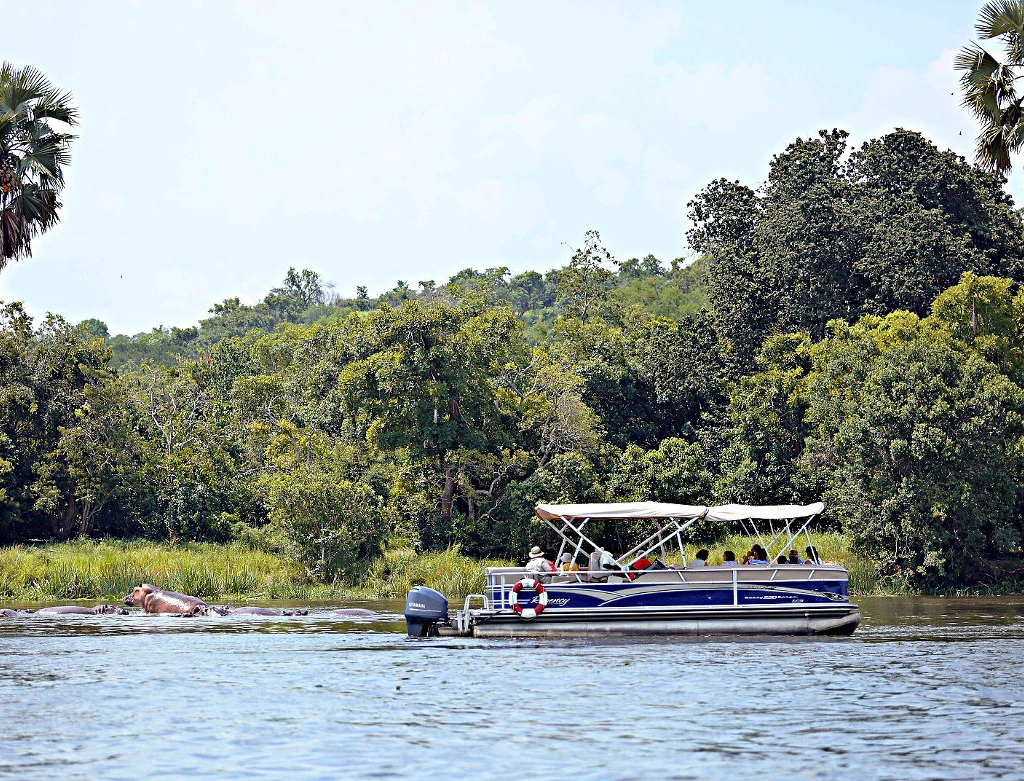
- Sunset cruises and birdwatching from a boat.
- Fishing for Nile perch and tilapia.
The adventure operators are professional, and we book only those with strong safety records. Please read our Health & Safety page before you go, and make sure your travel insurance covers adventure activities.
Practical information
- Getting there: Jinja is about 80 to 100 kilometres east of Kampala, a drive of two to four hours depending on the notorious Kampala–Jinja traffic. It is an easy stop on the way to Mount Elgon, Sipi Falls and eastern Uganda.
- Time needed: one to two hours at the source itself; a night or two in Jinja to enjoy the river.
- Best time: year-round. Early morning and late afternoon are best for light and birdlife.
- Water safety: the Nile at Jinja is fast and strong. Swim only in places your operator recommends, and avoid unmanaged shores where bilharzia may be present.
The Nile with Offmap Safaris
We place the source of the Nile as a half-day on the road between Kampala or Entebbe and the east, and Jinja as a two-night stay for anyone who likes adventure. It pairs well with Ssezibwa Falls, Sipi Falls and Murchison Falls, which lie farther along the same river. Plan your safari, message us on WhatsApp +256 701 243 304 or email [email protected]. Read our Responsible Travel page too.