The Batwa cultural experience in Uganda is a guided forest walk led by Batwa hosts near Bwindi Impenetrable and Mgahinga Gorilla National Parks. Guides show how their community gathered honey, hunted, built shelters and used plants before the forests became protected. They as well share songs and stories of their existence. This guide explains who the Batwa are, what a visit involves, how to check that the income reaches them and how to fit it around a gorilla trek.
Who the Batwa are
The Batwa are one of the oldest peoples of the Great Lakes region. For many generations they lived in the montane forests of southwest Uganda as well as in Rwanda and the eastern Democratic Republic of Congo. Their lives are centered on hunting small game, gathering honey, fruits and plants while moving through and around the forests with deep knowledge of them. Their songs, stories and healing skills carry that knowledge forward.
The Batwa do not form a single settlement or a single voice. Families differ, and individuals hold different views about tourism, land and the future. Treat any presentation as one account from the people you meet and not as the last word on a whole people. A good guide will say this plainly.
What happened when the forests became parks
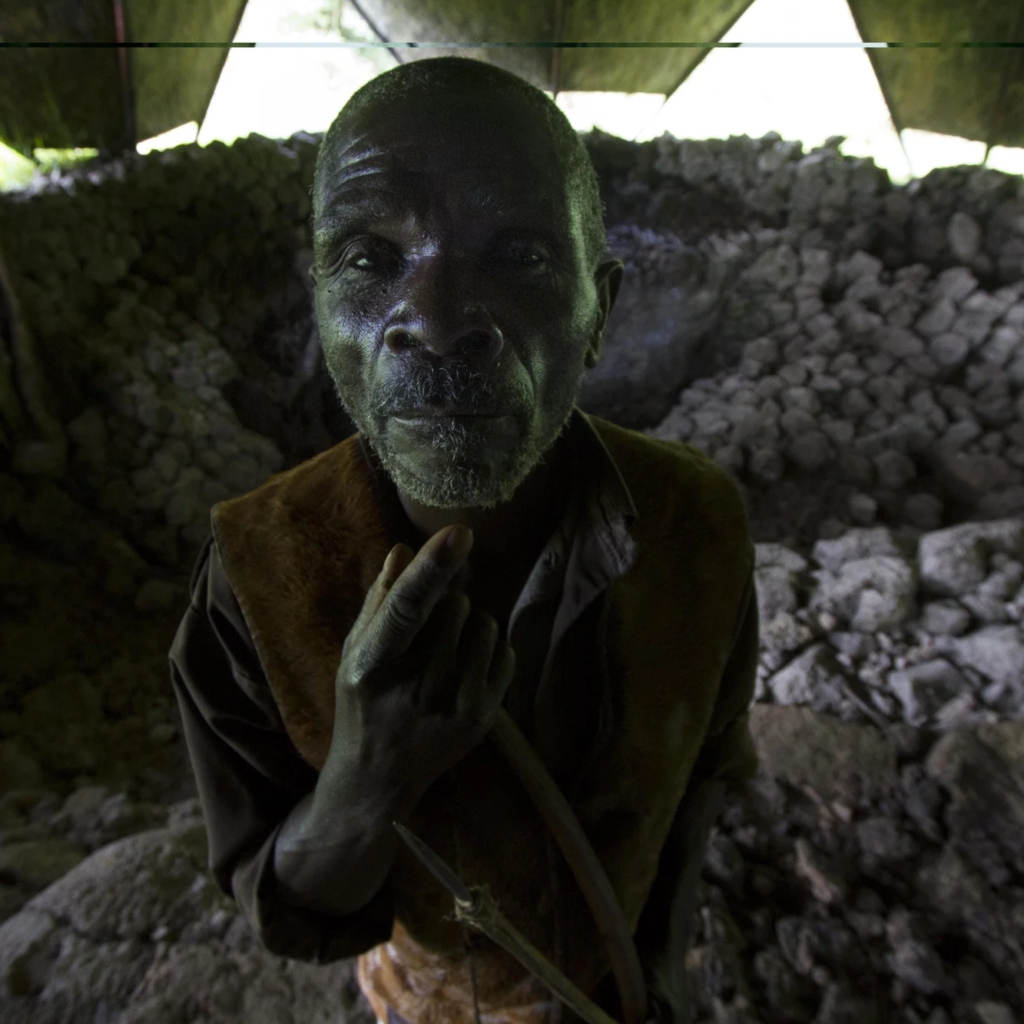
In the early 1990s: Bwindi, Mgahinga and nearby forests were gazetted as national parks partly to protect The mountain gorillas. Batwa families who lived and hunted there were asked to vacate the forests, many were left without land, compensation or a clear path to earn a living. Poverty, ill health and loss of identity followed for many. Some families have since received land and support and charities, community groups and the Batwa themselves have worked on schools, health care and cultural projects. Progress has been uneven.
This history is the context for the cultural experience. Visitors are not asked to feel guilty but rather, they should know that the walk is about people who lost their forest home, and that the gorillas they come to see are protected on land the Batwa once lived on. The best guides say this openly and do not pretend otherwise.
What the experience involves
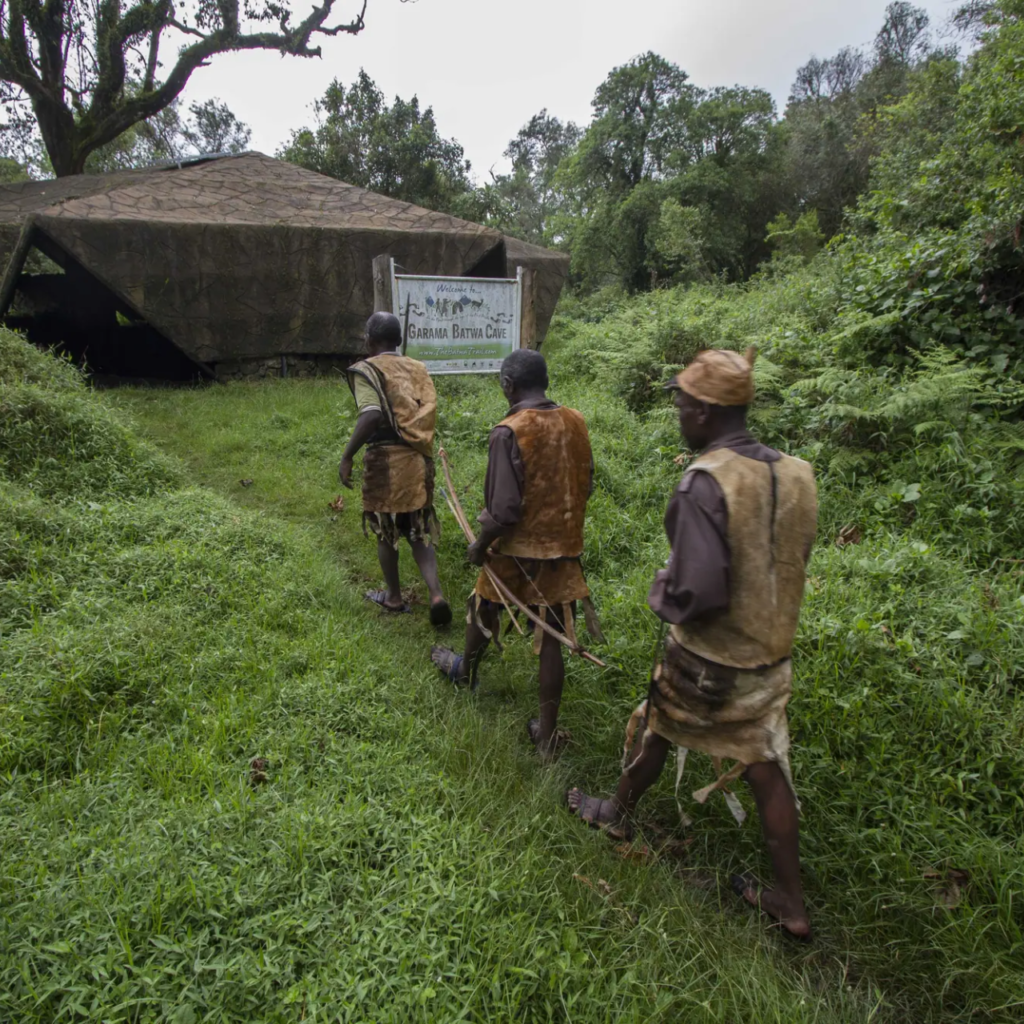
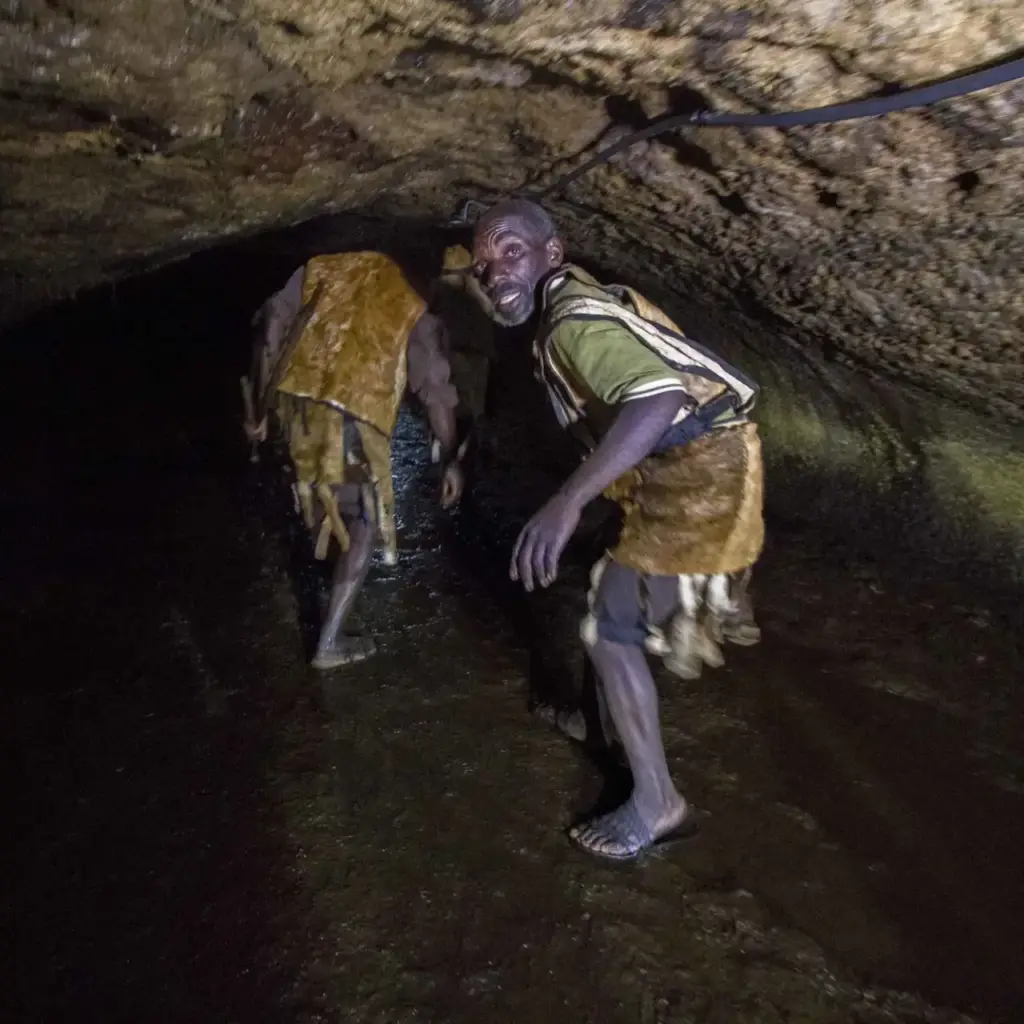
At Mgahinga Forest, in the far southwest near Kisoro, the Batwa trail takes about half a day. You are led into the forest on the slopes of the Virunga volcanoes, shown how to gather honey, identify medicinal plants, lay traps, and demonstrate fire making. The walk ends at a lava cave called Garama. This is where the Batwa sheltered and held ceremonies. Singing and storytelling in the cave are a highlight.
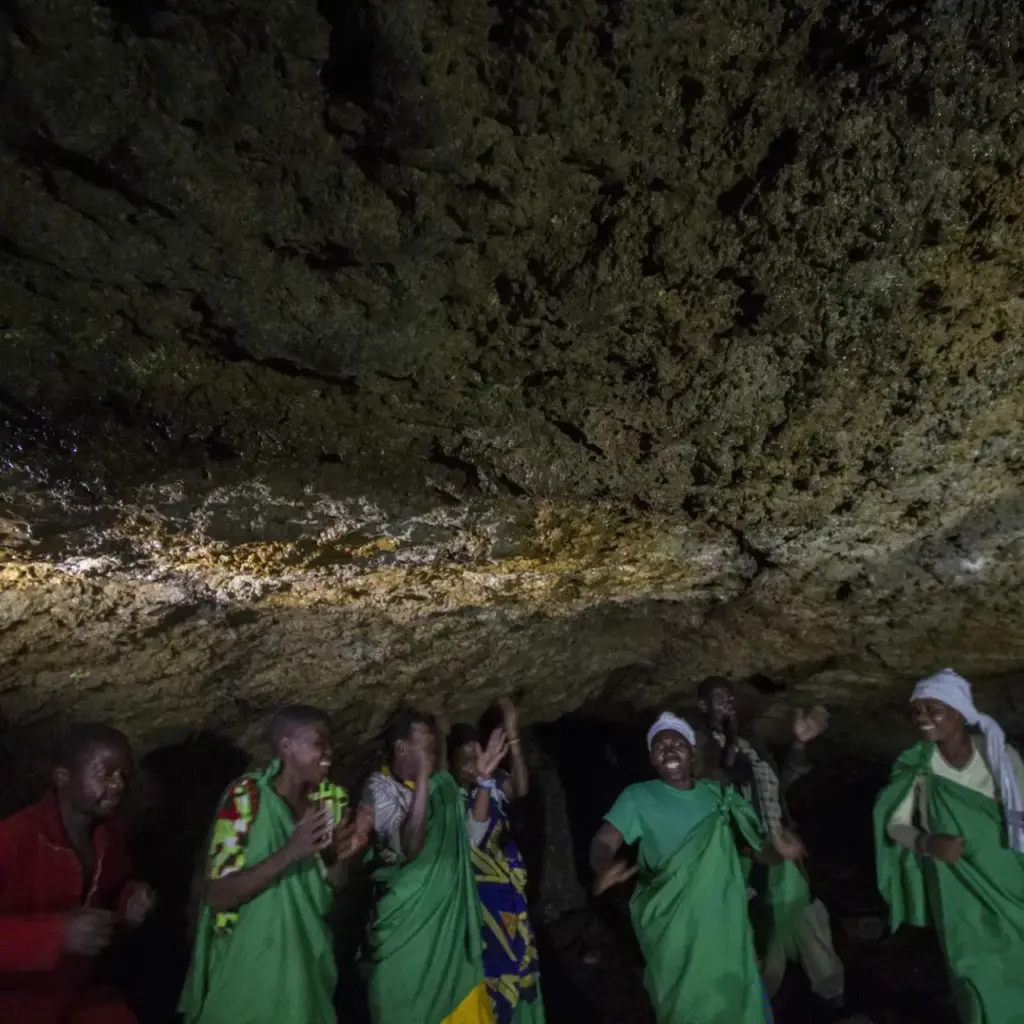
Near Bwindi, Batwa experiences are run from community settlements around Buhoma in the north and Nkuringo in the south. You walk through the edge of the forest and farm land, visit a homestead, watch dance and song, and hear about the hunting methods they used. In some places the Batwa also run craft stalls and a small museum.
The format varies and so does the quality. Some groups run their own programmes while others work through a community organization or a lodge. You are welcome to ask who organizes the day and how the money is shared. Our guide to gorilla trekking in Uganda explains the parks around the experience.
What you will not see
A respectful experience does not include a staged hunt of a live animal, a show of forest life dressed up for the camera or any claim that the Batwa still live inside the parks. Hunting in the parks is not permitted and honest hosts are expected to tell you that the skills shown are demonstrations of what their earlier families did. Some hosts also speak about present challenges such as access to land, schooling, health care and about the choices they would like the next generation to have. Listening to that is as much a part of the experience as the songs, and it is the part guests share to remember the longest.
A typical half day
A walk usually begins after your breakfast where you meet the Batwa guides at a community office or a trailhead. A short introduction explains the day and lets you ask questions. The group, which should be small, walks in single file along forest paths for about two or three hours at an easy pace. Along the way, the guides show how to find honey, trap a small animal, light a fire with sticks and use leaves and bark as medicine.
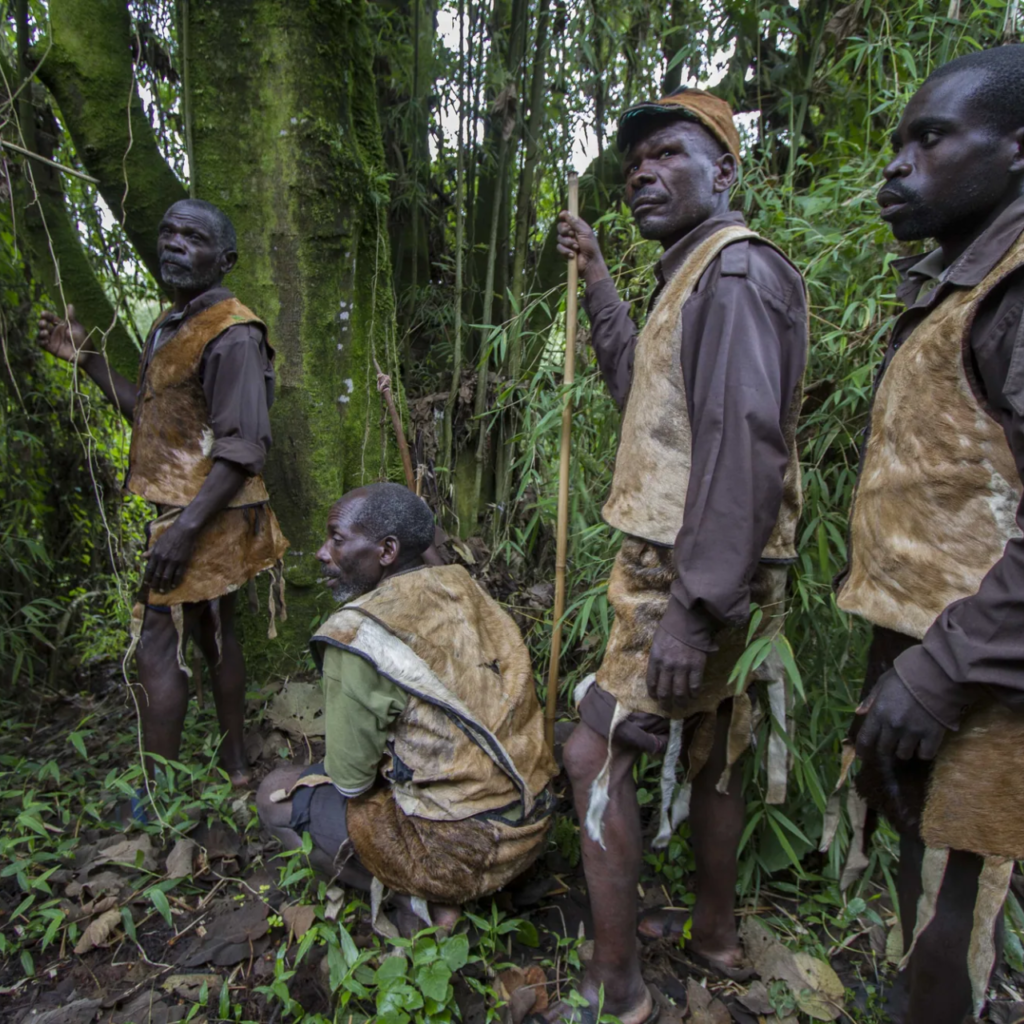
The walk ends with songs, dance and sometimes a meal. You can buy crafts such as baskets and woven mats, or simply thank the hosts. Wear comfortable shoes, bring water and expect mud in the wet months. Children of any age can join the walk, though the long pace suits older children best. It is often a good activity for the afternoon of a gorilla trek day or for a rest day.
How to choose a respectful Batwa visit
Not every visit is equal. Before you book, you are free to ask these questions and expect clear and honest answers:
- Do Batwa people plan, guide and own the experience or are they hired by an outside company?
- How is the fee divided between guides, the community and any organization?
- How many people can join and how often does a group come?
- Is the programme something the hosts want to share and can they decline questions?
- Are photographs permitted and who decides?
Look for programmes that pay a fair price, keep groups small and give a share to a community fund for schools, health or land. Be wary of any visit that treats the Batwa as an exhibit, promises a staged hunt or hands out sweets. Our broader guide to ethical cultural visits on safari sets out how we choose hosts.
On the day, listen, ask respectful questions and let hosts lead. Do not ask people to pose for photos or to dress up. If you wish to take a portrait, ask the person, accept a no, and offer to show them the picture. Buy crafts at the price asked and leave gifts and sweets at home.
Fitting it around gorilla trekking, and practical tips
In our various itineraries, we add a Batwa walk to a gorilla trek in Bwindi or Mgahinga. It works best on the afternoon after a trek or on the day before when your legs are rested. We keep an hour between the end of a trek and the start of the walk and avoid booking both on the same morning. Gorilla permits are non-refundable and if postponed, new permits could be bought, so confirm the dates before you arrange the Batwa visit. The minimum age for trekking is 15.
The dry months: June to September and December to February make paths easier, though the Batwa walk runs all year. Bwindi is cool and wet at altitude so carrying a light rain jacket, long trousers and sturdy shoes is advised. Carry a day pack with water and insect repellent plus a small amount of cash for crafts incase you are interested in crafts.
Practical tips: Must keep time, follow the guide, keep your voice low and put your phone away while the Batwa sing. Say webale, which means thank you in Luganda, or murakoze in Kinyarwanda if you cross to Rwanda. Ask us for the current programme in each sector before you decide where to stay. We choose hosts we know and we tell you what the visit includes before you arrive. Tell us about any health needs or mobility limits and we will adjust the pace of the walk.
We start with your dates and interests, then choose lodges, guides and community hosts to suit you. We explain what is fixed and what can change and out team looks after the safari from the first message to the last transfer. Browse our Uganda safaris, or tell us your plans on the Plan My Safari page.
Frequently asked questions
What is the Batwa cultural experience in Uganda?
It is a guided walk led by Batwa hosts near Bwindi or Mgahinga. They show how their families gathered honey, hunted, built shelters and used plants before the forests became parks, and they share songs and stories. It takes about half a day and fits around gorilla trekking.
Who are the Batwa and why did they leave the forest?
The Batwa are one of the oldest peoples of the region and lived by hunting and gathering in the forests of southwest Uganda. When Bwindi, Mgahinga and nearby forests became national parks in the early 1990s, families were asked to leave, and many lost their land and livelihood.
Does the money reach the Batwa?
It should if you choose the right programme. Ask who owns and runs the experience, how the fee is divided and whether a share goes to a community fund. Programmes led by Batwa hosts, with small groups and clear pricing, are best. We can tell you what we know of each.
Can I take photographs on the Batwa walk?
Ask first, and respect a refusal. Do not ask people to pose, dress up or repeat an act for the camera. Many hosts are happy for landscape and group photographs once agreed, and prefer you to put the phone away during songs. Offer to share pictures.
Should I do the Batwa walk before or after gorilla trekking?
Either works. Many guests do it on the afternoon after a trek or on a rest day, and keep at least an hour free after the trek. Gorilla permits are non-refundable, so confirm dates first. The minimum age for trekking is 15.