Uganda: Sipi Falls and Mount Elgon Arabica
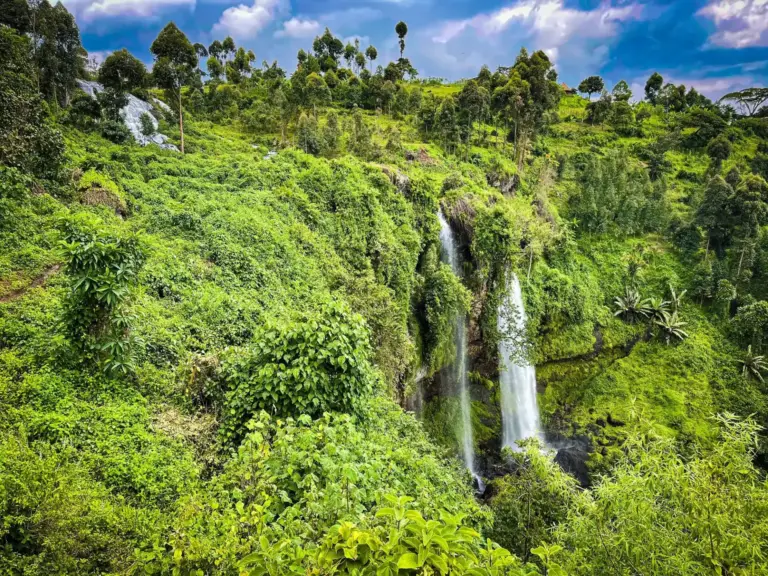
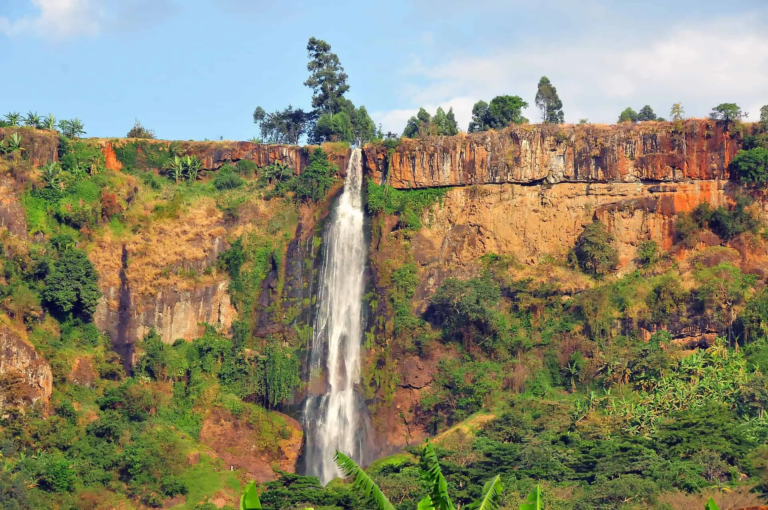
Uganda grows both Arabica and Robusta, and the clearest place to see the difference is the terraced slopes around Sipi Falls on the edge of Mount Elgon National Park, where Bugisu Arabica has been grown on hand-built terraces since colonial-era agricultural schemes introduced the crop. The Bugisu Cooperative Union runs tours through picking, processing and tasting, and visitors typically select ripe red cherries alongside local farmers, watch the pulp removed and the beans fermented and washed, then follow the same beans through hulling, sorting, and finally hand-roasting over an open fire before grinding and tasting several cups side by side.

Uganda’s Robusta belt
Away from Elgon’s Arabica terraces, central and western Uganda grow the country’s other major variety: Robusta, native to Uganda’s forests and grown widely around Masaka and the Ankole region near Mbarara. Robusta plants a stronger, more bitter cup and a higher yield per tree than Arabica, and Uganda remains one of Africa’s largest Robusta producers, most of it destined for instant coffee and espresso blends rather than the specialty cafes that buy Bugisu Arabica.
Rwanda’s coffee cooperatives
Rwanda’s coffee industry was almost entirely rebuilt after 1994, and cooperative-run washing stations across the country’s hillsides, particularly around the southern province near Huye, now produce some of the specialty market’s most consistent, fully traceable Arabica. Cooperative tours generally follow the same picking-to-cupping structure as Uganda’s, but with a stronger emphasis on the post-genocide rebuilding story: many of the cooperatives were formed specifically to give small farmers, often women-led households, a stable route to export markets and fairer prices than they could get selling cherries individually.
Tanzania’s Kilimanjaro slopes
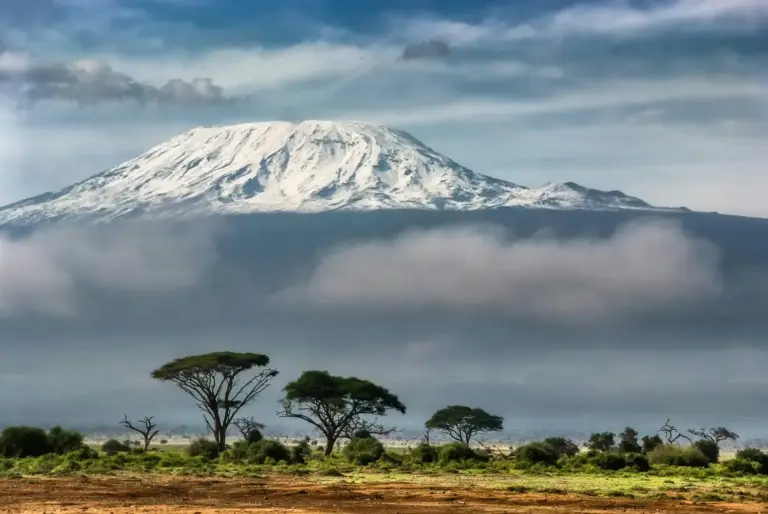
Coffee has grown on Kilimanjaro’s lower slopes since German colonial plantations were established there in the late 1800s, and the volcanic soil and altitude around Moshi still produce well-regarded Arabica today, much of it grown by smallholders on mixed farms alongside bananas rather than on large single-crop estates. Tours here often combine a coffee walk with a broader look at Chagga homestead farming, since coffee is typically one crop among several on a Kilimanjaro-area smallholding rather than the sole focus of the land.
What a coffee tour involves
Across all three countries, the core experience is similar: a walk through the coffee trees to see ripe cherries on the branch, hands-on picking and pulping, a look at drying beds or fermentation tanks, and a roasting demonstration, usually finishing with a tasting of two or three different roasts or origins side by side. Tours run two to four hours on average and require no special fitness, since coffee is grown on gentler slopes than a mountain trek would use, though Sipi Falls’ terraced hillsides do involve some walking on uneven ground.
Combining coffee with the rest of your itinerary
Coffee tours work naturally as a half-day stop rather than a dedicated multi-day booking. Sipi Falls pairs well with a broader Mount Elgon hiking stop or a stopover between Jinja and Kidepo Valley; Rwanda’s cooperatives work as an add-on around Kigali before or after gorilla trekking; and Kilimanjaro-area coffee farms slot easily into an acclimatisation day before or after a Kilimanjaro climb.
Arabica versus Robusta
The two species grown across the region suit different altitudes and produce very different cups: Arabica needs cooler, higher elevations above roughly 1,400 metres, which is why it dominates on Mount Elgon’s slopes and Kilimanjaro’s foothills, while Robusta tolerates lower, hotter, more humid conditions and grows more easily across Uganda’s central plains. Arabica generally commands a higher price and a more delicate, acidic flavour profile prized by specialty roasters, while Robusta’s higher caffeine content and fuller body make it a mainstay of instant coffee and traditional espresso blends, a distinction most tours make a point of explaining and letting visitors taste side by side.
From cherry to cup
What looks like a single “coffee bean” on a supermarket shelf starts as two seeds inside a red cherry, and the steps a tour walks through, from selecting only fully ripe cherries, to pulping, fermenting to strip away the surrounding mucilage, washing, sun-drying on raised beds, then hulling away the parchment layer before roasting, are the same steps that separate a well-processed batch from an inconsistent one. Seeing the full chain in a single morning gives most visitors a clearer sense of why coffee quality varies so much than any amount of reading about it beforehand would.
Best time to visit
Coffee is harvested at different times depending on altitude and rainfall pattern, but tours run year-round regardless of harvest timing, since cooperatives keep dried, stored beans on hand for processing and roasting demonstrations even outside the picking season. A dry-season visit simply makes the walk through the trees more comfortable underfoot.
From cherry to cup
A coffee visit follows the bean through every stage. You pick ripe cherries from the bush, pulp and wash them, spread the beans to dry in the sun, hull and roast them over a fire, then grind and brew a cup that tastes more vivid than anything from a packet. Growers explain how altitude, shade and rainfall affect the flavour, and many visits end with a tasting where you can compare different roasts.
Coffee growing areas are also beautiful so a tour often becomes a walk through hills, banana groves and village paths. Buy beans directly from the cooperative if you can, since that supports farmers and gives you a gift that carries the memory of the place home.
Planning your coffee experience
Tell us which country’s coffee region fits your route, and we will build a half-day stop into your itinerary alongside whatever else is already on your plan for that day.