Key facts
- Main forest: Nyungwe National Park in the south west
- Also: Cyamudongo forest on the edge of Nyungwe, and a small group at Gishwati Mukura
- Time with the chimps: One hour once the group is found
- Terrain: Steep, wet mountain rainforest
- Permits: Limited, issued in advance and non-refundable
- Getting there: Drive from Kigali or Huye, or fly to Kamembe
Chimpanzees in Nyungwe
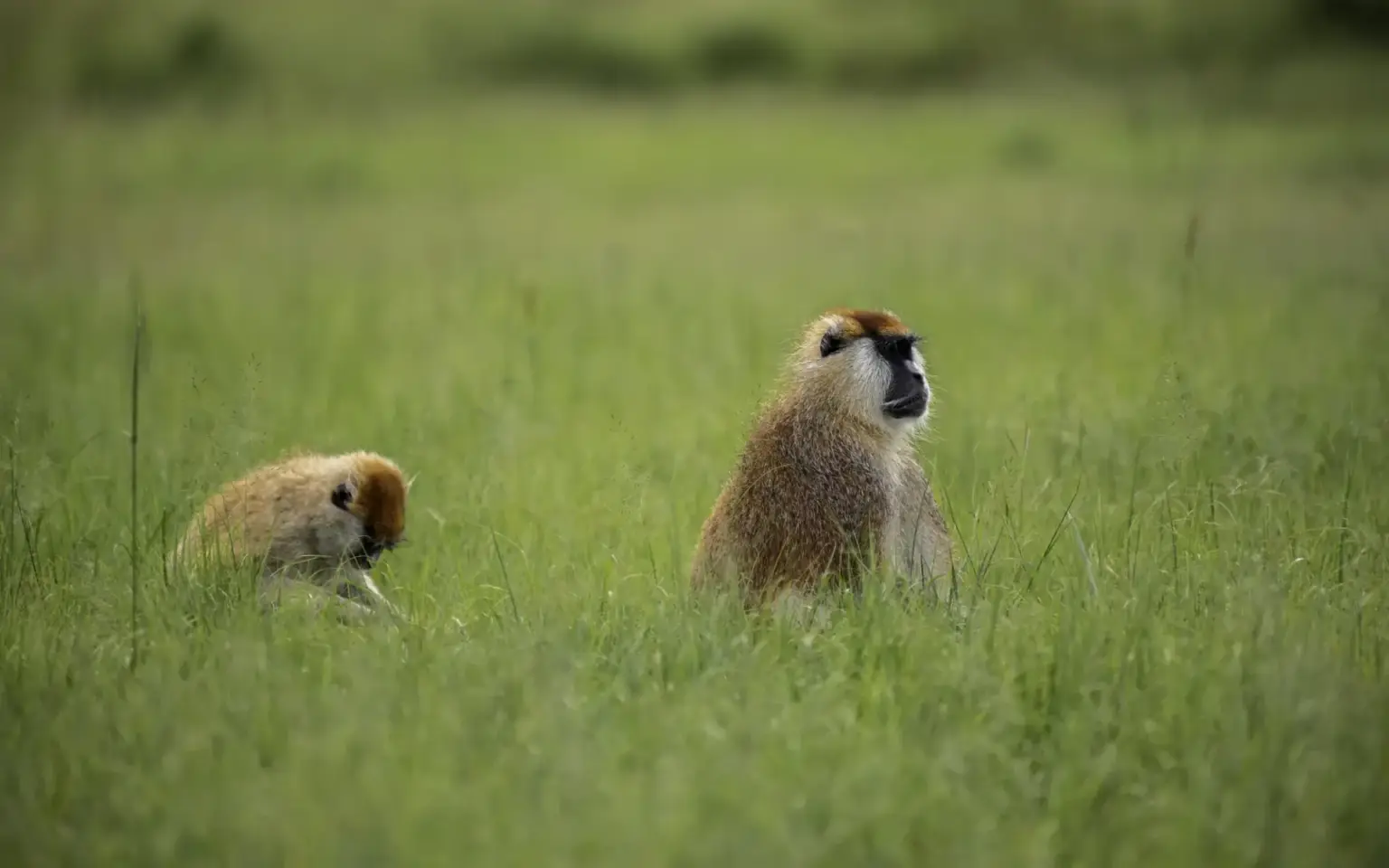
Nyungwe is home to more than a dozen primate species, including chimpanzees, colobus monkeys, blue monkeys and L’Hoest’s monkeys, along with hundreds of bird species. Chimpanzees roam widely here so tracking depends on early starts and skilled trackers who follow the group by sound and sign.
Sightings are less predictable than in Kibale, which is why we recommend allowing a spare night and combining the trek with other forest activities. Many groups succeed, and the setting alone makes the morning worthwhile.
Cyamudongo and Gishwati Mukura
Gishwati Mukura National Park holds a small chimpanzee population in forest recovering from heavy clearing. Cyamudongo, a small forest fragment at the edge of Nyungwe, offers a more compact tracking experience in a different setting. Ask us which suits your fitness, time and interests.
How the trek works
You meet before dawn at the trailhead and are briefed by rangers. Trackers radio the location of the group, and you hike through thick forest, often downhill first and uphill on the way back. Once found, you stay for one hour, watching quietly from several metres away.
Waterproof boots, a rain jacket, long trousers and a porter make the day easier. Fitness matters more here than in most forests so train with hill walks before you travel.
The wider Nyungwe experience
Nyungwe also has a famous canopy walkway high above the forest floor, waterfalls, tea estates on its fringe and a long list of Albertine Rift endemic birds. Staying two nights lets you enjoy chimps, canopy and monkeys without hurry. See our guide to chimpanzee tracking for how the countries compare.
Combining with gorillas and Lake Kivu
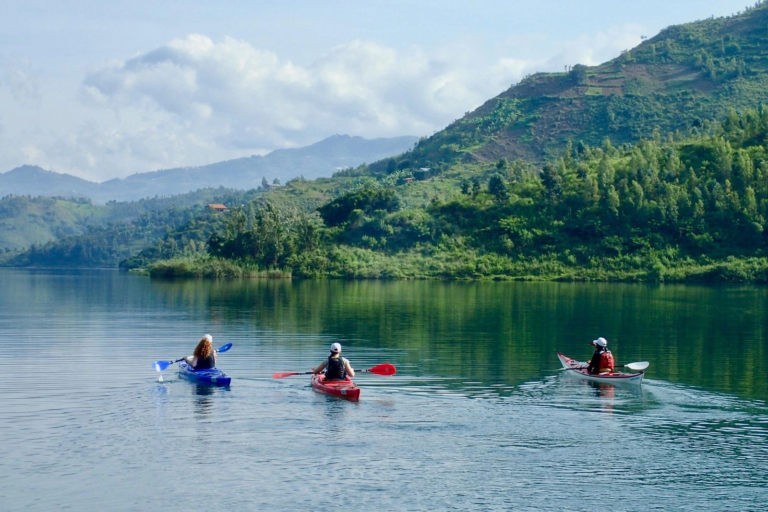
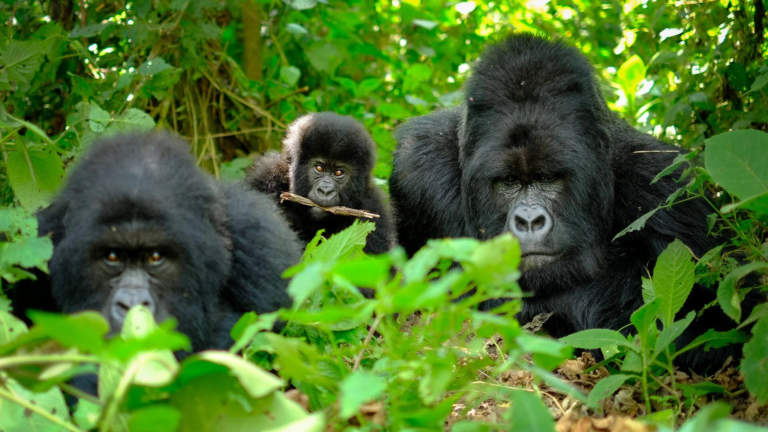
A classic route runs from Kigali to Volcanoes National Park for gorillas, then south along Lake Kivu to Nyungwe. Seven to ten days allows time for all of these. Browse our Rwanda safaris for routes, and remember that permits are non-refundable once issued.
When to go and how to plan the day
Nyungwe is wet at any time of year. Pack for rain whatever the month. The drier months, roughly December to February and June to September, give firmer trails and clearer views, while the wetter months make the forest lush and the slopes slippery. Mornings are cold and misty at this altitude, and the sun can feel strong when the cloud lifts.
We plan the trek for the morning after an overnight stay near the forest, so that you start rested and can leave before dawn. A spare day in the plan allows for a second attempt if the chimpanzees prove hard to find, and the canopy walkway and monkey walks fill the time well.
What to pack for the forest
Waterproof boots with ankle support are the most important item, followed by long trousers, a warm layer, a rain jacket and gloves. A walking stick helps on steep, slippery slopes, and a porter can carry your pack. Bring a refillable water bottle, snacks and insect repellent.
A camera that copes with low light is useful, and a lens cloth deals with mist. Keep electronics in a dry bag and carry a small towel and a spare shirt to change into after the walk.
A sample route with gorillas and Lake Kivu
A typical eight day route flies into Kigali, spends a day on memorials and markets, drives to Musanze for gorilla trekking in the Volcanoes National Park, continues to Lake Kivu for rest and a boat trip, then goes on to Nyungwe for the canopy walk and chimpanzee tracking before returning to Kigali. The route shows three very different faces of Rwanda in one trip.
Add a day in Akagera National Park for a savannah safari, or cross to Uganda for Bwindi. Tell us your dates and we will shape the plan around them.
Plan your Rwanda chimpanzee tracking safari
Tell us your dates and fitness level, and we will secure permits and build the trek into a wider Rwanda route. Start with Plan My African Safari, message us on WhatsApp at +256 701 243 304, or email [email protected].
Rwanda chimpanzee tracking safaris
6-Day Rwanda Volcanoes & Lake Kivu Wellness Safari
6-Day Rwanda Primates & Culture Safari
 Multi-Country
9 Day Volcanoes to Chimps: Rwanda and Uganda Crossing
 Multi-Country
17 Day Uganda, Rwanda and Pemba Island Safari and Sea
 Multi-Country
22 Day Uganda, Rwanda and Virunga Congo Grand Expedition
 Multi-Country