Lions are the animal most travellers picture when they imagine a safari, and a lion safari in East Africa is one of the most dependable wildlife experiences you can plan. Lions are social, living in prides, which makes them easier to find and more interesting to watch than a solitary cat. This guide explains how lion prides live, where to see lions in Kenya, Tanzania, Uganda and Rwanda, where to find the famous tree-climbing lions and how to plan a safari that gives you the best chance of great sightings.
How lion prides live
A pride is usually built around a group of related lionesses and their cubs, with one or a few adult males. The lionesses do most of the hunting, often working together, while the males defend the territory. Lions sleep for much of the day, commonly 16 to 20 hours, and hunt mostly at dusk, at night and in the early morning, so the best times to watch them are early and late.
A male lion's roar can carry for several kilometres across the savanna and is one of the defining sounds of a safari night.
Best places to see lions in Kenya
The Maasai Mara is one of the strongest lion areas in Africa, with several well-known prides in the reserve and the surrounding conservancies. The open plains make sightings easy, and during the Great Migration the lions gather to hunt. Amboseli, Samburu and Tsavo also have lions, though Tsavo's sightings can be harder because of the denser bush.
Best places to see lions in Tanzania
The Serengeti holds one of the largest lion populations in Africa, and the Seronera area is known for reliable sightings. The Ngorongoro Crater has high lion densities in a small, easy-to-search area. Lake Manyara and Tarangire add variety, including the tree-climbing lions of Manyara.
Lions in Uganda and Rwanda
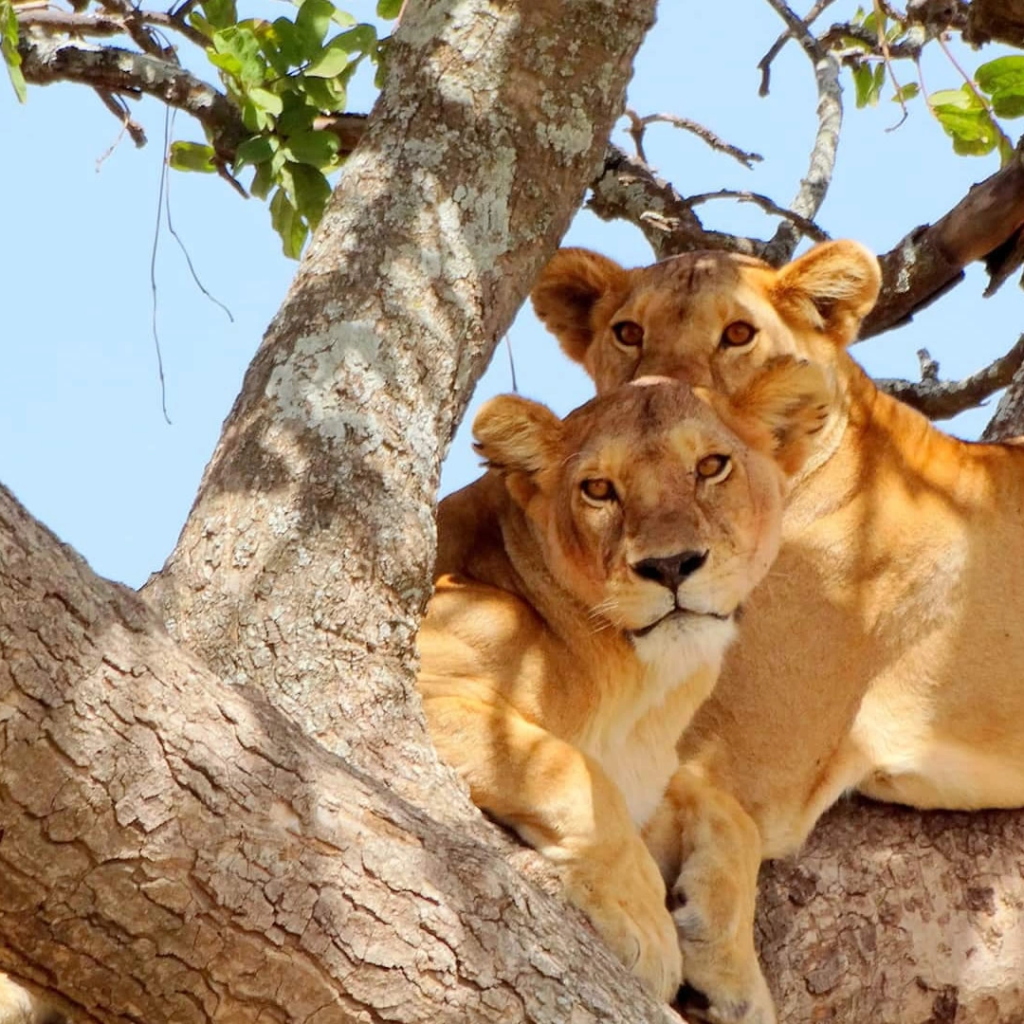
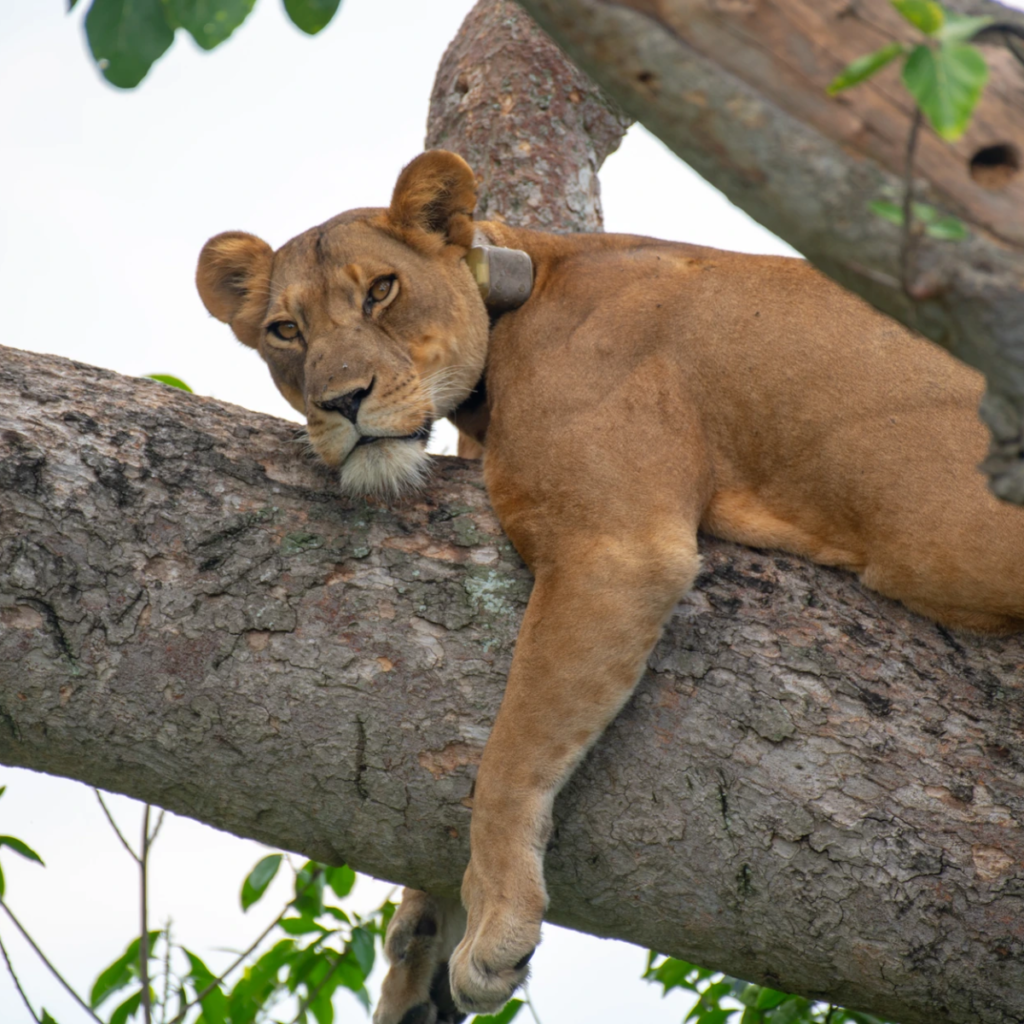
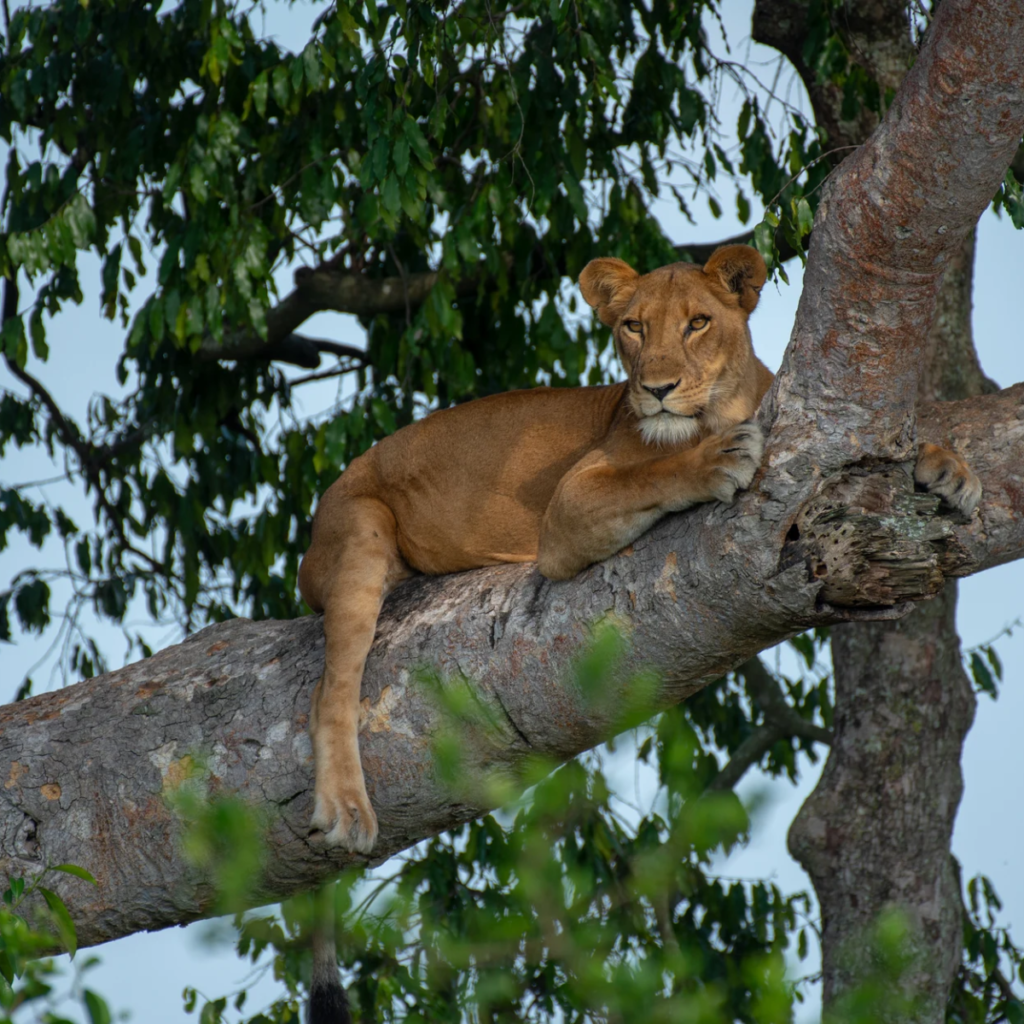
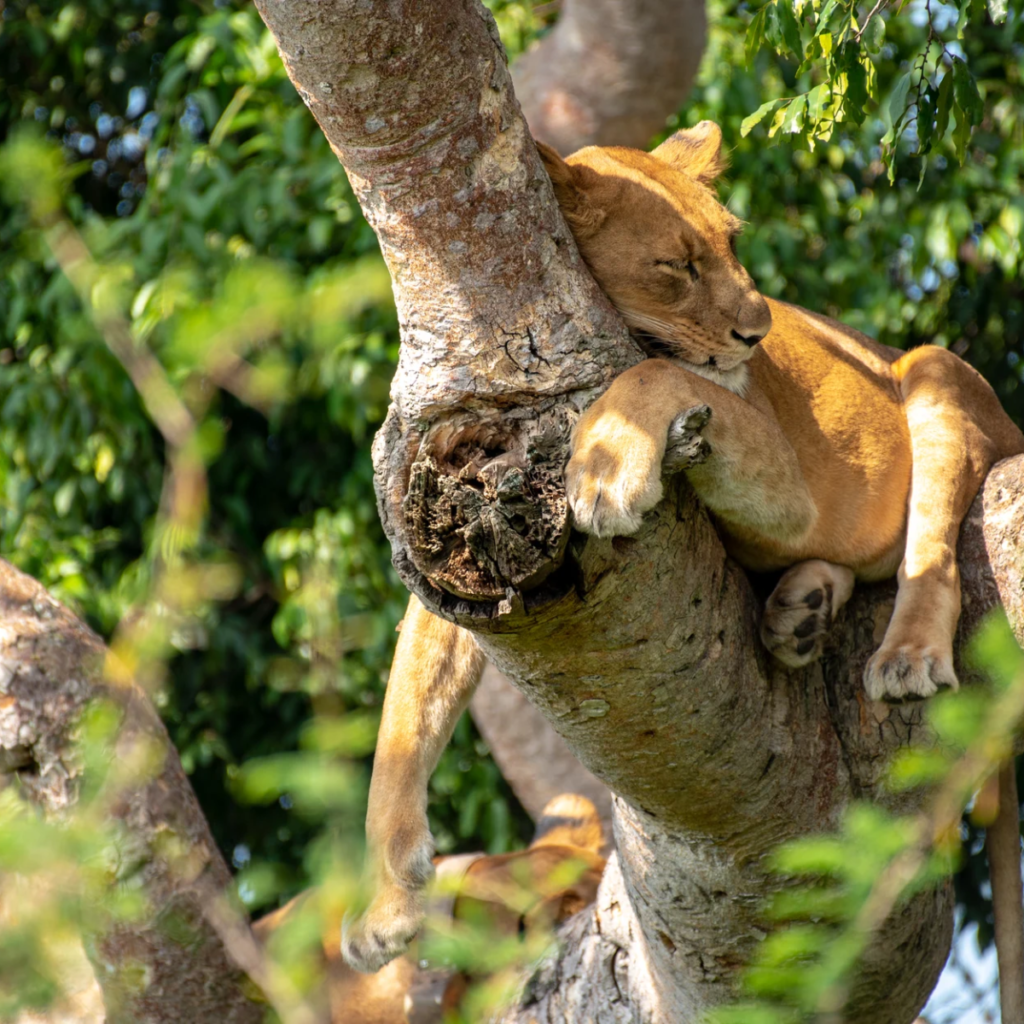
In Uganda, Queen Elizabeth National Park, Murchison Falls National Park and Kidepo Valley all have lions, and Queen Elizabeth is especially famous for the tree-climbing lions of the Ishasha sector. In Rwanda, lions were reintroduced to Akagera National Park in 2015 and the park now has a growing, resident population, making Akagera a rewarding add-on to a gorilla safari.
Tree-climbing lions
Most lions rest on the ground, but in a few places prides habitually climb trees. The best known are the Ishasha sector of Queen Elizabeth National Park in Uganda and Lake Manyara National Park in Tanzania. The reasons are debated: some say it is to escape the heat and insects, and others to get a better view of prey. Whatever the reason, a pride draped across a fig tree branch is one of the most memorable sights in East African safari. Read more in our tree-climbing lions guide.
Lion cubs, family life and territory
Cubs are born in a hidden den and spend their first weeks out of sight. When they join the pride, they spend much of their time playing, a behaviour that teaches hunting skills. Lionesses often raise cubs together, a system called communal care. Males hold territory for a few years before younger males challenge them, and a change of males can bring dramatic upheaval to a pride. Watching these dynamics over several days is one of the most absorbing parts of a lion safari.
Lion behaviour to watch for
Look for cubs playing, a pride resting in the shade, lionesses stalking and males patrolling territory. Each sighting teaches you something about family bonds and the savanna food chain. A guide who reads body language will tell you when a pride is about to hunt, move or settle, and that knowledge is the difference between a quick look and a great sighting.
Best time for a lion safari
Lions can be seen all year, but the dry season, roughly June to October and January to February, is the easiest because animals gather near water and the grass is shorter. Early morning and late afternoon drives are best. Allow at least two or three days in a good lion area to improve your chances.
Lion safari tips
Choose a camp close to lion territory, set out early and stay late, and ask your guide to spend time with a pride rather than rushing between sightings. Bring binoculars and a camera with a long lens, and wear neutral colours. A calm, patient approach gives the best view of lion behaviour.
Lion conservation
Lions are listed as vulnerable, and their range has shrunk in Africa. East Africa remains a stronghold, thanks to well-managed parks and conservancies. Park fees and responsible tourism fund rangers, monitoring and community programmes that help lions and the people who live beside them. Choosing operators who follow park rules and support conservation helps keep lion country wild.
Planning a lion safari
We combine lion areas with other highlights so you also see elephants, buffalo, leopards and the wider wildlife. We keep a respectful distance, follow park rules and choose guides who put the animals first. Tell us your dates and what you hope to see, and we will build a route around the best lion country.
At a glance
- Maasai Mara and Serengeti for strong lion populations
- Ishasha and Lake Manyara for tree-climbing lions
- Akagera for lions in Rwanda
- Go early and late for the best action
Keep exploring
- Tree-climbing lions
- The Big Five
- Leopards
- Maasai Mara National Reserve
- Serengeti National Park
- Queen Elizabeth National Park
- Akagera National Park
- Wildlife safaris
- Uganda safaris
Plan a safari around Lions in East Africa: Where to See Lions and How Prides Live
Tell us your dates and what you most want to see, and we’ll time your safari to match it as closely as nature allows. Talk to us, or browse our safari packages to see how a migration-timed itinerary is put together.
Lions in East Africa: Where to See Lions and How Prides Live