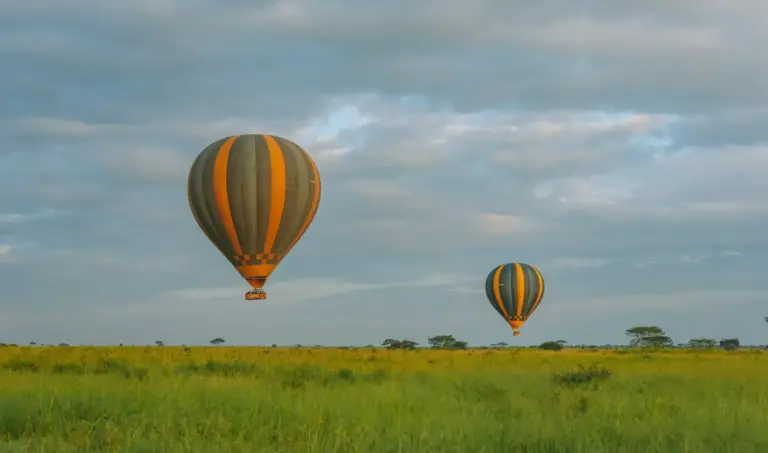
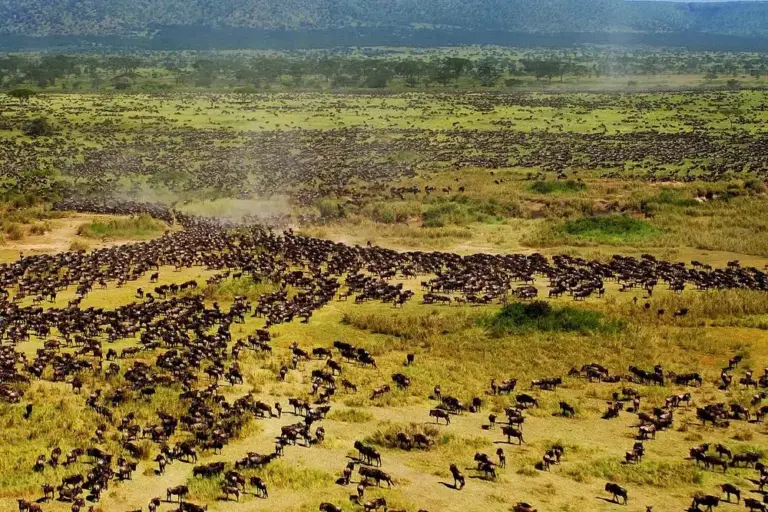
The Great Migration is the largest overland movement of animals on Earth, and planning a safari around the wildebeest migration is one of the most rewarding choices you can make. About 1.5 million wildebeest, with around 200,000 zebra and smaller numbers of gazelle and eland, follow the rains in a huge circle between Tanzania's Serengeti and Kenya's Maasai Mara. There is no fixed calendar, but the year has a clear shape, and this guide shows where the herds are in each season, when to see calving and Mara River crossings, and how to choose between Tanzania and Kenya.
What is the Great Migration?
The Great Migration is a continuous, year-round circuit rather than a single event. The herds move in search of fresh grass and water, driven by the rains, and travel an estimated 800 to 1,600 kilometres a year. Predators follow, which is why the migration is also one of the great wildlife dramas of the world.
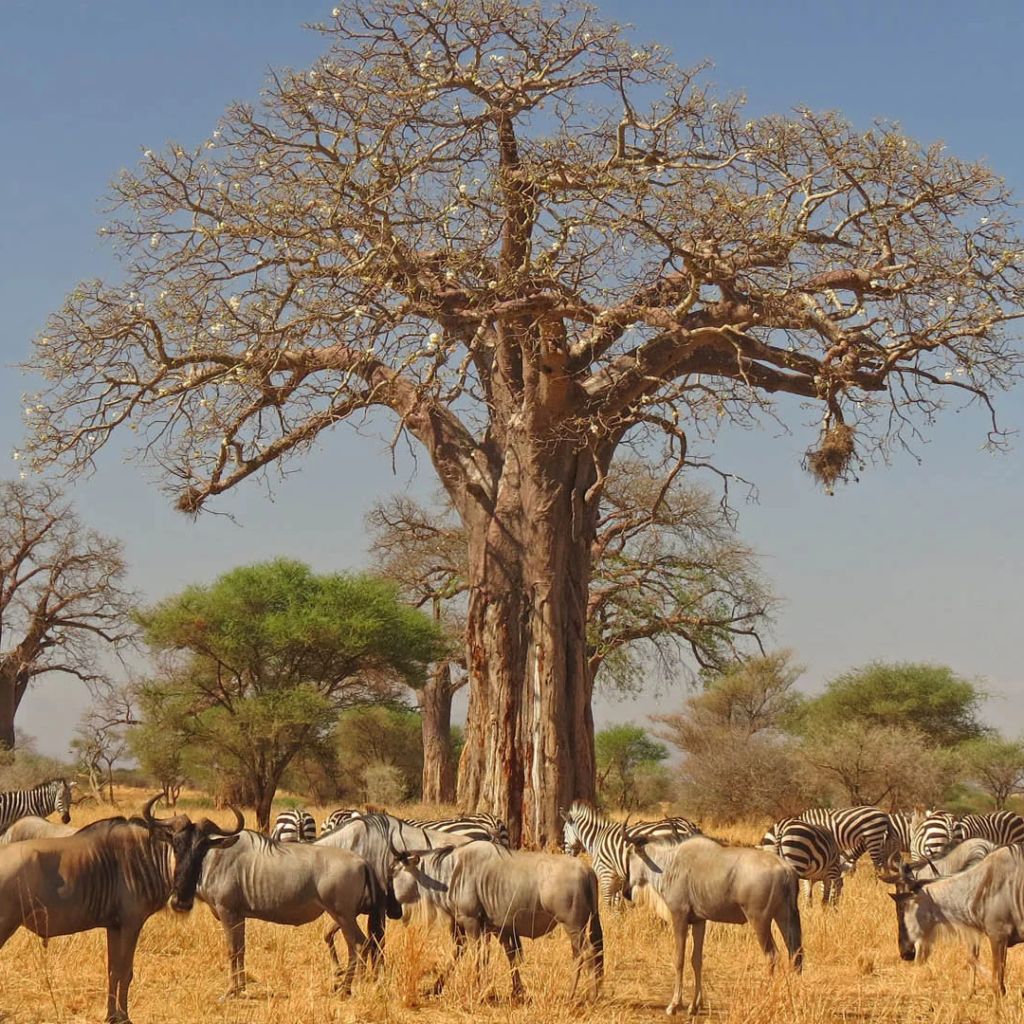
The wildebeest are the stars, but zebra, Thomson's gazelle and eland travel with them, and lions, hyenas, cheetahs and crocodiles all depend on the movement. If you want to understand the animal behind the story, read our guide to the wildebeest.
January to March: calving season in the southern Serengeti
From roughly January to March the herds gather on the short-grass plains of the southern Serengeti and the Ndutu area. In a few weeks around half a million calves are born, and predators gather to hunt them. This is a period of intense wildlife action, and the open plains make it easy to watch.
Choose this season if you want newborn animals and big-cat sightings in Tanzania. It is also a quieter time than the peak crossing months in terms of visitors.
April to June: the move north and west
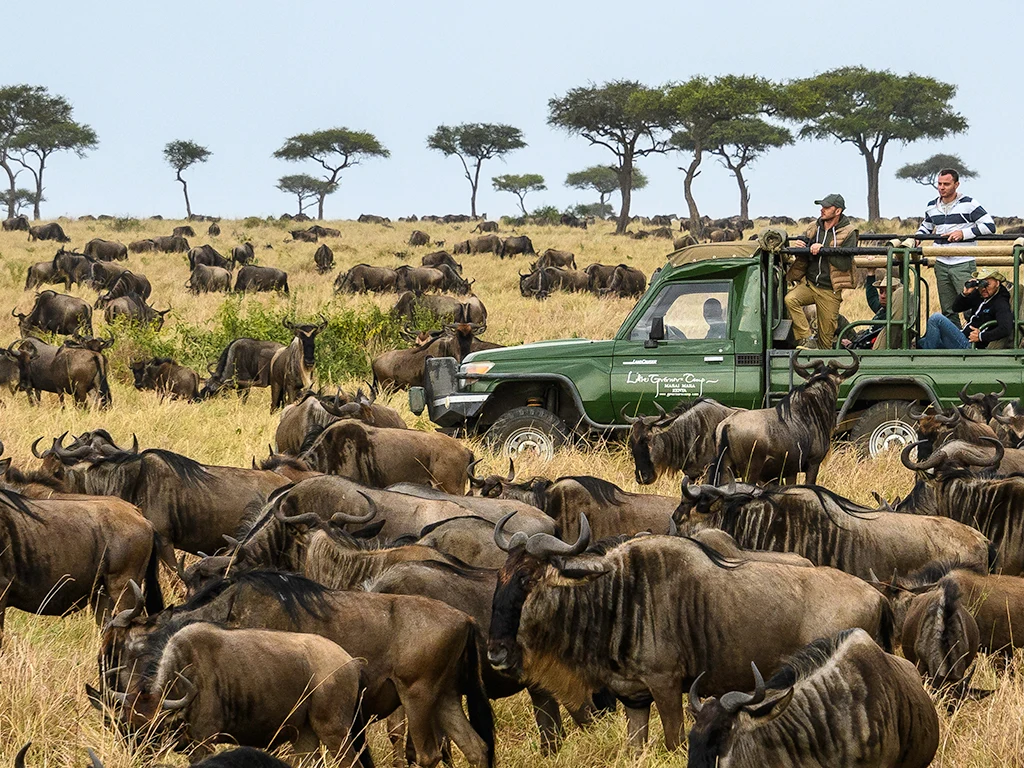
As the rains arrive the herds begin to move north and west through the central and western Serengeti. Dense columns of animals string across the plains, and the Grumeti River becomes a challenge, with smaller river crossings in the western corridor, often around May and June.
This is a green, dramatic season with fewer crowds, though rain can affect roads and camp access. Plan with flexibility and a guide who knows where the herds are.
Where to stay for the Great Migration
The herds shift, so the best camp depends on the month. Camps in the southern Serengeti and Ndutu suit calving season. Camps in the central and western Serengeti suit April to June. Camps in the northern Serengeti and the Maasai Mara conservancies suit July to October. Mobile and seasonal camps can move with the herds, while permanent lodges give comfort and reliability. We match the camp style to your budget and flexibility.
Photography and what to bring
The migration rewards a long lens, a fast shutter speed and plenty of memory. Bring binoculars, a hat, sunscreen, layers for cool mornings and a dust cover for your camera. Mornings and evenings give the best light, and long drives are part of following the herds.
July to October: Mara River crossings and the Maasai Mara
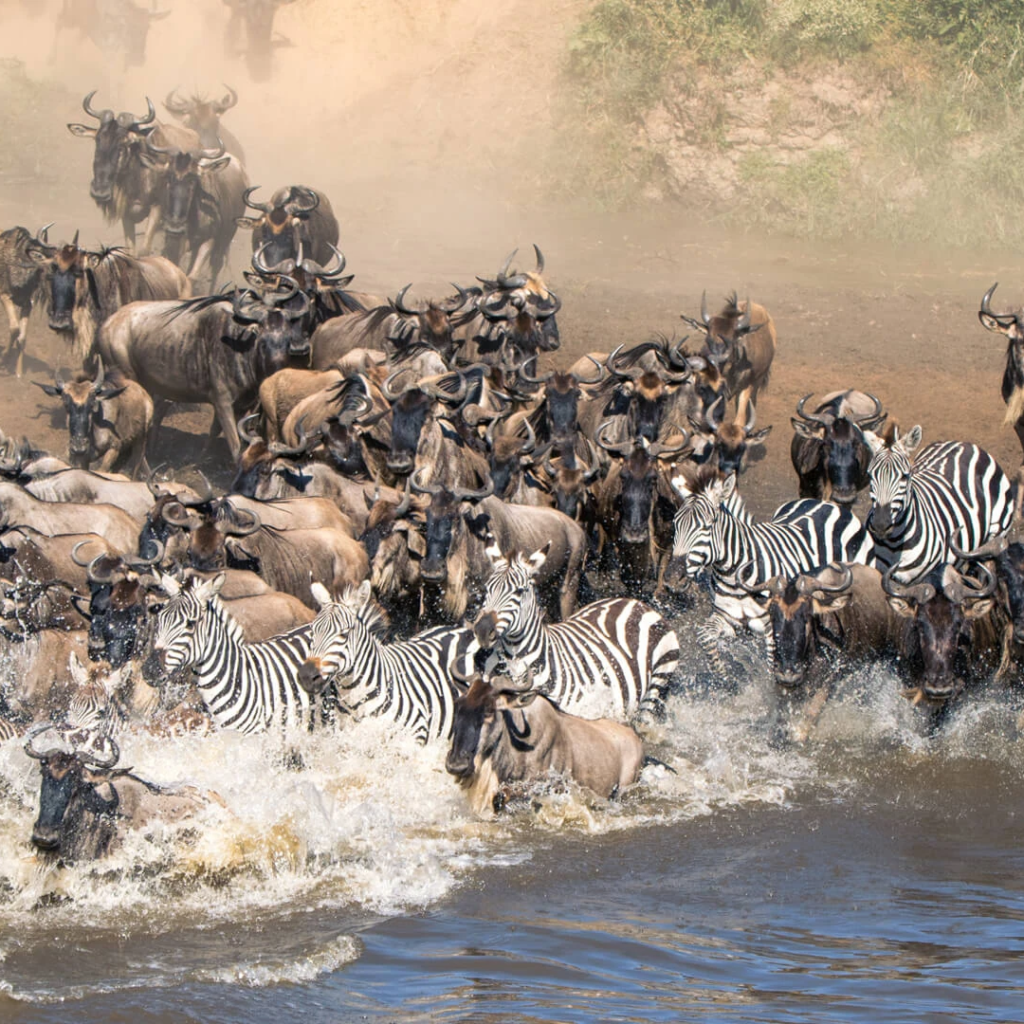
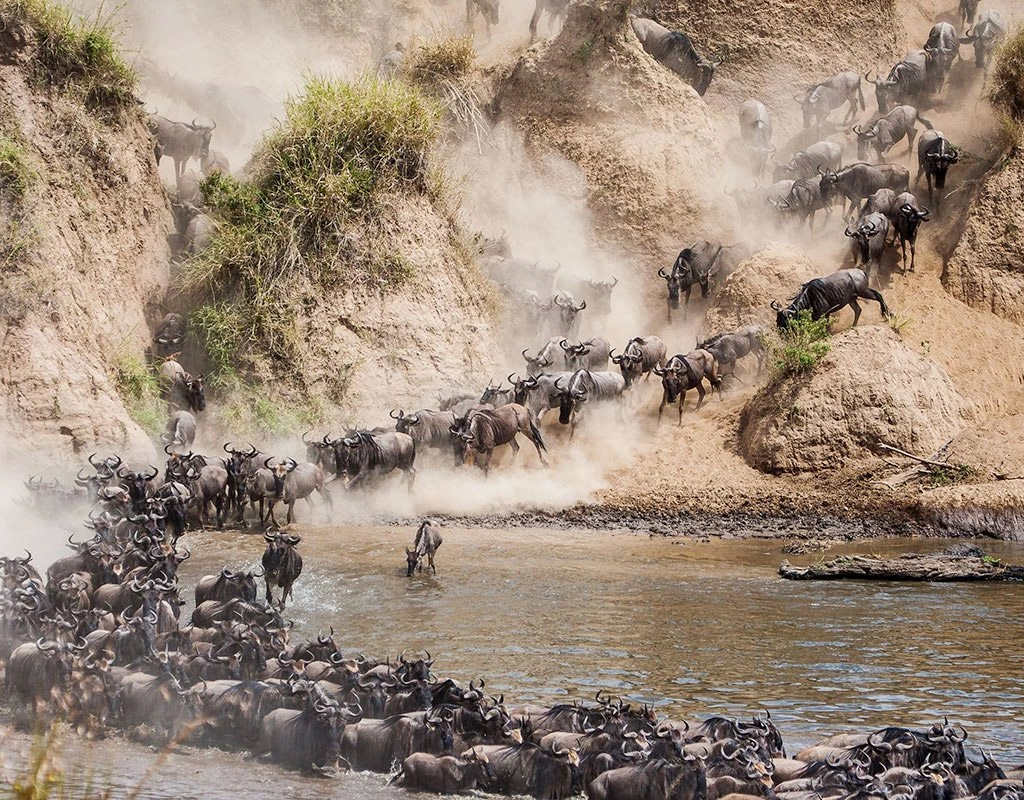
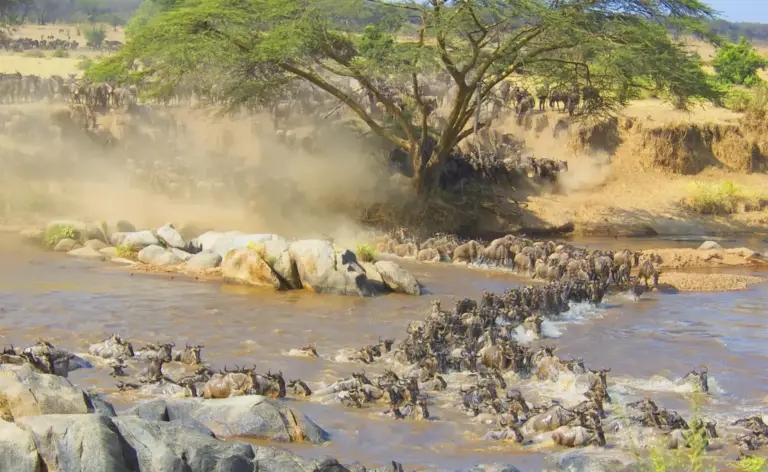
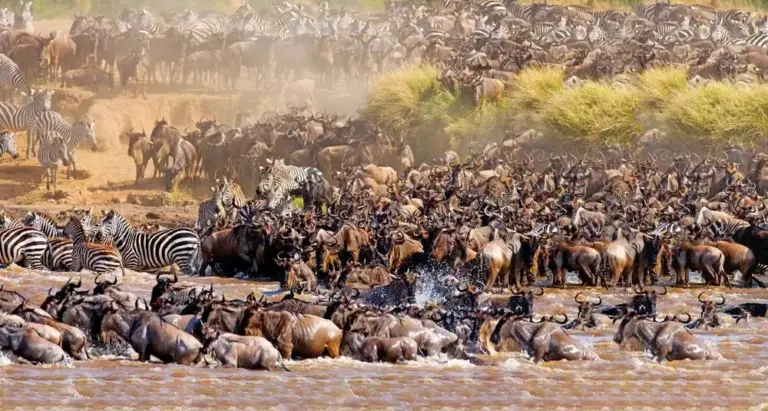
From roughly July the herds reach the northern Serengeti and the Mara River, then cross into Kenya's Maasai Mara. This is the most famous part of the Great Migration, because the river crossings are dramatic, with crocodiles waiting and herds hesitating on the banks. You can read more in our Mara River crossings guide.
Crossings cannot be scheduled, and a herd may wait for hours before committing. The most reliable window in the Mara is roughly July to October, but timing shifts from year to year with the rain.
November to December: the return south
As the short rains return, the herds turn south again, moving back through the northern and eastern Serengeti towards the southern plains. It is a quieter, greener period and a good time for wildlife in general, with fewer vehicles and lush landscapes.
Tanzania or Kenya for the Great Migration?
Tanzania has herds in the country for more of the year, plus the calving season. Kenya offers the best-known river crossings and the resident Big Five wildlife of the Maasai Mara. If you can, combine both on one safari, because the herds cross between the two countries and a combined route follows more of the circle.
Read our dedicated guides to the Great Migration in Tanzania and the Great Migration in Kenya for camp areas, seasons and planning details.
Common questions about timing
Travellers often ask whether the migration can be seen all year. The herds are always somewhere in the ecosystem, but what you see changes by month: calving in the south, columns in the centre, river crossings in the north and the return south at the end of the year. Rain can shift timing by weeks, so a flexible plan and a few extra nights improve your chances.
How we plan a Great Migration safari
We choose the experience first, for example calving in the south or river crossings in the north. Then we match camps and lodges to where the herds are likely to be, keep the route flexible and plan extra nights when the herds are hard to predict.
Book early for July to October, when the best camps fill quickly. Tell us your dates and we will propose a route, and we can combine the migration with gorilla trekking or a beach stay.
At a glance
- Calving: January to March, southern Serengeti and Ndutu
- Western Corridor and Grumeti: roughly April to June
- Mara River crossings: roughly July to October
- Combine Tanzania and Kenya to follow more of the circle
Keep exploring
- The Great Migration in Tanzania
- The Great Migration in Kenya
- Mara River crossings
- The wildebeest
- Serengeti National Park
- Maasai Mara National Reserve
- Tanzania safaris
- Kenya safaris
- Wildlife safaris
Plan a safari around The Great Migration: Where the Herds Are and When to Go
Tell us your dates and what you most want to see, and we’ll time your safari to match it as closely as nature allows. Talk to us, or browse our safari packages to see how a migration-timed itinerary is put together.
The Great Migration: Where the Herds Are and When to Go