The Great Migration is the year-round movement of well over a million wildebeest, with zebra and gazelles around the Serengeti and Masai Mara ecosystem in search of fresh grass. This guide to the Great Migration by month explains where the herds usually are, from calving in the south to the Mara River crossings in the north and gives an honest note on how much the timing varies with the rains.
How the migration works
The herds do not follow a calendar. They follow rain and fresh grass, moving in a rough clockwise circle between the southern Serengeti, the central and western areas, the northern Serengeti and the Masai Mara in Kenya and back again. Some animals are always in the ecosystem so there is no month without wildlife.
The monthly pattern below is typical. In any given year, the herds may be a few weeks early or late or take a different route. This is influenced by rains which tend to start earlier or later. Nobody can promise where the herds will be on a given day. We plan with flexibility and tell you honestly what is likely.

January to March, calving in the south
From about January to March the herds gather on the short grass plains of the southern Serengeti and the Ndutu area. Around half a million calves are born within a few weeks, often with the peak in February. Many calves can stand and run within minutes of birth.
Predators come for the easy prey so lions, hyenas and cheetahs are active. This is a very good time for photography with green plains and dramatic skies. Lodges in the south fill early, so plan well ahead. See our Serengeti National Park guide for the regions.
April and May, moving north and west
As the rains fall and the southern grass is eaten down, the herds begin moving north and west. In April and May, they often pass through the central Serengeti and head towards the western corridor. These are the long rains so the park is green, quiet and good value, though some roads are slow and some camps temporarily close.
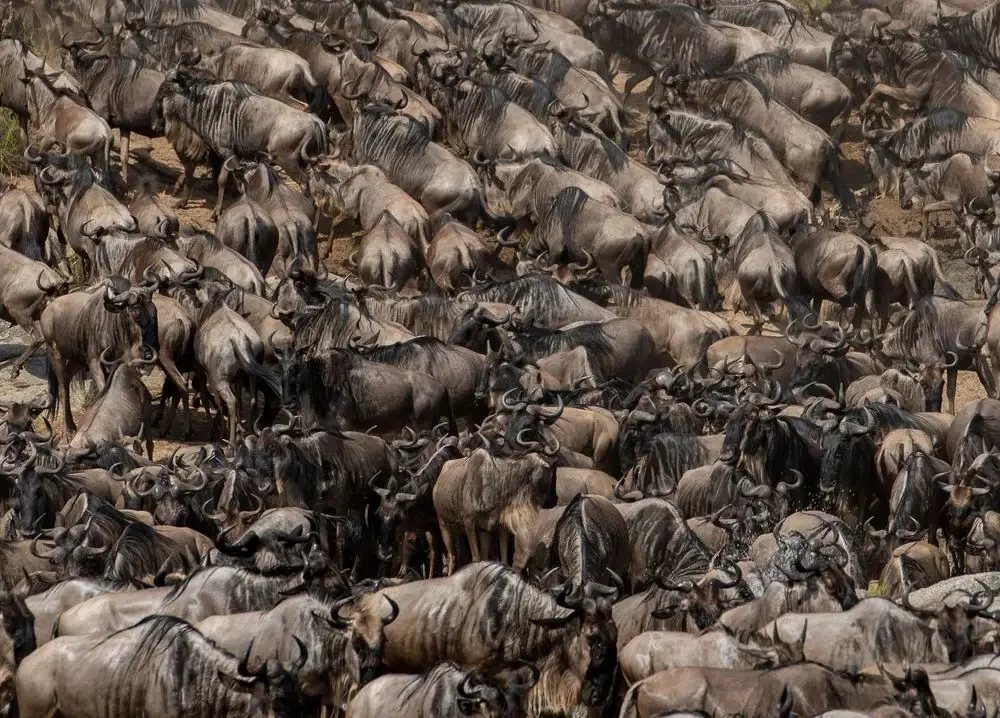
Mating season for wildebeest known as the rut, often falls around May and June, with bulls holding territories and calling loudly. It is a lively, noisy time for those who are willing to accept some rain.
June and July, the Grumeti River
In the western corridor the herds meet the Grumeti River which they must cross. The crocodiles here are large and crossings can be dramatic, though they are less predictable and less sustained than the Mara River crossings. Timing varies and some years the herds cross early or late.
Many travellers use the central Serengeti as a base in these months, since the herds can be north or west depending on the year. A good guide listens to the radio and checks where the herds are before the day starts. Our guide to the best time to visit Tanzania sets this against the rest of the year.
July to October, northern Serengeti and the Mara
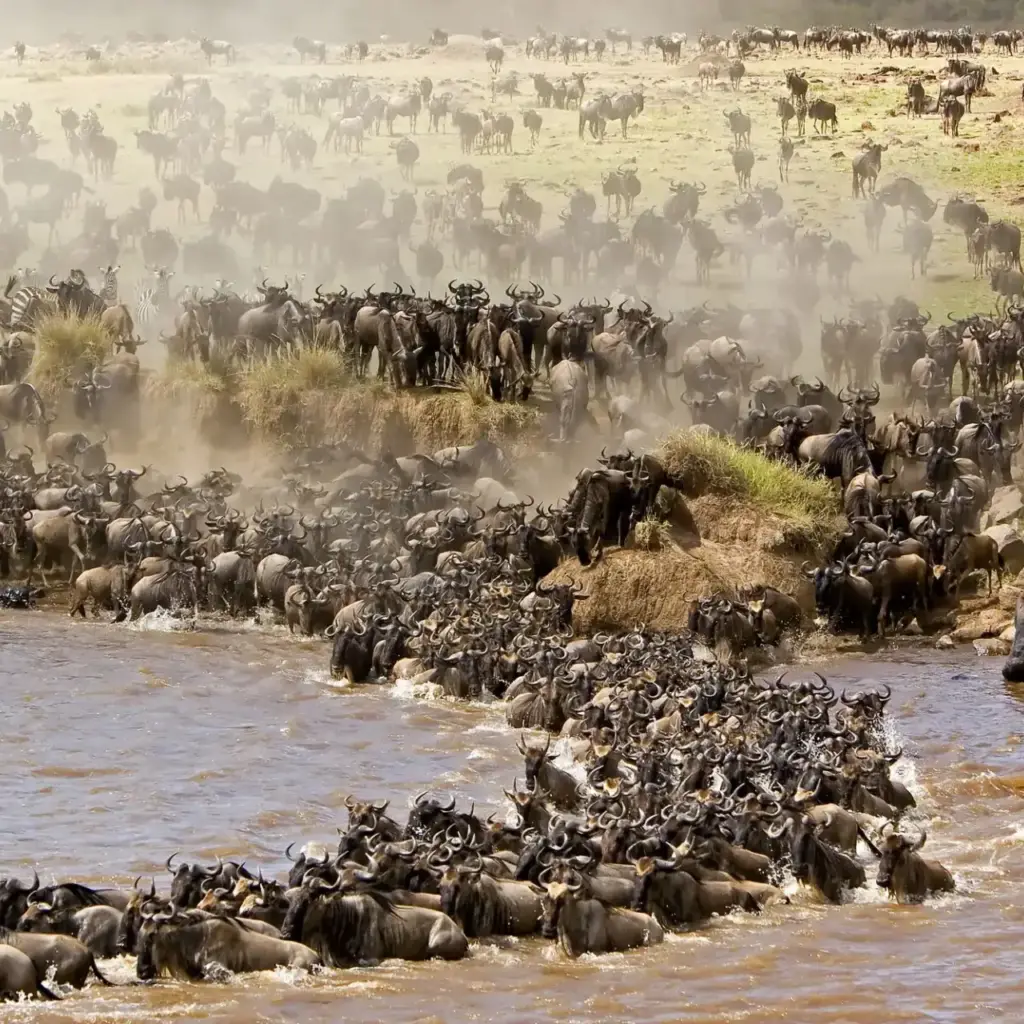
From about July, the vanguard of the herds reaches the northern Serengeti and the Mara River. They gather on the banks, wait and then cross, with crocodiles in the water and lions on the shore. The famous crossings can happen from about July to October and they can be repeated or quickly over, so patience is needed.
Some herds move on into the Masai Mara in Kenya, where crossings continue until the herds return south. If you want to see both sides, our Masai Mara guide explains the Kenyan side. Book early for these months as the best camps in the north fill a year ahead.
November and December, heading south
The short rains begin around November and the herds leave the Mara and the north and move south again through the eastern Serengeti. By December, many are returning to the southern plains and preparing for calving. It is a quieter time with fewer vehicles, green landscapes and good birding.
A wide spread of herds can be seen across the east and centre in these months. Lions and hyenas follow and the southern lodges begin to open for the new season.
Practical tips for planning around the migration
- Pick a region first, then pick the month rather than chasing the herds.
- Book early for July to October and for January to March.
- Be flexible since rain dates change from year to year.
- Spend at least three nights in each region you visit.
- Ask us about camps that move to follow the herds.
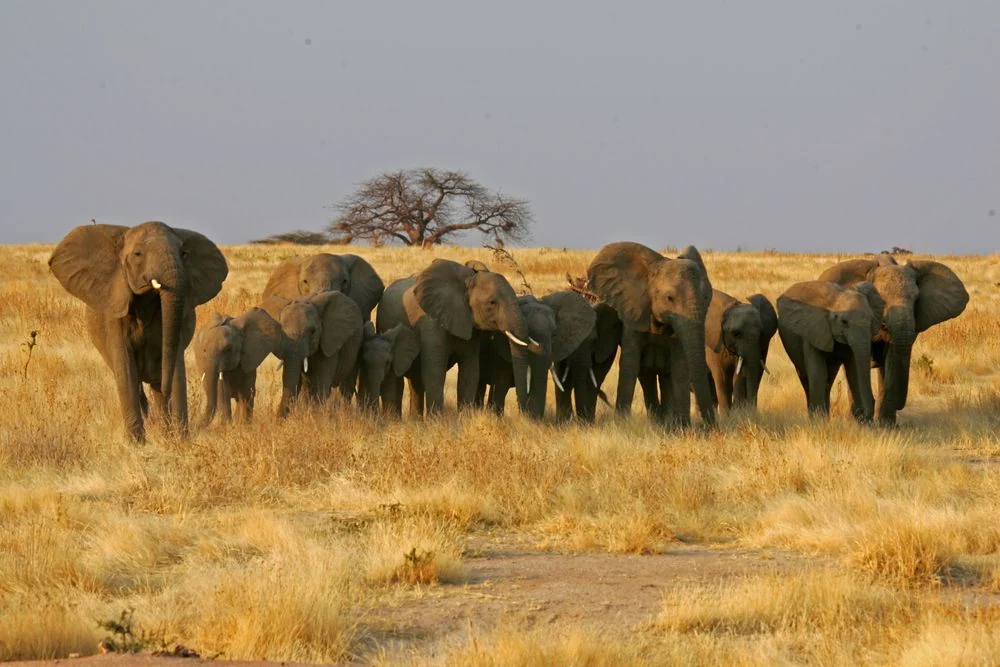
Pack layers, binoculars and a hat, and be ready for early starts. Whatever the month, the Serengeti has good wildlife viewing, with big cats, elephants and giraffes always present. Ask your guide to explain what the herds are doing that day and enjoy the whole landscape, not only the crossing.
We start with your dates, then choose lodges, guides and transport to suit you. We explain what is fixed and what can change and our team monitors and looks after the trip from the first message to the last transfer. Browse our Tanzania safaris, or tell us your plans on the Plan My Safari page.
Frequently asked questions
What is the Great Migration?
It is the yearlong movement of over a million wildebeest, with zebra and gazelles, around the Serengeti and Masai Mara ecosystem. The herds follow rain and fresh grass in a rough clockwise loop, so their location changes through the year.
When are the river crossings in the Serengeti?
The Mara River crossings usually happen between about July and October in the northern Serengeti, and the Grumeti River crossings come earlier, around June and July. Timing varies with the rains, and crossings cannot be guaranteed. Patience and flexible planning help.
When is the calving season?
Calving is usually from about January to March in the southern Serengeti and the Ndutu area, with February often the peak. Hundreds of thousands of calves are born in a few weeks. Predators are active then, and dates vary from year to year.
Is the migration there in every month?
Yes, the herds are in the ecosystem all year, but their location changes. Some months have dramatic events such as calving or crossings, while others are quieter. Wildlife viewing is good in every month, with big cats always present.
Can the Great Migration be missed?
Timing varies with the rains, so herds can be early or late and nobody can promise exact locations. You reduce the risk by choosing the region that suits your dates, staying three nights or more, and using a guide who tracks the herds each day.