
The forest at a glance
- Zanzibar’s largest area of remaining indigenous groundwater forest, on Unguja island
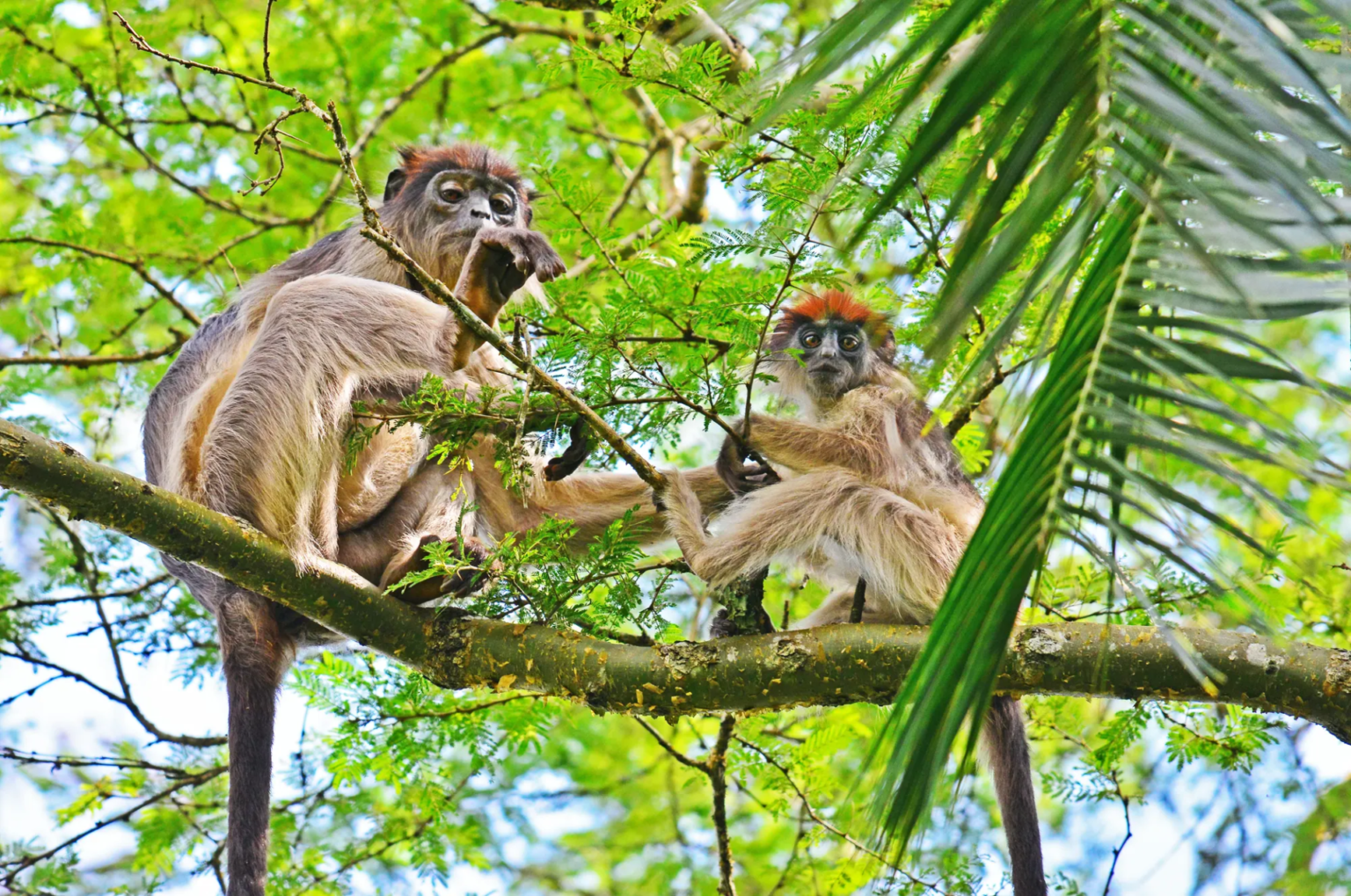
- Home to the endemic Zanzibar red colobus monkey, found only here
- Includes a mangrove boardwalk alongside the main forest trails
- Also shelters blue duikers, Sykes monkeys and a wealth of birdlife and butterflies
The Zanzibar red colobus
The red colobus population at Jozani was once reduced to a small, vulnerable group, but conservation efforts within the park have allowed numbers to recover, and habituated troops are now reliably seen along the forest trails. Guides lead short walks that bring visitors close to the monkeys while keeping a respectful distance, alongside sightings of blue duikers and, very occasionally, reports of the Zanzibar leopard, long thought extinct on the island.
The mangrove boardwalk
A separate raised boardwalk crosses a tidal mangrove swamp on the other side of the main road from the forest entrance, a section many visitors overlook despite it being included in the standard entrance ticket. The boardwalk offers views of crabs, mudskippers and fish moving through the mangrove roots, a contrasting ecosystem to the forest’s shaded canopy.
Things to do
- Guided walks to see the Zanzibar red colobus monkeys
- Crossing the mangrove boardwalk for a different ecosystem
- Birdwatching and butterfly spotting along the forest trails
Practical information
- Located roughly in the centre of Unguja island, easily reached from Stone Town or Zanzibar’s east coast resorts
- A guide is required and included with the entrance ticket
- Best combined with a wider Zanzibar itinerary covering the coast and Stone Town
Seeing the red colobus monkeys
Jozani is the best place in the world to see the Zanzibar red colobus, a monkey found nowhere else that lives mostly in the forest edge and in nearby gardens. Troops are used to people so guides can bring you within a few metres, but you must keep your voice low and never touch or feed them. Morning visits are quietest and give the best light, and the animals are often feeding in the lower branches. Look for the reddish back, black face and white fringe. Bring a zoom lens, because trees are tall and shade is deep.
A walk through groundwater forest and mangroves
The park protects one of the last patches of groundwater forest on the island, where tall trees, ferns and buttress roots form a cool canopy. A short loop trail leads through the forest, and a boardwalk crosses a mangrove swamp where crabs, mudskippers and birds feed at low tide. Guides explain medicinal trees, point out the tiny suni antelope when they appear and share local stories about the forest. The full visit takes around two hours, and paths are flat so most ages can walk them comfortably.
Community, conservation and your fee
Villages around the forest have a stake in the park. Entry fees support local projects, and women's cooperatives sell crafts and products made from sustainable materials. Wildlife conservation also faces pressure from roads, farming and tourism so guides stress good habits: stay on the path, carry out litter and keep a respectful distance. By choosing a licensed guide and paying fees at the gate, you help the forest pay for itself.
Combining Jozani with the beaches
The forest lies on the road between Stone Town and the east coast, so most visits are made on the way to Paje, Jambiani or Matemwe. Allow a morning, then lunch at a beach restaurant. It also fits a spice tour or a Stone Town afternoon. Sandals are fine, but closed shoes help in wet weather. For other places on the island, see Paje Beach and Stone Town.
Best time to visit and what to bring
Dry months from June to October and January to February make walking easy. During the long rains in April and May, paths can be muddy and the forest is wet, but it is also very green and quiet. Pack repellent, a light rain jacket, water and a hat. Check current entry fees and opening hours when you book. Start planning on the Plan My African Safari.
What else lives in Jozani
The red colobus are the stars, but the forest also holds Sykes monkeys, bushbabies and the shy Ader's duiker, a small antelope rarely seen by visitors. Over fifty species of butterflies and many birds, including paradise flycatchers and Fischer's turaco, live in the canopy. Chameleons and tree frogs appear on night walks arranged through the visitor centre, and guides know where to look. Patience is the key so move slowly and stop often.
Walking tips and etiquette
Wear light long trousers, closed shoes and a hat and carry water and repellent. Paths are wide and well kept, but roots and wet leaves can be slippery. Keep a distance of at least five metres from the monkeys, and do not use flash photography. Colobus can carry human diseases so anyone with a cold should stay back. Children are welcome and often enjoy the boardwalk most.
The park and the island's future
Zanzibar's forests have shrunk as farms and roads have spread. Jozani is now surrounded by villages that depend on it for water, medicines and income. Projects supported by visitor fees include tree nurseries, beekeeping and cooperatives, which give local people reasons to protect the forest. Ask your guide about these projects, and buy honey, soap or craft goods from the village shops at the gate.
Getting to Jozani and what it costs
Jozani lies about 35 kilometres from Stone Town, roughly 45 minutes by road, and about the same from the southeast beaches. Taxis, tour vans and hotel transfers all go there, and many operators combine it with the spice farms or the east coast. Entry is paid at the gate and includes a guide, and fees change from year to year, so check before you travel. Come early in the day, bring small notes and allow two to three hours.
Should children go?
Yes, with care. The paths are short and flat, the monkeys are easy to see and the boardwalk is fun. Younger children may tire in the heat. Carry water and plan a break at the cafe. Keep them close, because the monkeys are wild, and remind them not to shout or chase. Older children enjoy learning how forests clean the water and shelter animals.
Jozani Forest offers Zanzibar’s most rewarding wildlife encounter beyond its beaches. Offmap Safaris can build it into a Zanzibar itinerary. To start planning, visit Plan My African Safari, message us on WhatsApp at +256 701 243 304, or email [email protected]. See also our notes on health and safety and responsible travel.
Plan a safari that includes Jozani Forest
Our team plans private, tailor-made safaris, so we can build a trip around Jozani Forest and adjust the days, lodges and pace to suit you.