Hell’s Gate’s Fischer’s Tower and Central Tower
Hell’s Gate National Park‘s two basaltic plugs, Fischer’s Tower and Ol Basta, known as Central Tower, are the region’s most established rock climbing destination, popular enough that routes and bolted anchors are already in place for climbers arriving with their own gear or booking through a local guiding outfit. Rock hyraxes, small mammal relatives of the elephant despite their squirrel-like appearance, are a near-constant companion on both towers, visible on almost every climb.
What makes Hell’s Gate unusual
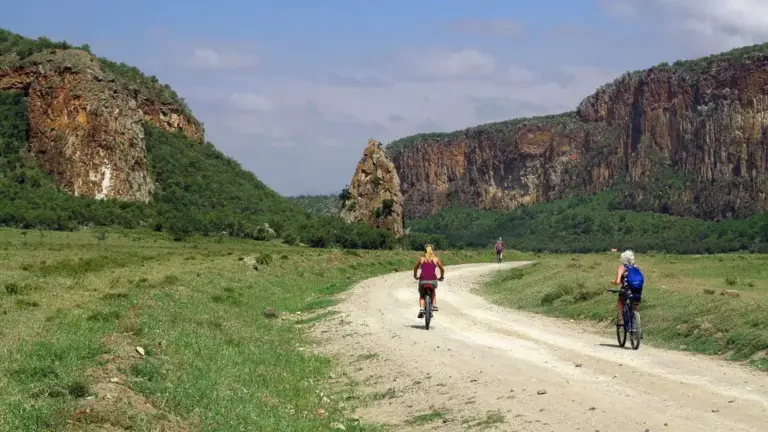
Unlike most East African parks, Hell’s Gate allows visitors to walk, cycle and climb independently rather than confining activity to a vehicle, a policy that makes rock climbing here feel like a natural extension of the park’s broader hands-on character rather than a specialist add-on. Climbers can combine a morning on Fischer’s Tower with an afternoon cycling or walking through the park’s gorge and wildlife areas on the same visit.
Difficulty and experience level
Both towers offer routes across a range of difficulty levels, from more accessible climbs suited to relative beginners with a guide to technical routes for experienced climbers, though specific grading systems and route conditions are best confirmed directly with a local guiding operator before arrival, since conditions and bolt maintenance can change over time.
Guides and equipment
Climbing independently without a local guide is possible for experienced climbers bringing their own gear, but booking through an established local outfit is the more common and generally recommended approach, particularly for anyone unfamiliar with the specific routes, since local guides know current conditions and can supply gear for those not carrying their own.
Other climbing spots in the region
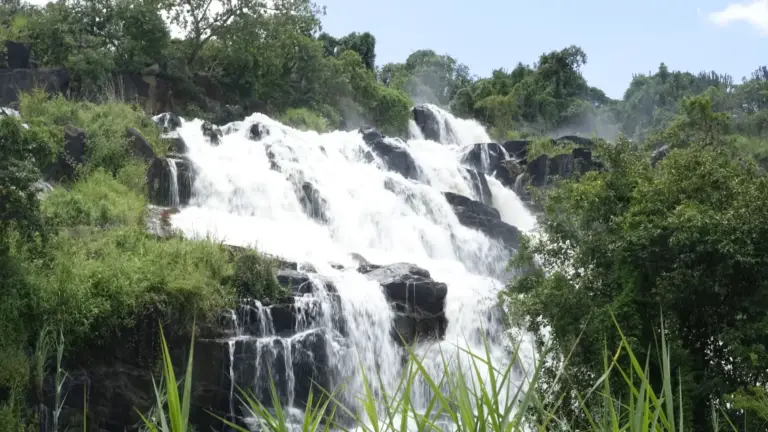
Smaller-scale bouldering and scrambling opportunities exist around Sipi Falls on Mount Elgon’s slopes and in parts of the Rwenzori foothills, though neither approaches Hell’s Gate’s scale or established infrastructure, and both are generally undertaken informally with a local guide rather than as a dedicated climbing destination in their own right.
Combining climbing with the rest of Hell’s Gate
Most visitors treat climbing as one part of a broader Hell’s Gate day rather than the sole activity, pairing it with the park’s cycling routes among wildlife and a walk through Hell’s Gate Gorge, itself notable as a filming location and geothermal feature.
What to bring
- Your own harness and shoes if you have them, though rental gear is available through local guiding outfits
- Sun protection and water, since the towers offer little shade during a climb
- Closed shoes for the approach walk and any combined cycling or walking on the same day
- A reasonable level of fitness and comfort with exposure, even on the more accessible routes
Multi-pitch versus single-pitch routes
Both Fischer’s Tower and Central Tower offer a mix of shorter single-pitch routes suited to a half-day session and longer multi-pitch climbs requiring more time, rope management and experience to complete safely. Which type suits a given visit depends heavily on group experience level and how much of the day is set aside for climbing versus the park’s other activities.
Why Hell’s Gate developed as a climbing destination
The park’s two volcanic plugs, remnants of the same geological activity that shaped the wider Rift Valley, happened to offer solid, climbable rock close enough to Nairobi for an easy day’s outing, a combination that made Hell’s Gate the natural place for Kenya’s small climbing community to develop established routes over the decades since. That accessibility, more than any particular technical superiority over other rock formations in the region, is largely why it remains the country’s primary climbing destination today.
Best time to visit
The dry seasons, roughly June to October and January to February, offer the most reliable rock conditions, since wet rock considerably increases the difficulty and risk of any climb.
A day on the cliffs: the rhythm
Climbing days start early, when the rock is cool and the light is soft. A typical day begins with a short walk to the base of the cliff, a safety briefing and a check of harnesses, helmets and ropes. Beginners usually start on easier routes with a rope set from above, then move to harder lines as confidence grows.
Between climbs there is time for water, snacks and a view over the gorge. Guides set the pace, and nobody is pushed beyond what they choose to try.
Reading the rock
Hell’s Gate is volcanic country, and its cliffs are formed from old lava and ash. The rock can be sharp and gritty so gloves, closed shoes and long trousers are sensible even in hot weather. Fischer’s Tower, a volcanic plug rising from the valley floor, is the best known formation, and the surrounding walls offer routes of several grades.
Holds can be loose in places, which is one reason guides inspect routes before each climb and ask climbers to wear helmets at all times.
Learning to climb and climbing responsibly
First timers are welcome. A qualified guide teaches knots, belaying and basic movement before anyone leaves the ground, and explains the signals used between climber and belayer. Climbers with experience can ask for harder routes or a longer day.
Hell’s Gate is a national park so we climb within its rules, carry out what we carry in and keep a respectful distance from wildlife. Raptors nest on some cliffs, and routes can be closed during nesting.
If you would rather watch than climb, the base of the cliffs is an easy place to sit with a flask of tea while others climb, and guides are happy to explain each route. Non climbers in the group can walk the gorge trail below and meet the climbers afterwards for lunch.
Planning your rock climbing day
Tell us your climbing experience level, and we will connect you with a local Hell’s Gate guiding outfit and build the rest of your day around cycling or walking in the park.