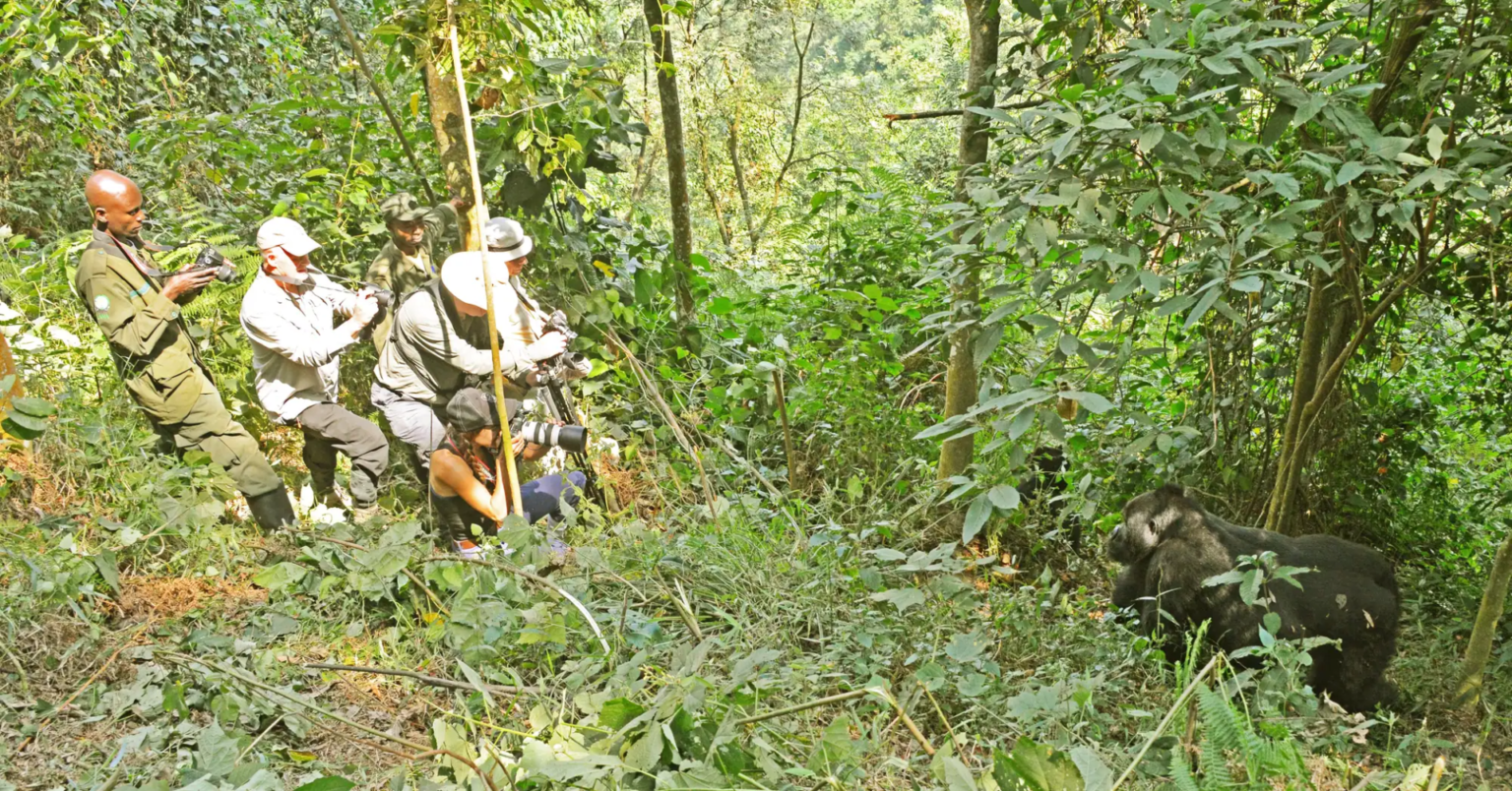
What to wear for gorilla trekking comes down to a few simple rules: long sleeves, long trousers, sturdy boots, gloves and a rain jacket, all in neutral colours. The forest is steep, wet, cool and full of nettles, thorns and biting insects so your clothes protect you more than they decorate you. This guide explains what to wear for gorilla trekking in Uganda and Rwanda, what to pack in your daypack and what to leave at the lodge.
What to wear gorilla trekking from head to toe
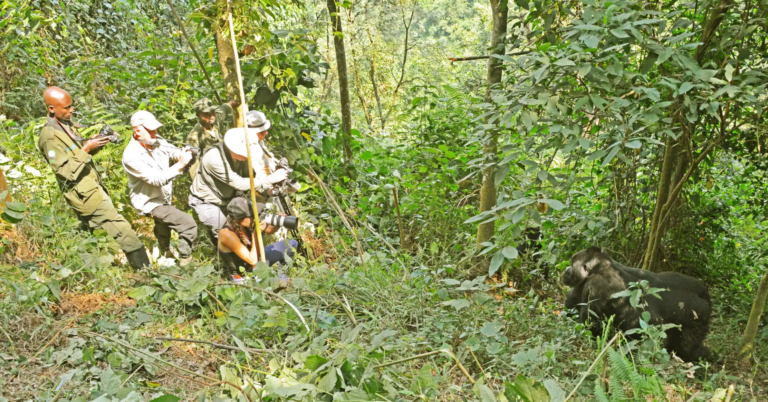
Start with layers, because the forest is cool in the morning and warm once you are climbing. A light long-sleeved shirt in cotton or quick-drying fabric is the base. Add a fleece or a light jacket for the briefing and the first hour which you can take off when you are hot. A waterproof jacket is essential because rain can arrive in any month.
Wear long trousers not anything short. They protect your legs from stinging nettles, thorns and insects. Choose lightweight, quick-drying trousers rather than jeans which stay wet and heavy. Tuck the legs into your socks or into gaiters so that ants and mud stay out. Thick socks are worth wearing for comfort and blister protection.

Boots, gaiters and gloves
Boots are the most important item. Choose waterproof hiking boots with ankle support and a deep tread, remember to break them in before you travel. New boots cause blisters and a blister on a steep trail ruins the day. Trainers are not enough on muddy slopes.
Gaiters are long covers that go over the lower leg and the boot. They keep mud, water and insects out and they are cheap and light. Gardening gloves protect your hands when you grab branches and vines on steep sections while guarding you against nettles. Rangers often recommend leather or thick fabric gloves with a good grip.
Colours and fabrics
Wear neutral colours such as green, khaki, beige or grey. Bright colours and strong patterns can stand out in the forest and gorillas may find them unsettling. Do not wear camouflage which is illegal for civilians in Uganda and Tanzania. Avoid perfume, strong lotions and heavy insect repellent on your clothes because gorillas have a keen sense of smell.
Cotton is comfortable but dries slowly. Synthetic and merino fabrics dry faster and are better in wet weather. Leave white clothes at the lodge because they will not stay white.
Common mistakes when deciding what to wear gorilla trekking
- The most common mistake is wearing new boots.
- The second is leaving the rain jacket in the car, because the weather in the hills changes fast.
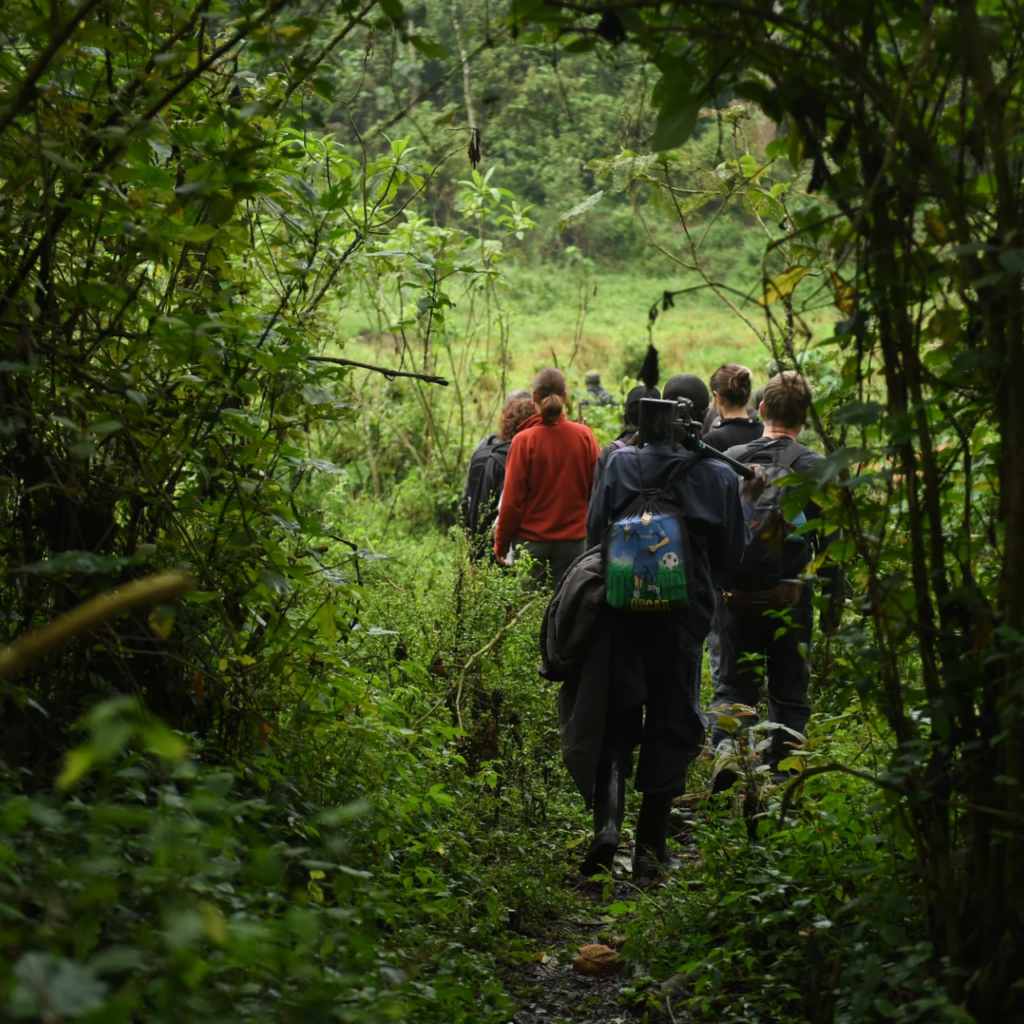
- The third is bringing a large backpack when a small daypack and a porter are all you need.
- Many guests also forget spare socks which feel wonderful after a wet crossing.
Another mistake is dressing for the lodge rather than the forest. Mornings at Bwindi and Volcanoes can be close to freezing. Wear a warm layer to the briefing.
By the time you reach the gorillas you will be warm and you can take the layer off and tie it to your bag.
What to carry in your daypack
Your daypack should hold:
- Two litres of water or more during the warm weather season
- A packed lunch and snacks provided by the lodge
- A rain jacket or poncho even on a sunny morning
- Sunscreen, a hat, insect repellent and sunglasses
- Spare socks in a plastic bag
- A camera with no flash and a spare battery
- Your passport and permit in a waterproof bag
- A small first aid kit with blister plasters and any personal medicine
Porters carry your bag and hiring one is a good idea. It supports local families and it makes the climb much easier. Walking sticks are available at the trailhead.
Practical tips for the day
Dress in layers you can remove. Do not wear a hat that blocks your view of the trail and tie back long hair. Cover your face and hands with a buff or a light scarf if the vegetation is dense. Take care with strong sunscreen and insect repellent on your hands because rangers ask you to wash them before you touch plants.
Rangers may ask you to wear a face mask when you are near the gorillas to protect them from human illness especially colds. Bring one in your daypack. Anyone with a cough or a stomach upset can be asked to stay behind. Read our full guide to gorilla trekking rules for what happens on the day.
The same clothes work in Uganda and Rwanda. The forests are at similar heights and share the same weather and the rules on dress are the same. In Rwanda, the volcano slopes are open and can be colder and windier, so a warm hat is useful. In Bwindi the forest is closed and damp so a good waterproof matters more.
How Offmap helps you prepare
We send a packing list when you book and we check boots, gloves and rain gear before you leave. If you forget something, many lodges near Bwindi and Volcanoes National Park sell or lend gaiters, ponchos and sticks. For help planning your trek, browse our Uganda safaris or contact us on the Plan My Safari page. Gorilla permits are non-refundable so we confirm your dates and health first.
Frequently asked questions
What should I wear for gorilla trekking?
Wear a long-sleeved shirt, long trousers, waterproof hiking boots, gloves and a rain jacket, in neutral colours. Layers help, because the forest is cool in the morning and warm on the climb. Add gaiters, a hat and socks that dry fast and leave perfume at the lodge.
Can I wear shorts for gorilla trekking?
No. Shorts leave your legs open to stinging nettles, thorns and insects. Long, quick-drying trousers are much better, and tucking them into socks or gaiters keeps out ants and mud. Rangers recommend long sleeves too, for the same reasons.
Do I need gloves and gaiters for gorilla trekking?
Gloves are strongly advised, because you will grab branches and vines on steep trails, and some plants sting. Gaiters keep mud, water and insects out of your boots and trousers. Both are cheap, light and often available at the lodge if you forget them.
What colours should I avoid when gorilla trekking?
Avoid bright colours and strong patterns, which may unsettle the gorillas. Choose green, khaki, beige or grey. Do not wear camouflage, which is illegal for civilians in Uganda and Tanzania. Skip perfume and strong lotions, because gorillas have a keen sense of smell.
Should I hire a porter for gorilla trekking?
Yes, if you can. Porters carry your bag, offer a hand on steep sections and earn an income that supports their families. The cost is small, and they make the trek far easier. You can hire one at the trailhead on the morning, and we can arrange it in advance.
Plan a safari that includes Bwindi Impenetrable National Park
Our team plans private, tailor-made safaris, so we can build a trip around Bwindi Impenetrable National Park and adjust the days, lodges and pace to suit you.