
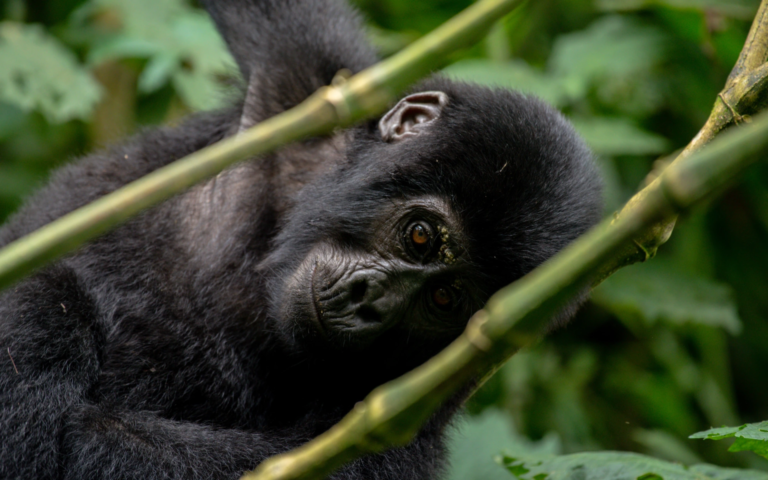
The forest at a glance
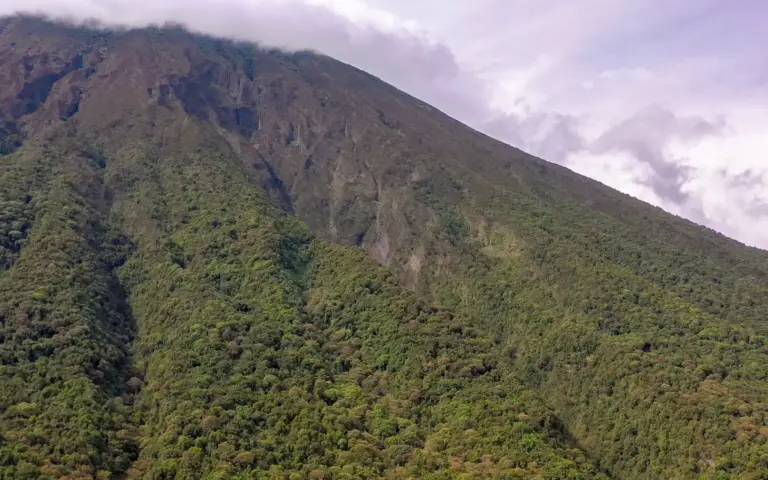
- Location: Bushenyi District in western Uganda, close to Queen Elizabeth National Park and the Maramagambo Forest, at the top of the escarpment overlooking the Albertine Rift.
- Altitude: about 1,400 metres above sea level.
- Size: the National Forestry Authority gives about 147 square kilometres. Older and other sources quote different figures, because the reserve was reduced when land was cleared for tea estates.
- Managed by: the National Forestry Authority, with tourism developed in partnership with the Uganda Wildlife Authority and local communities.
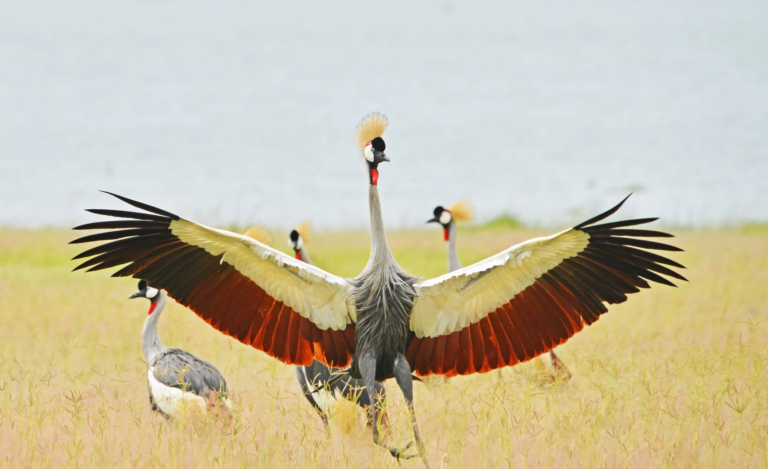
- Biodiversity: more than 400 tree species, around 378 bird species, over 260 butterfly species, and six or more primate species.
Chimpanzee tracking
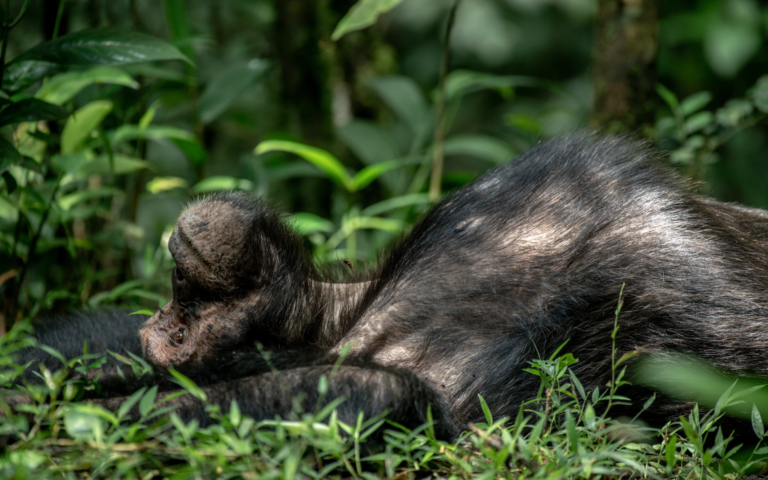
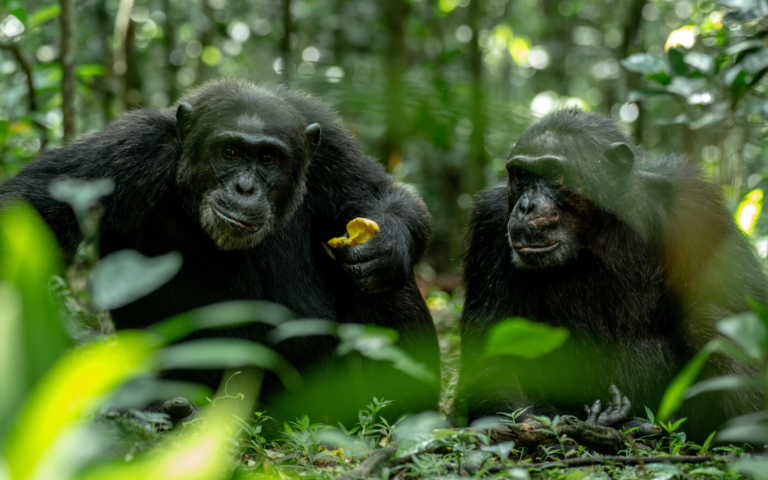
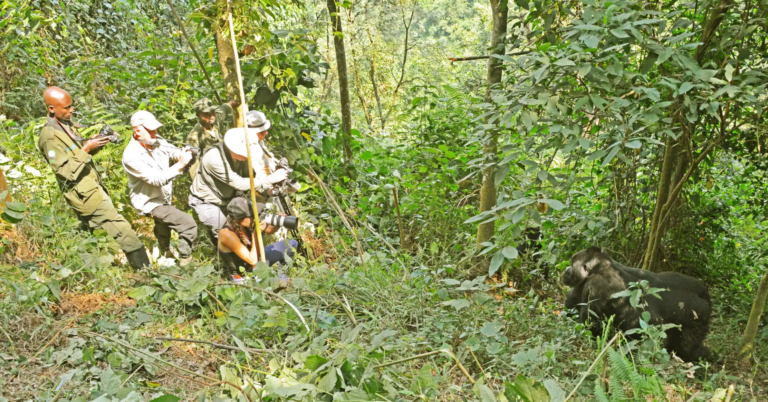
Kalinzu holds a large chimpanzee population, and some communities have been habituated to visitors over many years, with the help of researchers, including a long-running Japanese study. Small groups of up to eight people set out with a guide in the morning or afternoon. Tracking usually takes about three to four hours, and once the chimpanzees are found you spend time with them at a set distance. As with all chimpanzee tracking, sightings are likely but not guaranteed, and the same health rules apply: keep your distance, do not visit when ill and do not eat in front of the animals.
Permits at Kalinzu have generally cost far less than in Kibale. Fees change so we confirm them at booking.
Other things to do
- Forest walks along trails with big trees, ferns and streams.
- Birdwatching: a good site for forest birds such as the great blue turaco and sunbirds.
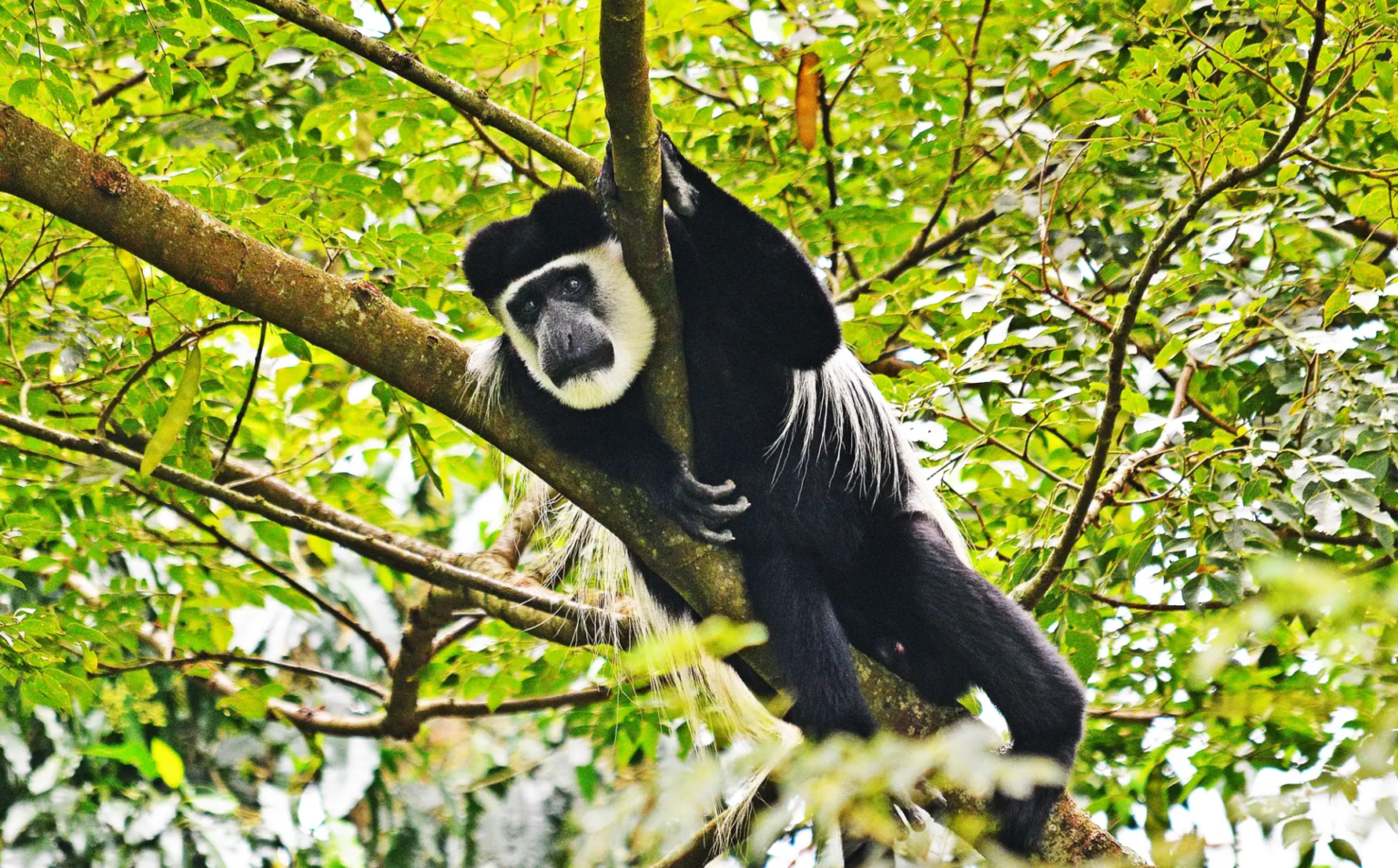
- Other primates: blue monkeys, vervets, red-tailed monkeys, L’Hoest’s monkeys, black-and-white colobus and baboons.
- Butterflies and small animals: including night creatures such as bushbabies and pottos on guided night walks where offered.
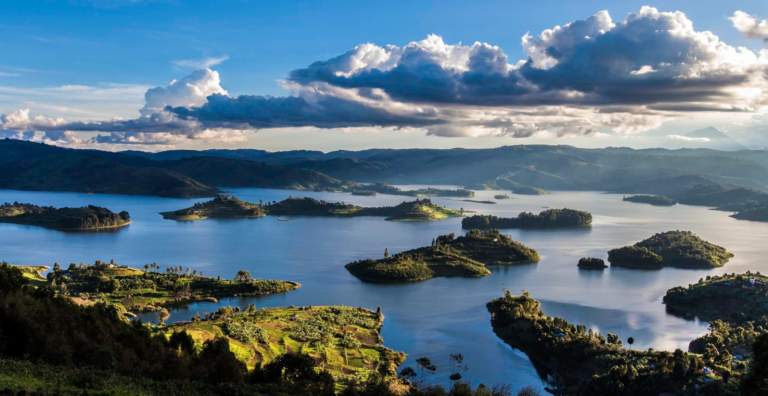
- Crater lakes: the area has several, including the twin lakes Kamweru and Kyema.
- Camping: a simple campsite at the forest station at Nkombe. More comfortable accommodation is found in Bushenyi and Ishaka, and in lodges around Queen Elizabeth.
Practical information
- Getting there: about 375 kilometres, or five hours’ drive, from Kampala. Kalinzu lies along the main road towards Kasese, about 30 kilometres from Bushenyi. Roads through the forest are old logging tracks so a four-wheel-drive vehicle is recommended.
- Time needed: half a day for a chimpanzee trek.
- Best time: year-round. The drier months, roughly June to September and December to February, make trails easier.
- What to bring: hiking shoes, long sleeves and trousers, a rain jacket, insect repellent and binoculars.
- Health: malaria risk; see our Health & Safety page.
Combining Kalinzu with other places
Kalinzu suits a route through Queen Elizabeth National Park (with the Kazinga Channel and Ishasha), Kyambura Gorge, Lake Mburo and Bwindi. See our pages on Queen Elizabeth National Park, Ishasha Sector and Kibale National Park.
Kalinzu with Offmap Safaris
We recommend Kalinzu for travellers who want another chimpanzee trek on the way to or from Bwindi, or a quieter forest than Kibale. Plan your safari, message us on WhatsApp +256 701 243 304 or email [email protected]. Please also read our Responsible Travel page.
Plan a safari that includes Kalinzu Forest Reserve
Our team plans private, tailor-made safaris, so we can build a trip around Kalinzu Forest Reserve and adjust the days, lodges and pace to suit you.