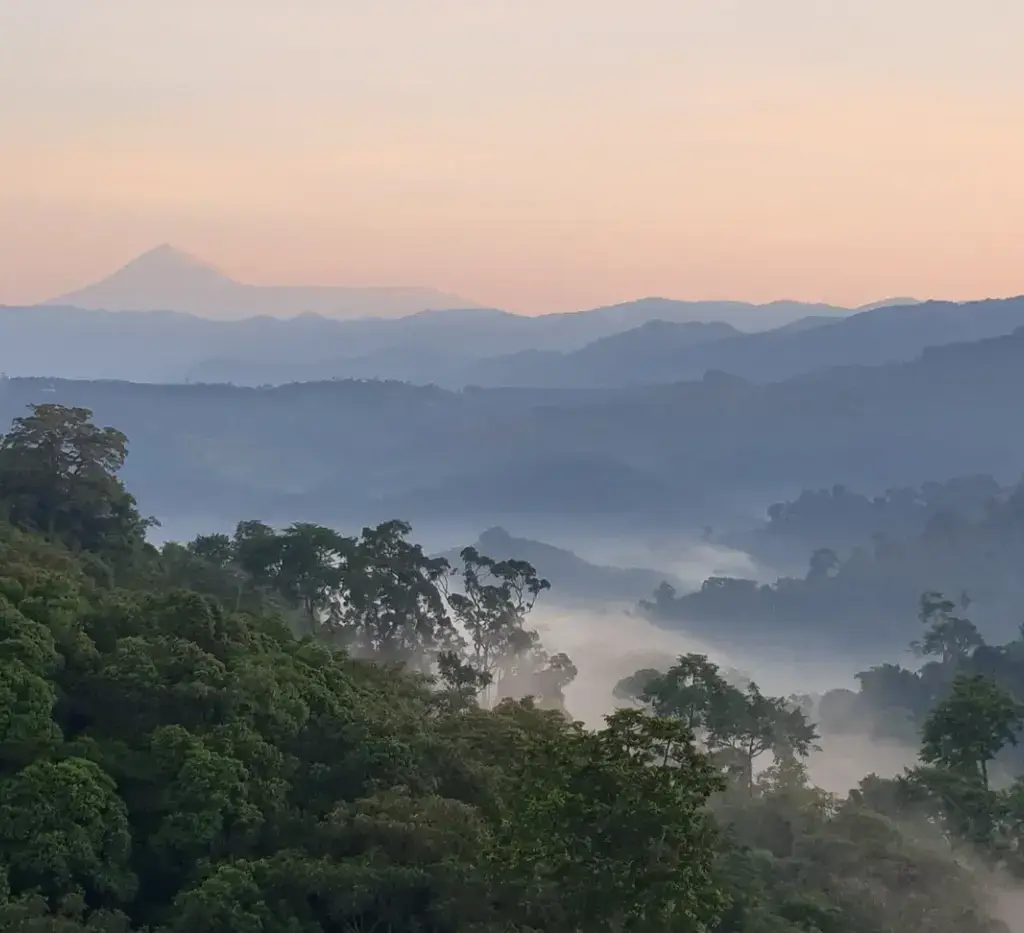
The Virunga volcanoes
Five volcanoes sit on Rwanda’s side of the Virunga range, four of which are regularly hiked. Each has a distinct character and difficulty level, and choosing between them is really the first decision to make when planning a volcano hike here.
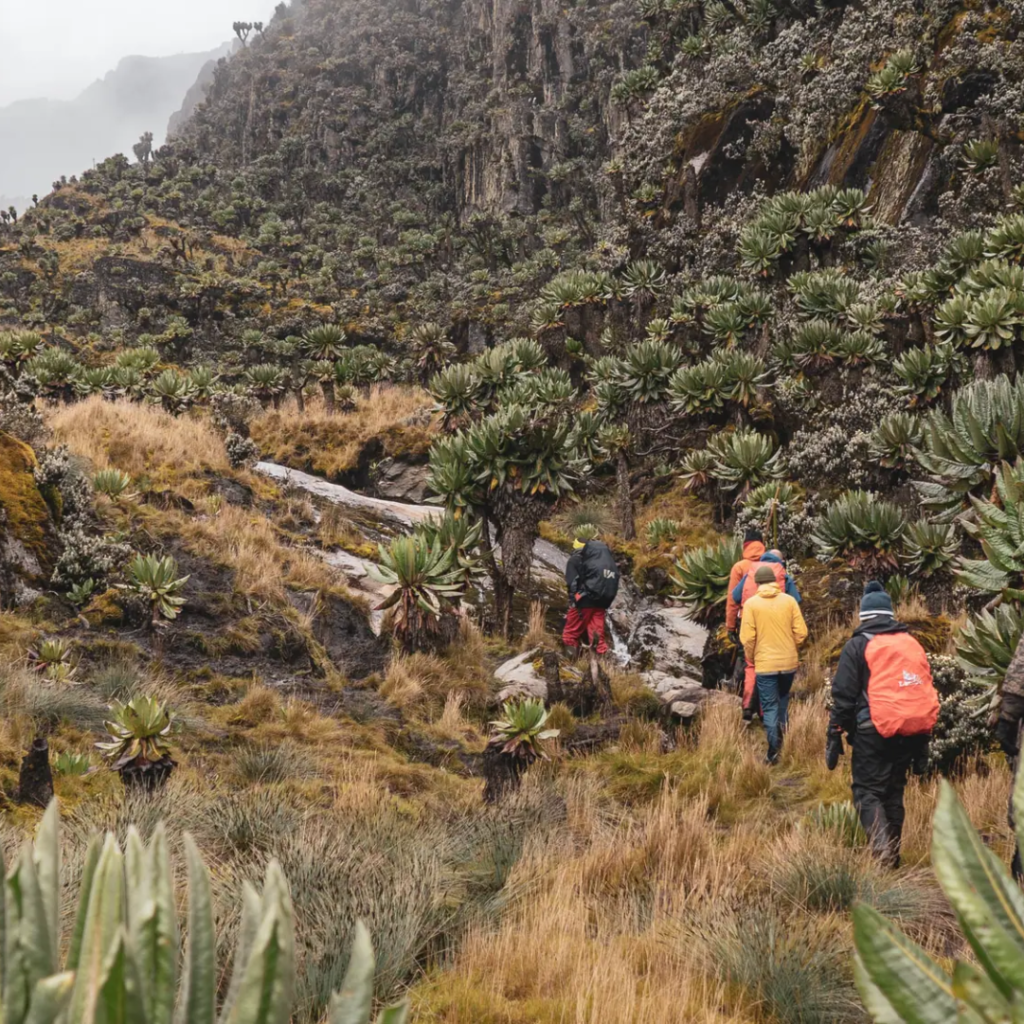
Mount Bisoke
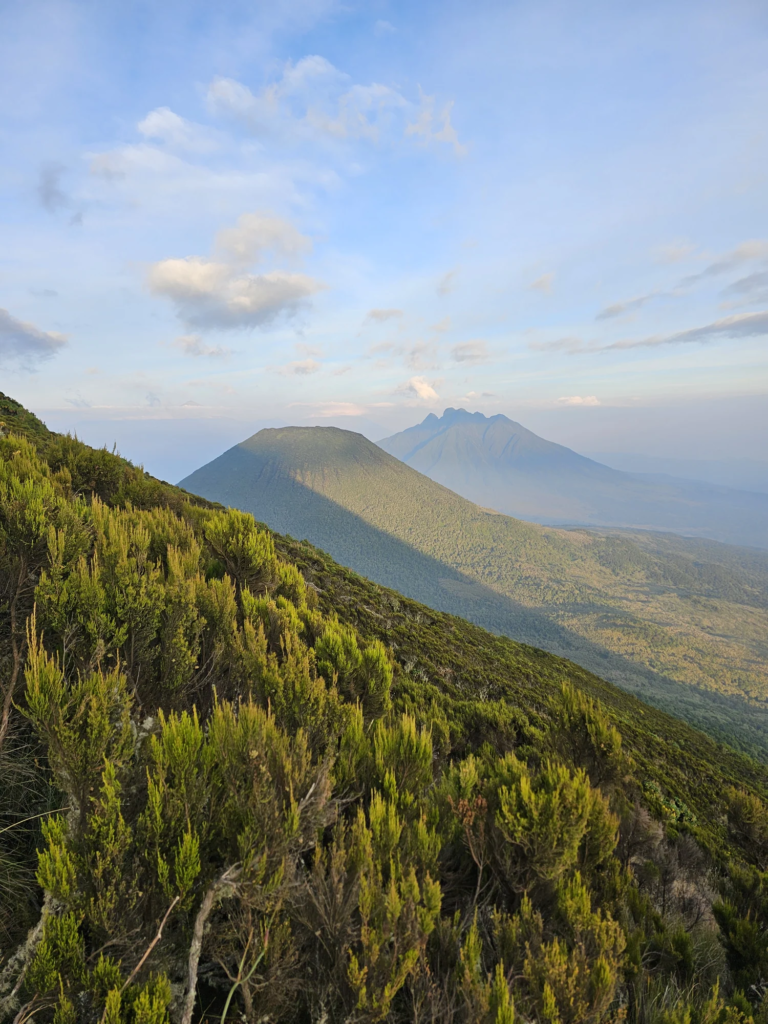
Mount Bisoke, at 3,711 metres, is the range’s most popular hike, a six-hour round-trip climb (roughly four hours up, two down) that rewards the climb with a crater lake around 400 metres across at the summit and views toward Mount Mikeno across the border in DR Congo. It’s challenging but achievable for a reasonably fit hiker without technical climbing experience, making it the default choice for most first-time volcano hikers in the range.
Mount Karisimbi
Mount Karisimbi, the range’s highest peak at 4,507 metres and Africa’s fifth-highest mountain, is a different proposition entirely: a two-day trek with an overnight camp at roughly 3,700 metres before summiting the following morning. It occasionally receives snow despite sitting almost on the equator, and it’s reserved for seasoned hikers prepared for a demanding, high-altitude multi-day climb rather than a single strenuous day.
Mount Muhabura and Mount Gahinga
Mount Muhabura, straddling the Rwanda-Uganda border at 4,127 metres, runs a six to eight hour round-trip climb to a summit crater lake with views over the twin lakes Burera and Ruhondo below, a serious but single-day alternative to Karisimbi’s overnight commitment. Mount Gahinga, the range’s shortest peak, is the gentlest option of the four, recommended for hikers wanting a genuine but less demanding introduction to volcano hiking.
Mount Sabyinyo
Mount Sabyinyo, known for its jagged, knife-edge ridges and multiple summits along the Rwanda-Uganda-DR Congo border, was closed for years on safety grounds before a managed trail was established on the Rwandan side; the Ugandan-side route through Mgahinga remains the more established and rewarding approach for hikers specifically seeking Sabyinyo’s dramatic ridge walking.
Permits and logistics
Volcano hiking permits are booked and issued separately from gorilla trekking and golden monkey tracking permits, even though all three activities happen inside the same protected forest, so a volcano hike doesn’t draw on the same limited daily permit pool as a gorilla trek. Porters are available on every route to help carry gear, and a walking pole is worth arranging in advance for the steeper volcanic scree sections near each summit.
What you’ll see along the way
Because these hikes climb through the same bamboo-forest habitat gorillas and golden monkeys use, chance sightings of either species are possible on the lower slopes, even though a volcano hike permit doesn’t guarantee or include a primate trek. Higher up, the vegetation shifts to alpine moorland and, near the summits, sparse volcanic rock, giving a genuine sense of ecological zonation over a single day’s climb.
Fitness and preparation
Even the range’s gentlest peak, Gahinga, involves a genuine forest hike with real elevation gain, and Bisoke and Muhabura both demand a solid level of cardiovascular fitness and several hours of sustained walking on volcanic soil that turns slick after rain. Preparing with regular hill walking or stair training in the weeks before a Virunga climb is worth doing, particularly for anyone attempting Karisimbi’s overnight climb where the combination of altitude and multi-day exertion asks considerably more of a hiker’s body than a single strenuous day would.
Comparing volcano hiking with gorilla and golden monkey tracking
All three activities happen in the same bamboo-forest ecosystem, but they ask different things of a visitor: gorilla and golden monkey tracking involve a variable-length walk to find a group followed by a fixed, limited viewing window, while volcano hiking is a summit climb in its own right, with the destination being the peak and crater lake rather than an animal encounter. Travellers with several days in the Virunga region often combine one primate trek with one volcano hike, giving a genuine variety across the stay rather than repeating a similar forest walk each day.
Best time to hike
The dry seasons, June to August and December to February, offer firmer underfoot conditions and clearer summit views, while the wetter months bring muddier trails but often more dramatic cloud and light for photography, a trade-off worth weighing against how much a clear view matters to you.
What a volcano day feels like
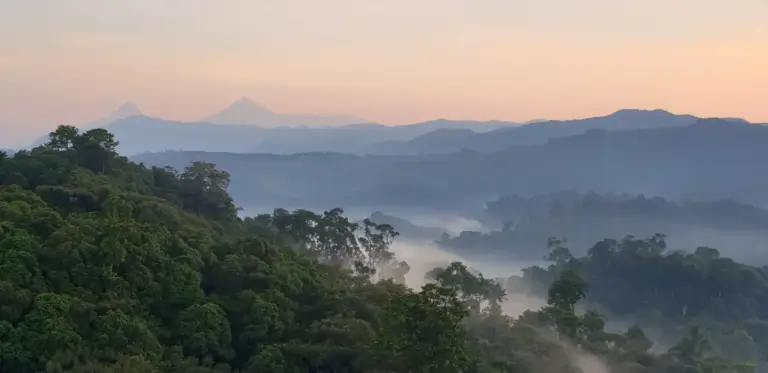
Most volcano hikes start in the dark or at first light with a briefing at the park office, followed by a drive to the trailhead and a steady climb through farmland, then bamboo, then giant heather and moss, and finally the open summit. Each step brings a change in vegetation, and every step is steeper than it looks from the car.
Weather changes quickly on these slopes. Mist can hide views for an hour and clear suddenly so patience is part of the day.
Gear and trail conditions
Good boots with grip, a waterproof jacket, gloves, a hat and trekking poles are the core kit. Trails can be muddy and slippery even in the dry months, and gaiters keep your trousers clean. Porters are available and help with day packs, and hiring one supports local families.
Ranger escorts are required on protected volcanoes, which keeps you safe and supports conservation work.
Planning around gorilla permits
Gorilla permits and volcano permits are separate, and each has its own rules. We usually place the volcano hike on a different day from the gorilla trek, with a rest day between. If you plan both in Rwanda, a base in Musanze keeps travel short. In Uganda, Mgahinga offers volcano hikes and gorilla tracking close together.
Permits sell out in busy months so we confirm yours before building the rest of the trip.
Planning your volcano hike
Tell us which peak matches your fitness and time available, and we will book the right permit and pair it sensibly with any gorilla trekking or golden monkey tracking already on your Virunga itinerary.