Where balloon safaris fly
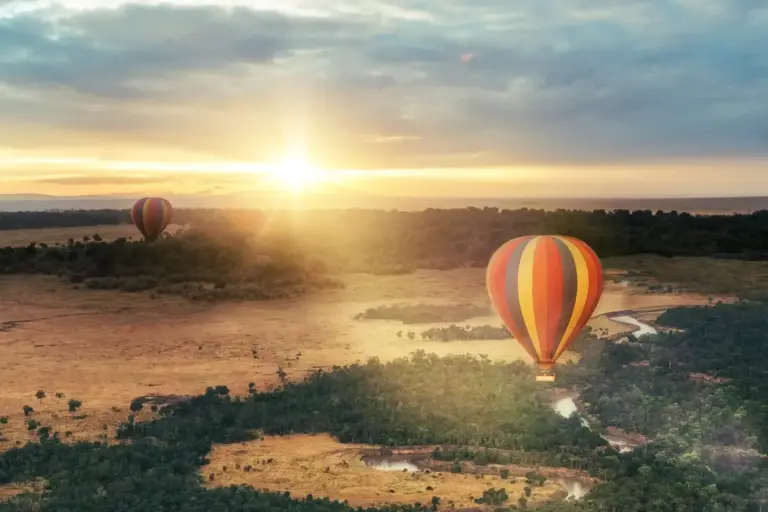
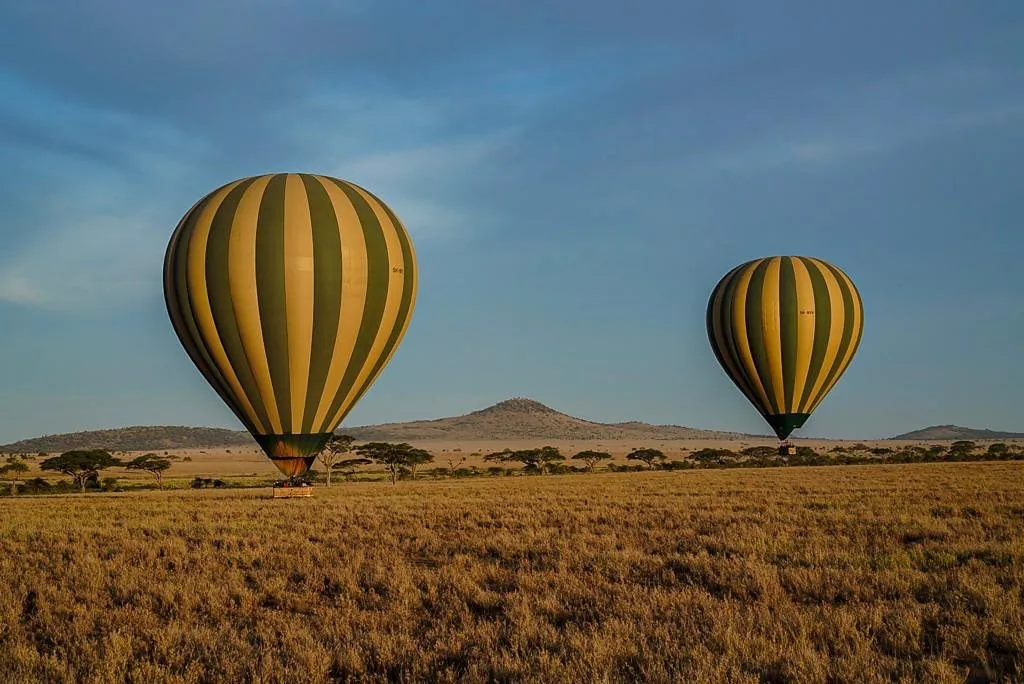
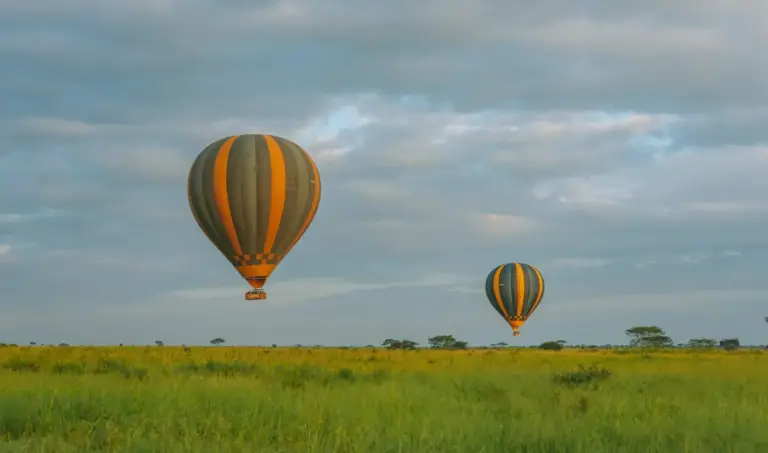
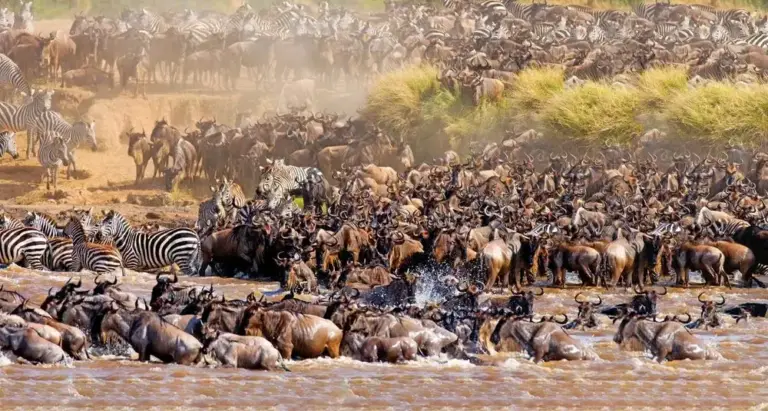
Kenya’s Maasai Mara National Reserve and Tanzania’s Serengeti National Park are the two established balloon destinations in East Africa, with several operators running daily flights, weather permitting, from fixed launch sites near partner camps. Both parks’ open, largely treeless plains make for ideal balloon terrain: wide, unobstructed views and predictable early-morning wind conditions that are calm enough for safe flying.
How the morning unfolds
A balloon safari starts very early, typically with a pre-dawn wake-up call and a transfer to the launch site while balloons are inflated in the half-light, itself a striking sight as the enormous envelopes rise and steady in the still morning air. The flight itself lasts around an hour, drifting at varying altitude depending on wind and terrain, low enough over open plains to pick out individual animals, higher over rivers and woodland to take in the wider landscape. Landing is not always precisely predictable, since balloons drift with the wind rather than follow a fixed course, and a ground crew tracks the balloon by vehicle to meet it wherever it comes down.
The champagne breakfast tradition
Nearly every balloon safari in the region ends the same way: a celebratory breakfast served at the landing site, following a tradition observed at balloon flights worldwide of toasting a safe return to earth with sparkling wine. Tables are typically set with proper linen in the open bush, and a full breakfast, often including freshly brewed coffee, is prepared on site rather than packed in advance, turning the flight into a full morning rather than just the hour aloft.
Best time for a flight
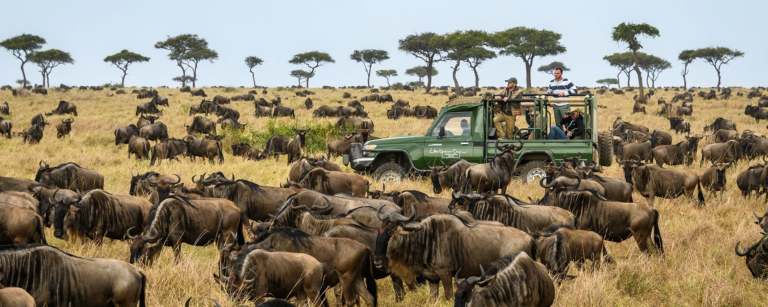
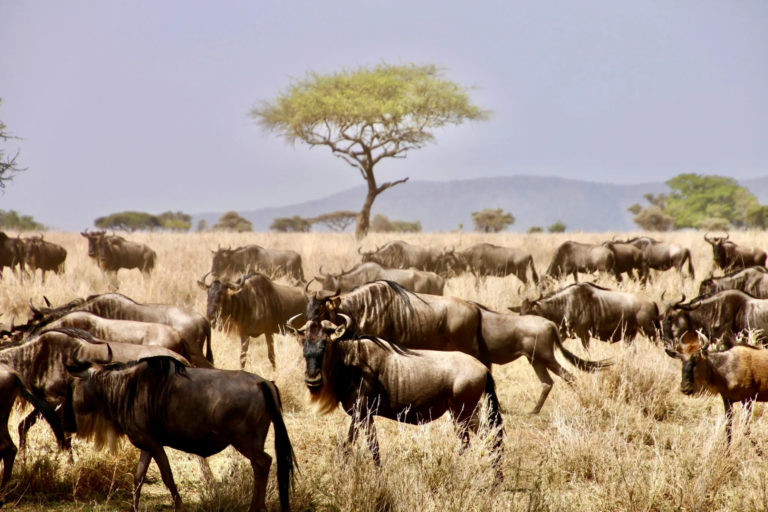
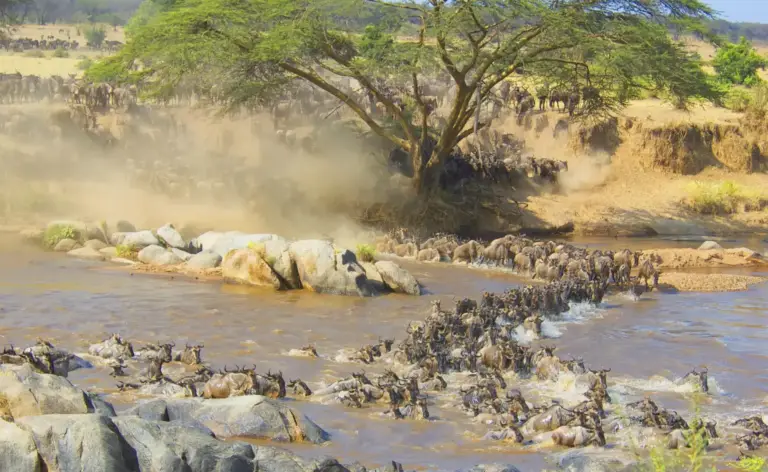
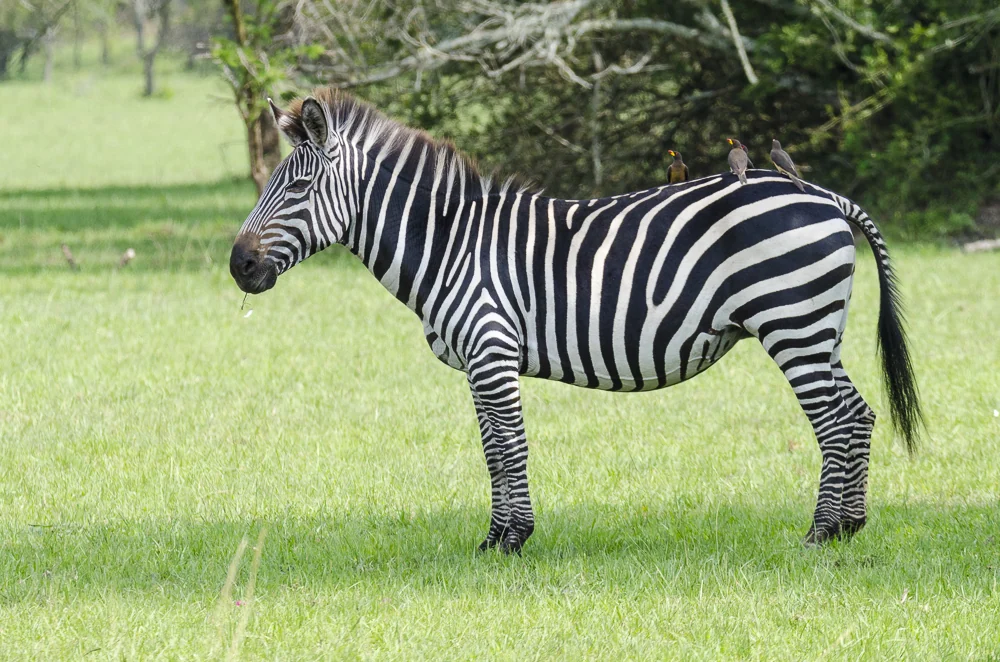
Flights run year-round, weather permitting, but the wildebeest migration season, roughly July to October in the Maasai Mara and slightly earlier further south in the Serengeti, is the most sought-after time to fly, since a balloon can pass directly over migrating herds and river crossings from an angle no vehicle can match. Outside migration months, the plains still hold resident wildlife in good numbers so a flight remains worthwhile even without the migration as a backdrop.
What to expect on board
Balloons typically carry a pilot and a group of passengers in a basket divided into compartments, standing throughout the flight rather than seated. Landings can range from a gentle touchdown to a slightly firmer bump depending on wind conditions, and the pilot briefs passengers beforehand on the landing position to adopt, bent knees and holding the basket’s internal straps. No specific fitness is required, though passengers should be comfortable standing for around an hour and able to climb in and out of the basket, which sits at roughly waist height.
Booking ahead
Balloon safaris operate on a fixed daily schedule with limited passenger capacity per flight, and demand during peak migration months regularly exceeds supply at the most established launch sites. Booking well ahead of a Mara or Serengeti stay, ideally at the same time as confirming camp accommodation, gives a far better chance of securing a preferred date than trying to arrange a flight once already on safari.
Practical notes
- Flights depart very early, often before 6am so a balloon safari usually means an early night beforehand
- Warm layers are worth packing for the pre-dawn wait at the launch site, even though temperatures rise quickly once the sun is up
- Weight limits apply for safety reasons, and operators will ask for accurate passenger weights when booking
- Flights can be cancelled or delayed by wind conditions; a flexible morning schedule helps if a reschedule is needed
Safety and weather
Balloon operations are cancelled outright rather than flown in marginal conditions when wind speeds are too high or too unpredictable for safe launch and landing, a call pilots make on the morning itself rather than in advance. This occasionally means an early rise followed by a rescheduled or refunded flight, a genuine possibility worth knowing about beforehand rather than being surprised by on the day. Reputable operators maintain their balloons and baskets to strict safety standards and brief every passenger thoroughly before departure.
Combining a flight with the rest of a safari
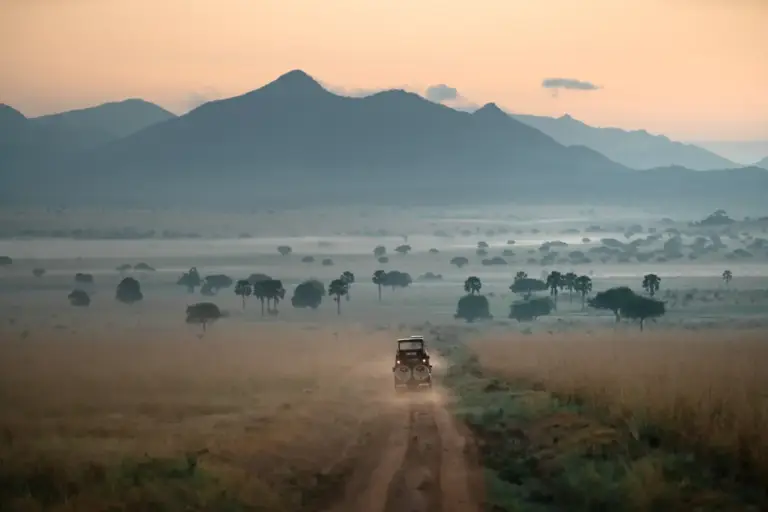
A balloon safari is almost always added as a single early-morning activity within a longer Mara or Serengeti stay, rather than requiring its own dedicated itinerary. Most travellers fly on one morning of a multi-night stay and continue with standard game drives on the others, since the balloon adds a different perspective rather than replacing the vehicle-based game viewing that fills the rest of a Mara or Serengeti visit.
Planning your balloon safari
Tell us your Mara or Serengeti dates, and we will check current availability, confirm passenger weight requirements and add the flight as an early-morning addition to the rest of your itinerary.