Four countries, seven international airports, and one question most travellers ask before anything else: which one do I actually fly into? Here’s the full picture, country by country.
The seven gateways
- Kenya: Jomo Kenyatta International Airport (NBO), Nairobi, the region’s busiest hub; and Moi International Airport (MBA), Mombasa, for the coast.
- Tanzania: Kilimanjaro International Airport (JRO) for the northern circuit; Julius Nyerere International Airport (DAR), Dar es Salaam, for the southern circuit; and Zanzibar Airport (ZNZ) for the archipelago.
- Uganda: Entebbe International Airport (EBB), the country’s only scheduled international gateway.
- Rwanda: Kigali International Airport (KGL), a short, easy transfer from the capital.
Choosing the right airport for your safari
For a Kenya-only safari, JKIA is almost always the answer, with Wilson Airport close by for onward flights to the Mara and other parks. For Tanzania, the choice depends on which circuit you’re visiting: JRO for the Serengeti, Ngorongoro and the north; DAR for Nyerere National Park, Ruaha and the south. Uganda and Rwanda each have a single gateway, so the decision largely makes itself. Entebbe for Uganda, Kigali for Rwanda. On a multi-country itinerary combining gorilla trekking with a savannah safari, it’s common to fly into one country and out of another entirely, rather than doubling back.
Entry requirements at a glance
Kenya, Uganda and Rwanda can be covered by a single East Africa Tourist Visa if your safari spans more than one of them, while Tanzania always requires its own separate visa, since it sits outside that shared system. Rwanda additionally offers visa-on-arrival to all nationalities with no advance application needed. See our full Visa & Entry Requirements page for the complete, country-by-country breakdown, and always confirm current requirements for your own nationality before booking flights.
Once you’ve landed
Every one of these international airports is only the first leg: onward travel into the parks themselves usually means a domestic flight from a separate airstrip, or a road transfer. See our Airstrips guides for Kenya, Tanzania, Uganda and Rwanda for how each country’s domestic network connects to the parks.
Open jaw routes: fly in one country, out of another
The most useful trick on a multi-country safari is to arrive and depart through different airports. A gorilla trip can start in Entebbe and finish in Kigali, or the reverse, which removes a long day of backtracking. A Kenya and Tanzania route can start in Nairobi and end in Kilimanjaro or Zanzibar. Open jaw tickets can cost more or less than a return, so compare the fare with the drive time saved. We price both and explain the difference.
Flight times between the gateways
Typical flying times, which vary with the airline and schedule, are about one hour between Entebbe and Kigali, about one and a half hours between Nairobi and Entebbe, about an hour between Nairobi and Kilimanjaro, and about an hour and a half to two hours between Nairobi and Zanzibar. Dar es Salaam to Zanzibar is just 20 minutes. Direct flights are not offered on every pair every day, so check schedules early.
Crossing by road
Some travellers cross borders by road rather than by air. Common crossings include Namanga between Kenya and Tanzania, Katuna and Cyanika between Uganda and Rwanda, and Busia or Malaba between Kenya and Uganda. They add paperwork and long days, but they also show the landscape between parks. We organise vehicles on each side, so you do not need to change cars alone at a border post. Read safari duration to judge how many days a route needs.
Arrival times and first nights
Many long haul flights land at night, in Nairobi, Entebbe, Kilimanjaro and Kigali alike. A first night near the airport, rather than a long drive, is a sensible rule everywhere. Each airport page covers local advice, including Entebbe, Kigali, Nairobi, Mombasa, Kilimanjaro, Dar es Salaam and Zanzibar.
What to pack for the flights
Bush planes use soft bags with a weight limit, often around 15 kilograms, so keep a small duffel for the safari and leave larger cases at a hotel. Carry your yellow fever certificate, passport copies and the confirmation of your gorilla permit in hand luggage. Drones need permission in all four countries, so leave them at home. Take a light jacket for cool evenings, and arrange travel insurance that covers medical evacuation. Start planning on our plan my safari page.
Choosing by interest
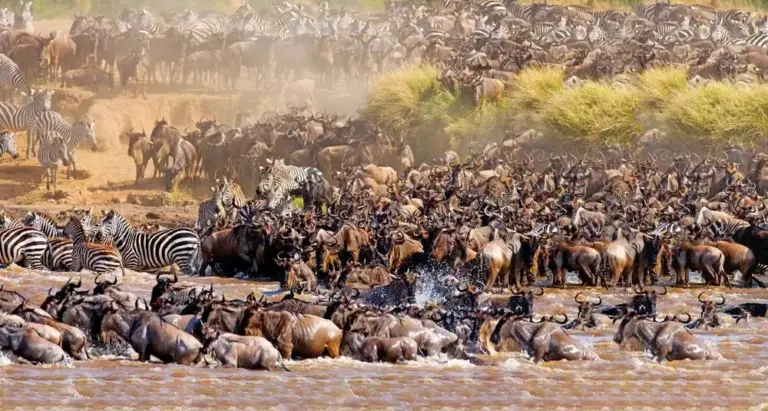
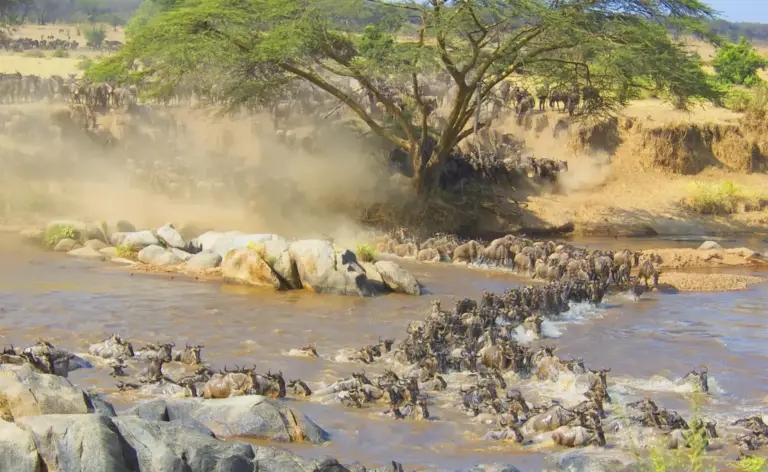
If gorillas are your priority, start with Entebbe or Kigali. If the Great Migration is the goal, choose Nairobi for the Mara or Kilimanjaro for the Serengeti. For beaches, pick Mombasa or Zanzibar. For wild remote parks in the south, Dar es Salaam is the gateway. Each decision affects the route, so talk to us before you buy flights, because ticket changes can be costly.
Insurance, vaccinations and documents
Book insurance with medical evacuation cover before you pay your deposit. Check your passport has six months of validity and blank pages. Yellow fever certificates are checked in several countries, and malaria advice depends on the parks you visit. Keep copies of your permits, vouchers and insurance in digital form. Gorilla and chimpanzee permits are non-refundable, so confirm your dates carefully.
How we choose the airport for you
We start with your priorities, your dates and the permits you need, then pick the arrival and departure airports that give the shortest ground time. We compare flight schedules, check visa rules for your nationality and plan the first and last nights around your landing times. Where an open jaw ticket saves a day, we say so, and where a return ticket is cheaper, we say that too. Ask us for a written route before you commit to flights.
Seasons and airport crowds
Peak months for flights are July to October and December to February, when the migration, the dry season and school holidays overlap. Airports are busiest then, so arrive early and book transfers in advance. Shoulder months bring fewer crowds, lower fares and green landscapes, although some roads become slow after rain. Our team can tell you which gateway handles the season best for your plan.
Plan your arrival into International Airports in East Africa: The Complete Gateway Guide
Tell us your flight details and where your safari starts, and we’ll make sure your arrival connects smoothly into the rest of your itinerary. Talk to us, or browse our safari packages to see how it all fits together.