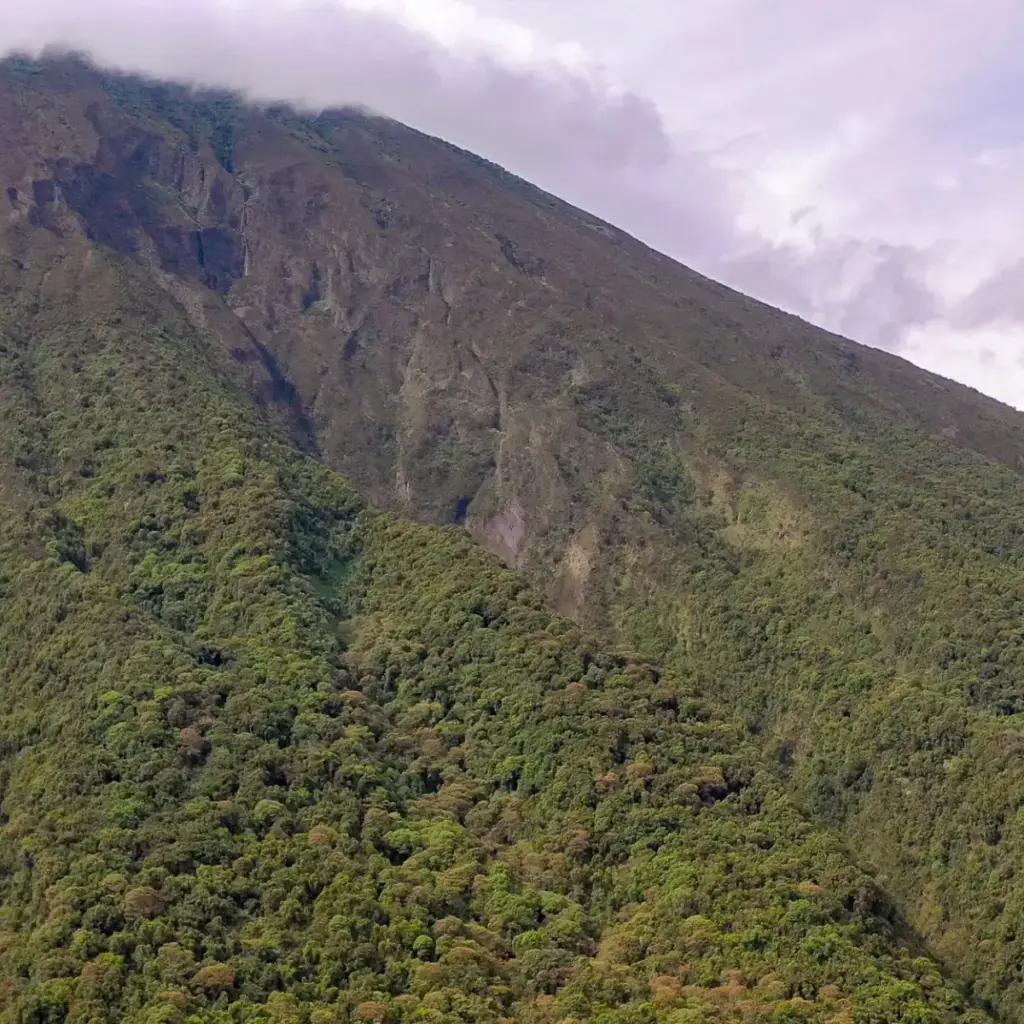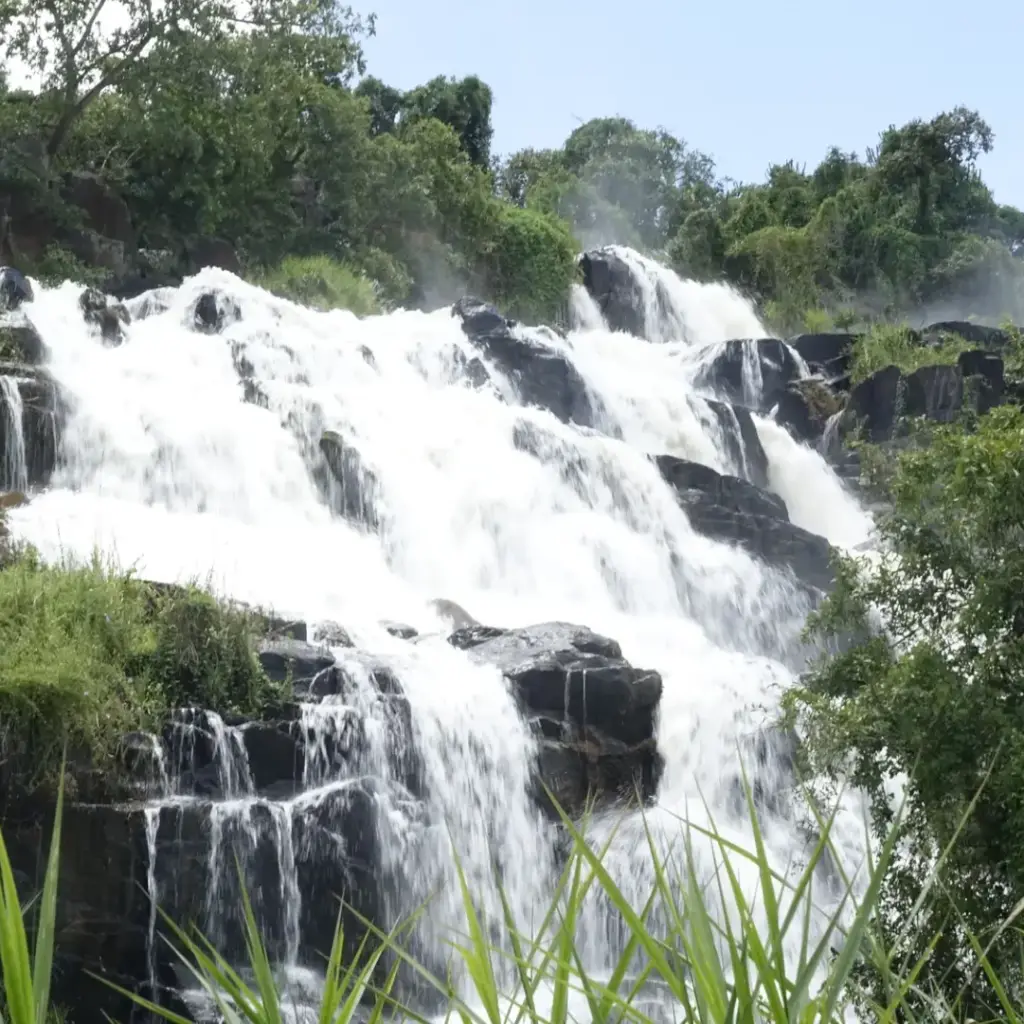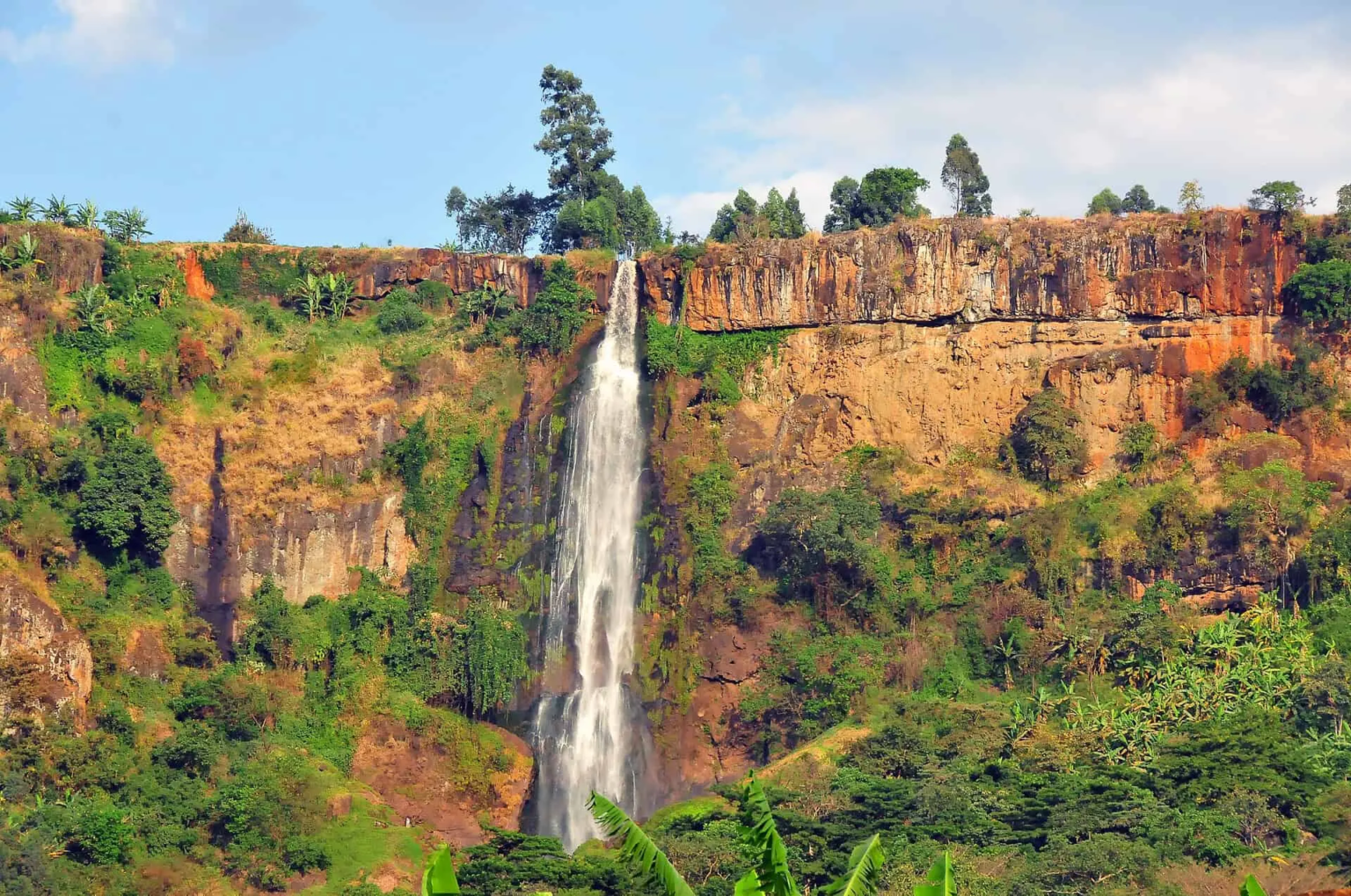
Where the green foothills of Mount Elgon drop away toward the plains of eastern Uganda, the Sipi River leaps off the edge of the escarpment three times in a row. The result is Sipi Falls, one of the most beautiful and most visited natural attractions in the country: a staircase of waterfalls surrounded by coffee farms, banana groves, small villages and thick forest, with a view over the Karamoja plains that seems to run on for ever.
Sipi is a place to walk, to eat well, to drink some of Uganda’s best coffee and to watch the light change on the cliff. It also makes a superb gateway for anyone continuing to Mount Elgon National Park, the Bugisu highlands or the wide, wild north of Karamoja.
The three falls
Sipi is really three main waterfalls along the Sipi River, plus smaller seasonal ones. Heights vary a little between sources, but the pattern is clear:
- The Main Fall (Sipi Falls): the tallest, at around 95 to 100 metres, and the one visible from the lodges on the escarpment. This is where abseiling takes place.
- Simba Falls: the middle fall, about 74 metres high, with a cave behind the water curtain that hikers can enter.
- Ngasire Falls: the upper fall, about 85 metres high, reached on the classic half-day hike.
There are also two lesser-known falls that can be visited on a separate three-hour trail, and in the wet seasons dozens of temporary waterfalls appear across the escarpment. The falls lie just outside the boundary of Mount Elgon National Park, which was gazetted in 1993 and protects the mountain above them, and the river that feeds them flows down toward the Lake Kyoga basin.
Where does the name come from? A popular local story says that the river is named after a wild banana-like plant called sep. A British visitor asked a woman gathering it for the name of the river, she answered with the name of the plant, and “Sep” became “Sipi”. The plant’s roots and leaves are traditionally used as medicine.
Where it is
Sipi sits on the northern slopes of Mount Elgon in Kapchorwa District, at an altitude of around 1,780 metres. Kapchorwa town, known locally as the Land of Champions for the runners it produces, is only about 25 minutes away on a tarmac road. The village of Sipi is roughly 270 kilometres from Kampala, a drive of about four to six hours depending on traffic, and around 195 kilometres from Jinja. The nearest large town is Mbale, on the way up from the south.
What to do at Sipi
Hike the falls
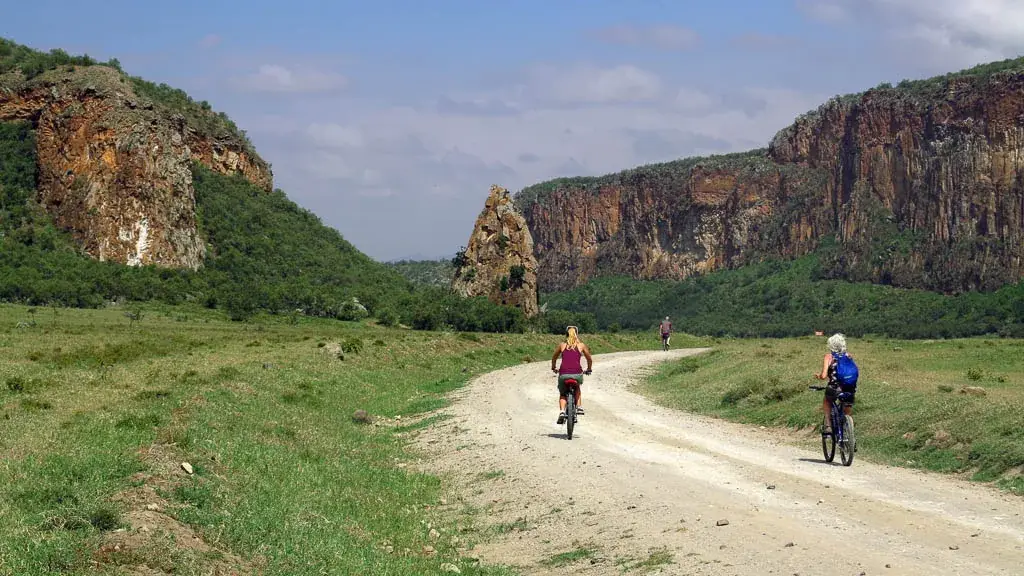
The classic walk visits all three falls with a local guide. It takes three to four hours at an easy pace, passing through coffee plots and villages, then into the gorges. You climb to the cave behind Simba Falls, continue up to Ngasire, and return by the ridge with views over the plains. Trails can be steep and slippery after rain, so proper shoes matter. A longer option takes you to the top of the falls and to higher viewpoints.
Abseil the main fall
For those who want their adrenaline, guided abseiling descends the cliff next to the 100-metre main fall. Experienced operators offer a gentler practice drop for beginners, and the experience gives you a completely different sense of the falls’ scale. Safety equipment and instructors are essential, and we only use operators with a good record.
Coffee tours
The slopes of Mount Elgon produce Arabica coffee. On a coffee tour, a local farming family shows you the whole process from picking to pulping, drying, roasting by hand over a fire and grinding, and then you drink the result. It is one of the best cultural experiences of the region and puts money directly into farming households.
Cultural experiences
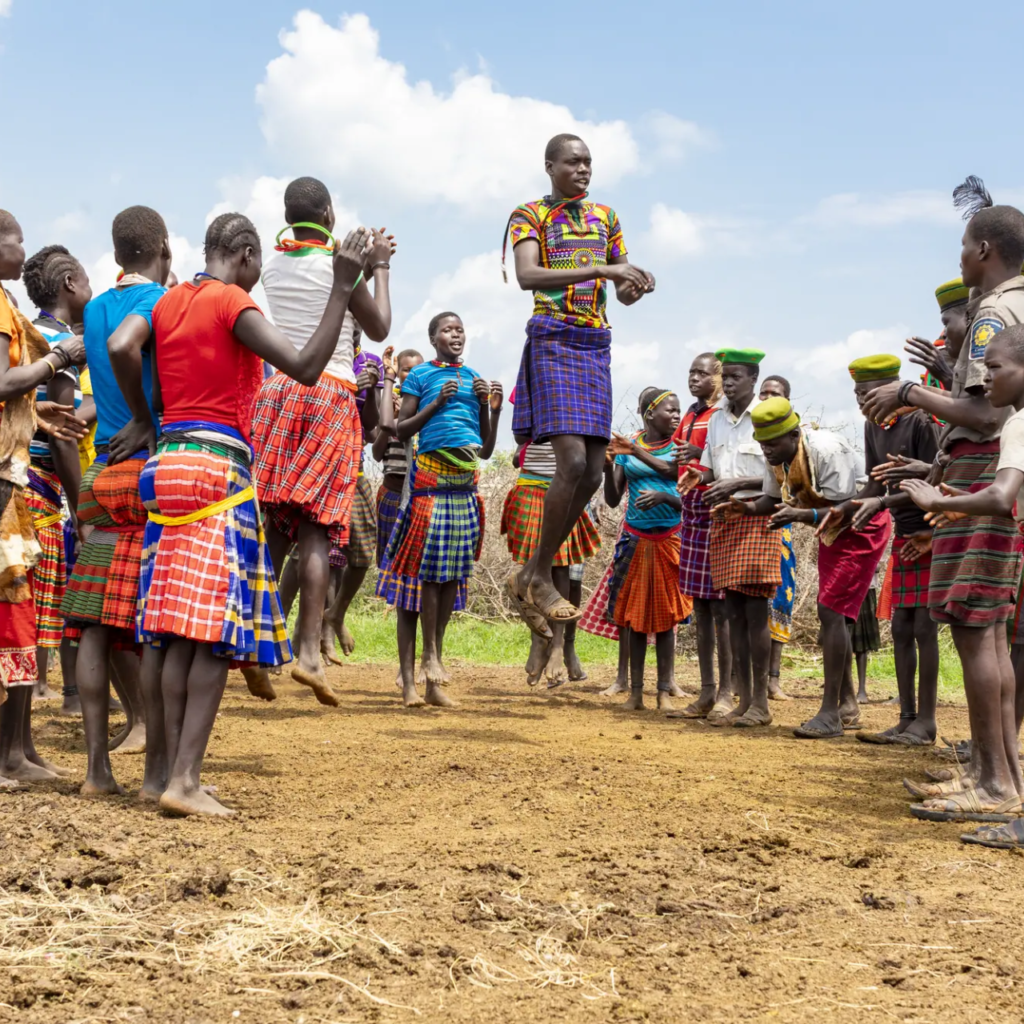
The area is home to the Sabiny, also called the Sebei, and to the Bagisu across the mountain. Community-led options include village walks, cooking with local women, and traditional dance. The Bagisu are famous for the Imbalu circumcision ceremonies held in even-numbered years, which are a private community rite and should be approached only as invited by community leaders.
Birdwatching and nature walks
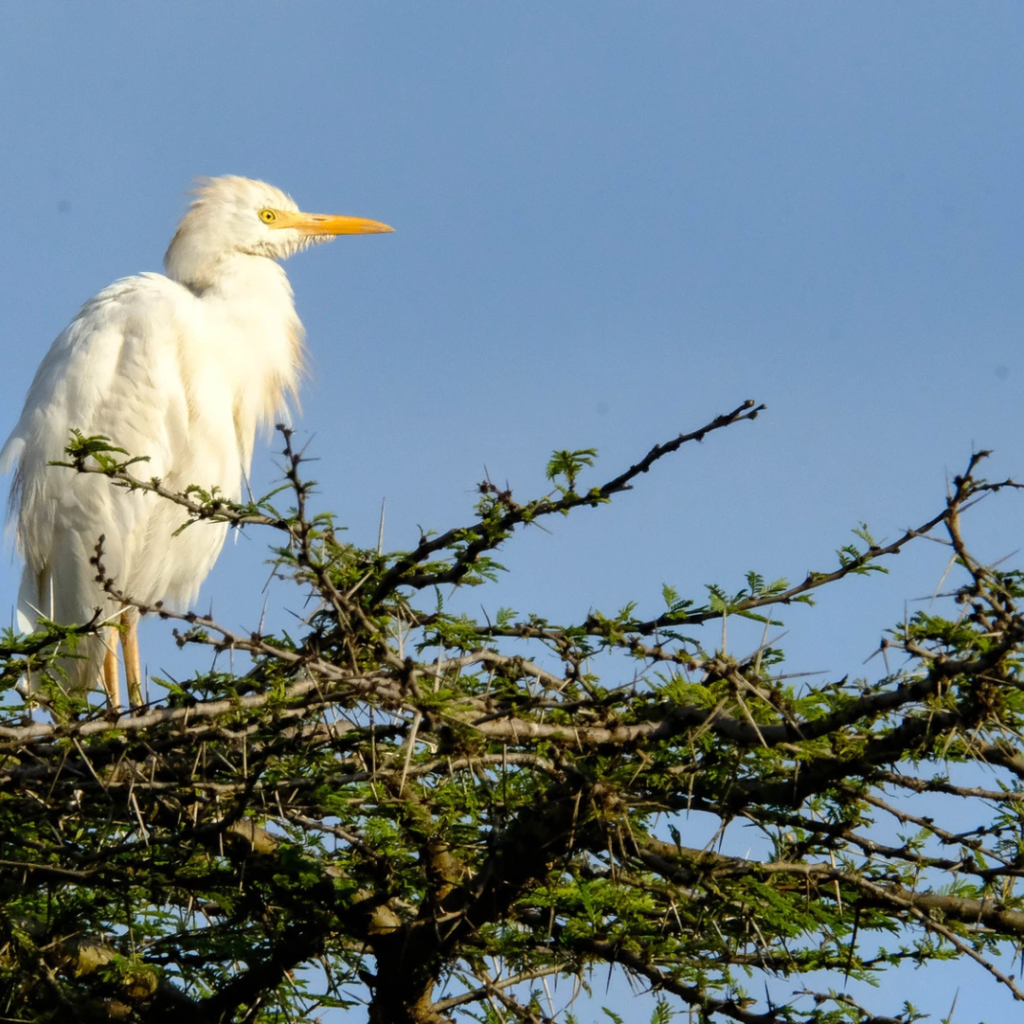
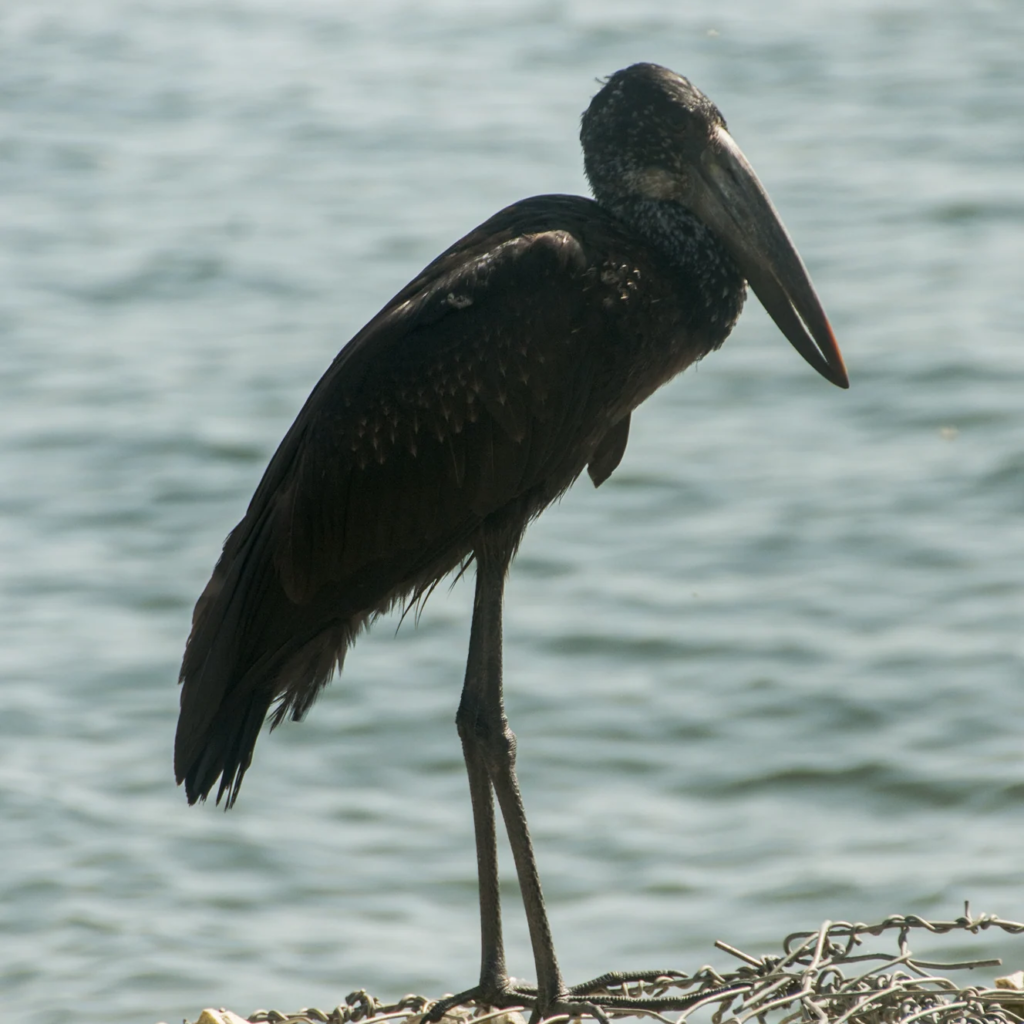
The forest edges and farmland around Sipi are good for birds, and the nearby Kapkwai Forest Exploration Centre within Mount Elgon National Park offers forest walks and small caves. Guides can tailor a morning walk for birds, butterflies or simply for views.
Cycling, climbing and mountain views
Village cycling routes, rock climbing near Chebonet Falls and sunrise viewpoints on the ridge are all on offer. Sunset from the cliff-edge lodges, when the plains glow and rainbows appear in the falls’ spray, is worth planning your day around.
Where to stay
Accommodation ranges from simple campsites and guesthouses to cliffside lodges with terraces that face the main fall. Staying on the escarpment lets you watch the falls from breakfast to bedtime. We choose places that support the local community and hire local guides, and we will suggest the right level of comfort for your group.
Combining Sipi with other places
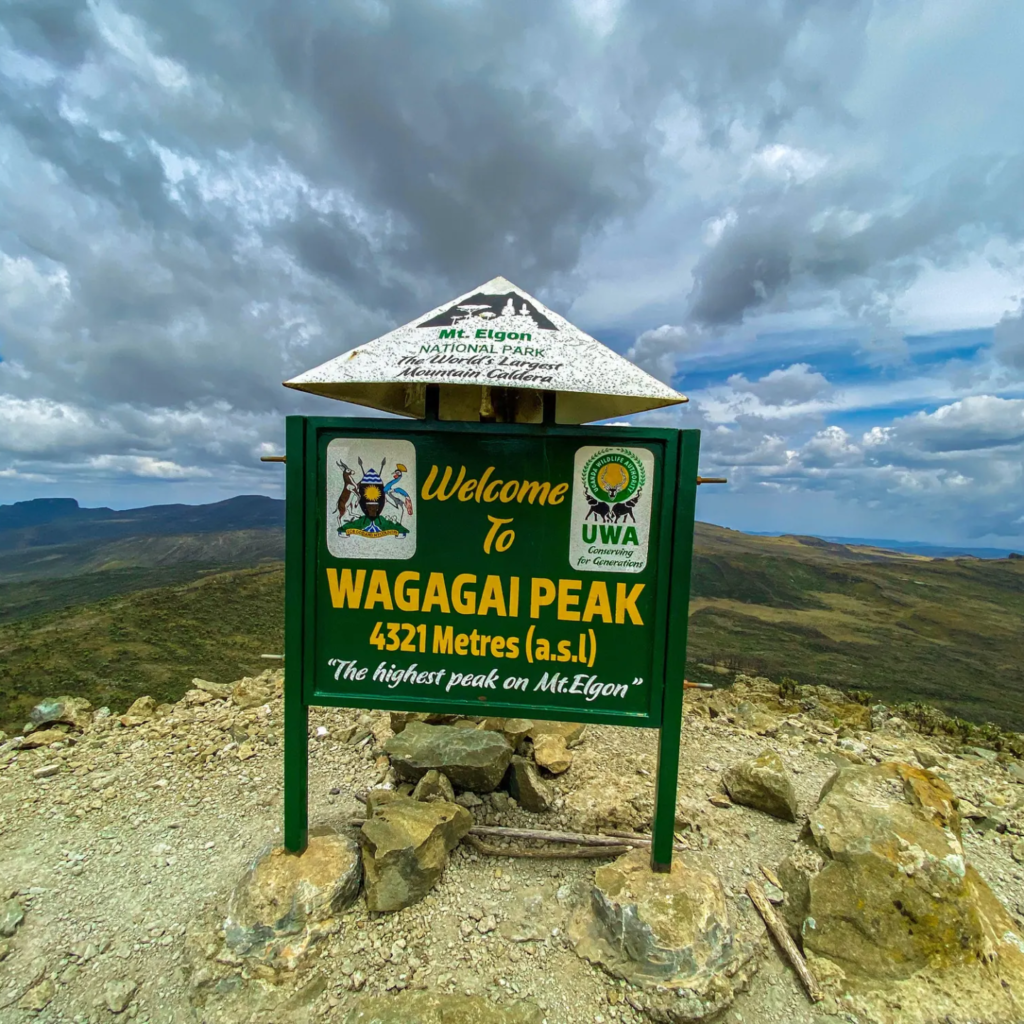
- Mount Elgon National Park: multi-day hikes on the Sasa, Sipi and Piswa routes, caves, hot springs and views of an extinct volcano straddling the Kenya border.
- Jinja: the source of the Nile and Uganda’s adventure capital, on the way from Kampala.
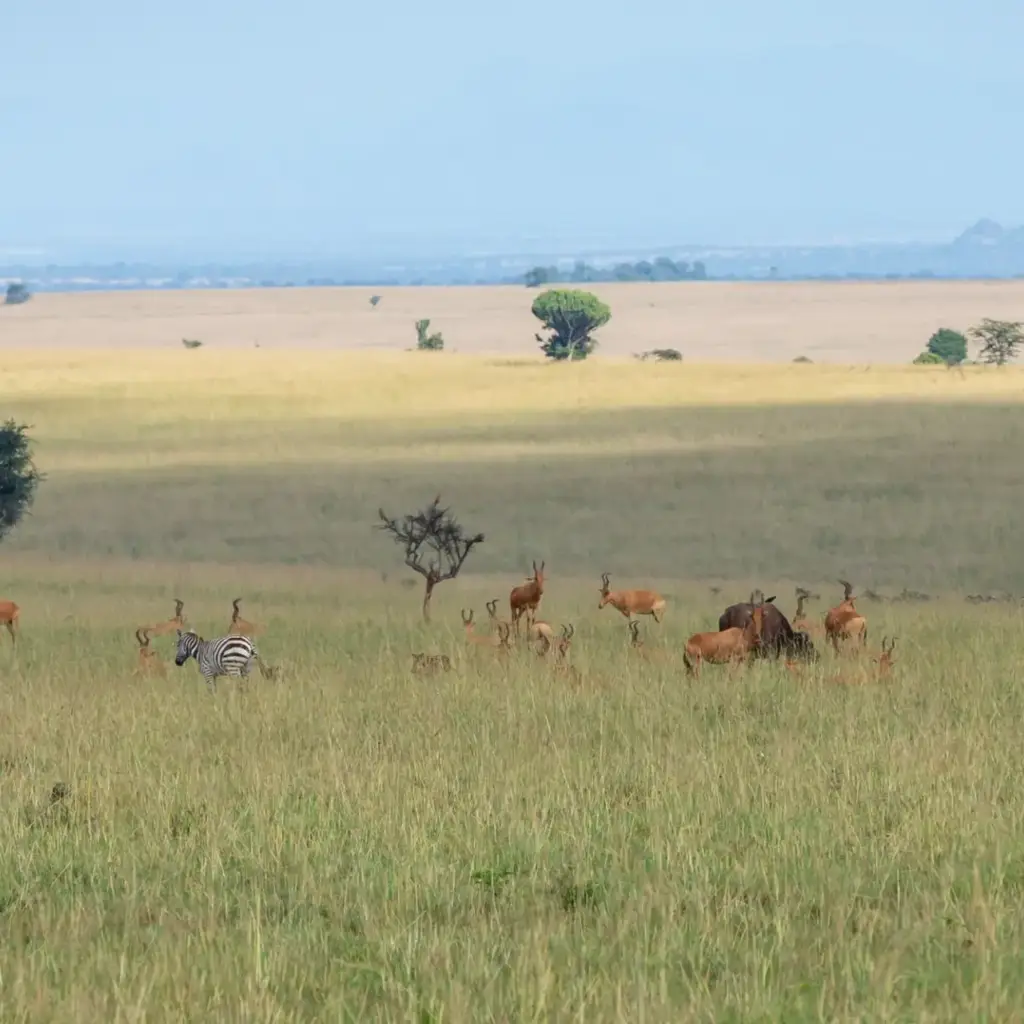
- Karamoja and Kidepo Valley National Park: the remote, culturally rich north, which lies beyond the plains you can see from Sipi.
- Pian Upe and Matheniko: wildlife reserves on the Karamoja edge.
When to go
Sipi can be visited year-round. The drier months, roughly December to February and June to August, are easiest for hiking and give clear views, though the falls run fullest after rain. During the rains the trails are muddy and the countryside is spectacularly green.
Practical advice
- Wear sturdy shoes with grip, bring a rain jacket and carry water, sun protection and a small torch.
- Hire a local guide for every hike. It supports the community and is much safer than going alone.
- Do not swim or wade above the falls, and keep to the paths near cliff edges.
- Nights can be cool at this altitude, so bring a warm layer.
- Check our Health & Safety page for guidance on fitness and altitude.
Visit Sipi with Offmap Safaris
Sipi is best given at least two nights, so that you have a full day for the waterfalls and a slower one for coffee, culture and views. It fits well into a longer route across eastern Uganda. Start planning your safari, message us on WhatsApp +256 701 243 304 or email [email protected]. Read our Responsible Travel page to learn how to visit well.