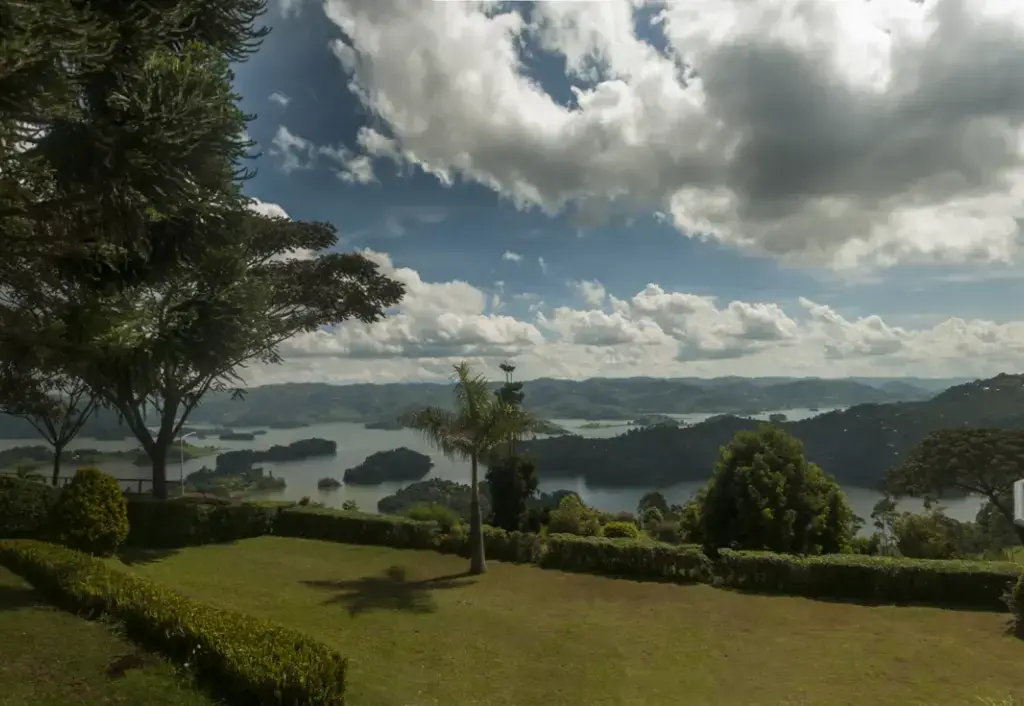
Rwanda’s Congo Nile Trail
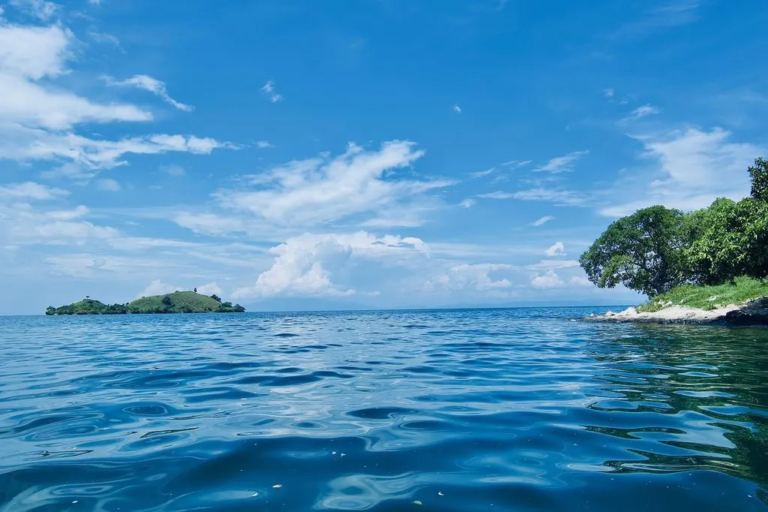
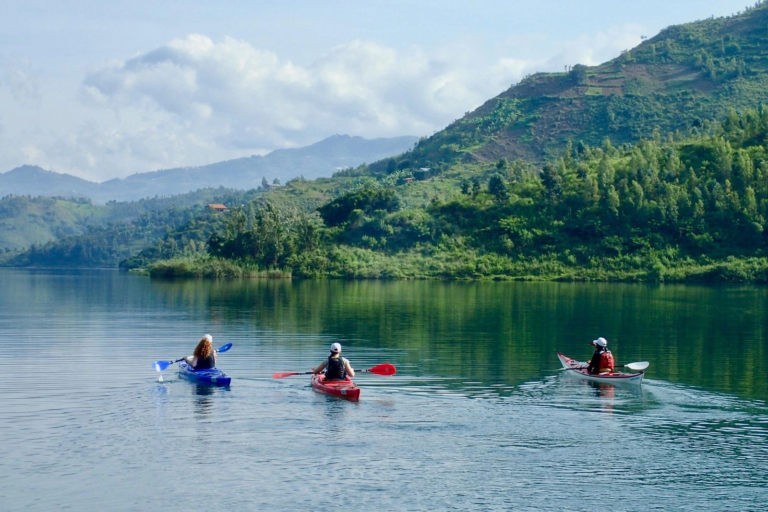
The best-known dedicated cycling route in the region traces Lake Kivu’s eastern shore for roughly 227 kilometres, beginning at Rubavu (Gisenyi) and running south through fishing villages, tea plantations and terraced hillsides toward Kamembe near Rusizi (Cyangugu). Most cyclists complete it over four to seven days, staying in lodges and guesthouses along the way, though the terrain is demanding: around three-quarters of the route is unpaved, with significant elevation gain through the tea-growing highlands and stretches of rugged forest track near Nyungwe National Park that can be tough after rain. Shorter one- or two-day sections are a realistic option for travellers who want a taste of the route without committing to the full distance.
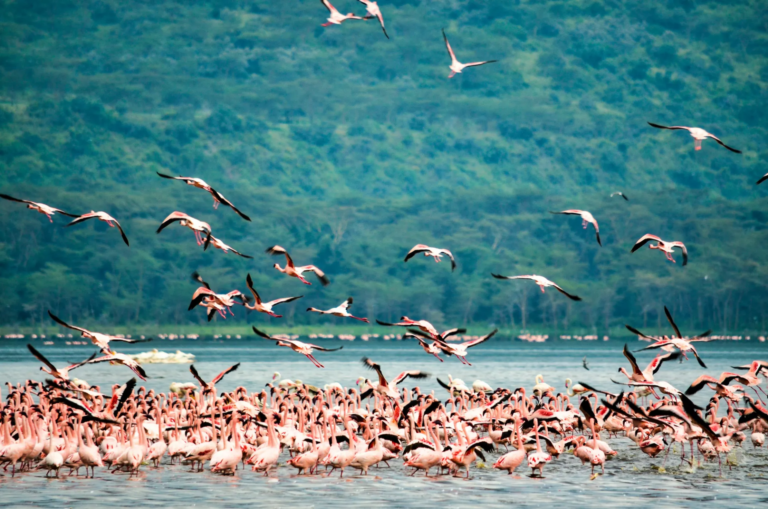
Hell’s Gate: cycling among wildlife
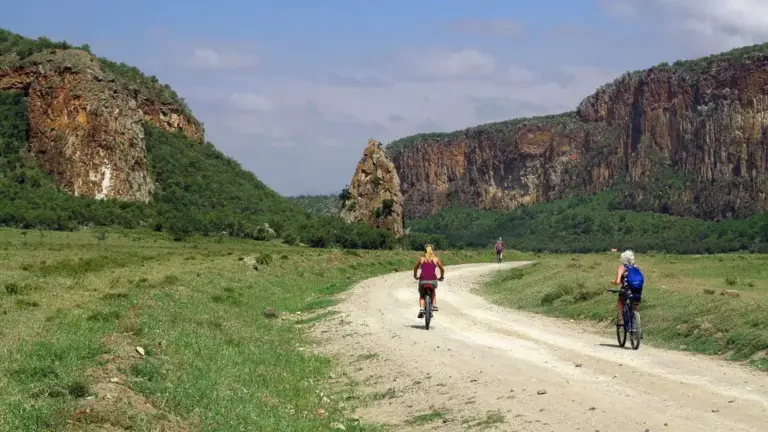
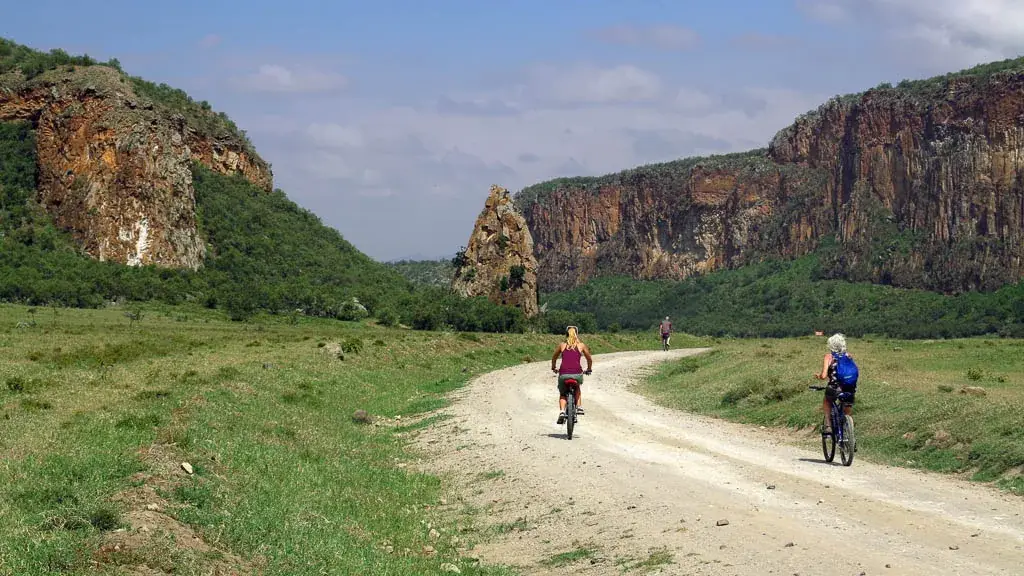
Kenya’s Hell’s Gate National Park is unusual for allowing visitors to cycle freely on its tracks among wildlife, since the park holds no predators large enough to pose a serious danger to cyclists. Riding beneath the park’s dramatic red-rock gorges and towers, with zebra, giraffe and antelope grazing unconcerned nearby, is a markedly different format from a multi-day route: a single memorable half-day rather than an endurance ride, and one of the very few places in East Africa where cycling and big-game scenery combine directly.
Community and rural cycling
Shorter guided rides through rural Uganda or Rwanda offer a lower-intensity way to add cycling to a safari without committing to a demanding multi-day route. These typically combine a few hours on quiet rural roads with a stop at a village, farm or cooperative along the way, giving a closer look at everyday agricultural life than a vehicle-based itinerary usually allows. Bicycles and support vehicles are provided by local operators, and routes are chosen for manageable gradients rather than technical difficulty.
Lakeside rides around Bunyonyi and Kivu
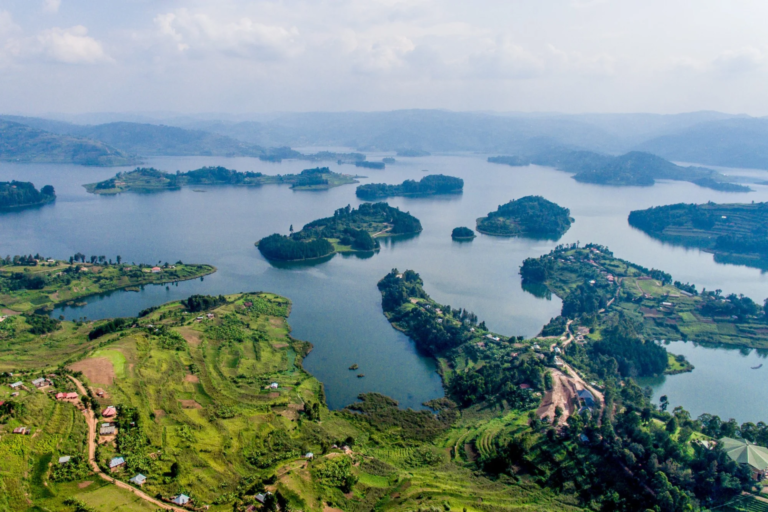
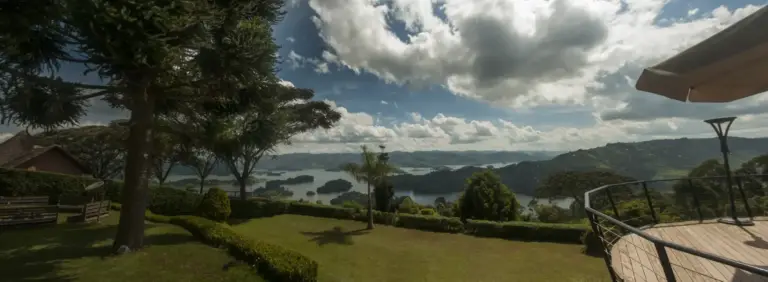
Beyond the dedicated Congo Nile Trail, the hills around Lake Bunyonyi and the wider Lake Kivu shoreline offer shorter, less strenuous rides through terraced farmland and fishing communities, usually arranged directly through lodges in the area rather than as part of a dedicated cycling tour operator’s programme. These suit travellers who want an active morning or afternoon without committing to a multi-day route, and they pair naturally with a wider southwestern Uganda or Rwanda itinerary built around gorilla trekking.
Fitness and experience needed
The Congo Nile Trail’s full length demands genuine cycling fitness and comfort on unpaved, occasionally steep terrain; it is not a route to attempt without some riding experience beforehand. Hell’s Gate and community rides, by contrast, are accessible to most reasonably fit adults regardless of cycling background, since the terrain is gentler and the distances shorter. Operators can usually adjust distance and pace to match a rider’s fitness, particularly for shorter sections of longer routes.
Zanzibar’s spice-farm cycling routes
On Tanzania’s coast, gentle cycling routes through Zanzibar’s spice-growing interior offer a lower-key alternative again, riding between smallholdings growing cloves, cinnamon and vanilla rather than climbing highland terrain. These rides are typically flat, short, and suited to travellers combining a beach stay with one active morning inland, quite different in character from either the Congo Nile Trail’s endurance riding or Hell’s Gate’s wildlife-adjacent tracks.
What’s provided
Multi-day operators typically supply mountain bikes suited to the terrain, a support vehicle carrying luggage and water, and a guide familiar with the route’s water points, accommodation and any sections best walked rather than ridden. Riders bringing their own preferred saddle or pedals are welcome to do so, subject to airline transport arrangements. Helmets are provided and should always be worn.
Combining cycling with wildlife safari days
Cycling rarely forms the whole of an East African itinerary; it works best as one or two active days set against a wider safari built around game drives, gorilla trekking or a beach stay. A common pattern pairs Rwanda’s Congo Nile Trail or a Lake Bunyonyi ride with gorilla trekking in Bwindi or Volcanoes National Park, since both destinations sit within the same southwestern Uganda and Rwanda region, letting travellers alternate between an active cycling day and a demanding forest trek without excessive additional travel time between them.
Practical notes
- The Congo Nile Trail’s wet season, roughly March to May and October to November, makes unpaved sections considerably harder and slower
- Sun protection matters even on cooler highland routes, given the equatorial latitude and altitude
- A support vehicle following multi-day rides means a tired or unwell rider can rest without abandoning the group’s schedule
- Hell’s Gate requires a park entry fee in addition to any bike hire or guide fee
Choosing your bike and your route
Mountain bikes with front suspension suit most routes, and e-bikes are an option on longer days where available. Helmets are provided and gears are checked each morning. We match route length and terrain to your fitness, with a vehicle following for rest, water and luggage.
Ask for a saddle that fits well and bring padded shorts for longer rides.
Cycling with care for the road and the community
On shared roads, ride in single file and keep to the left in countries that drive on the left. Greet people you pass and ask before taking photographs of villagers. Cycling also lets you buy fruit or a cold drink directly from roadside sellers, which supports the local economy.
Keep a respectful distance from wildlife when riding in parks.
Planning your cycling safari
Tell us your fitness level and how much time you want to spend on two wheels, whether that is a full Congo Nile Trail crossing, a single memorable morning at Hell’s Gate, or a gentle rural ride between other safari days, and we will match the right route and duration to it.