
What a day looks like
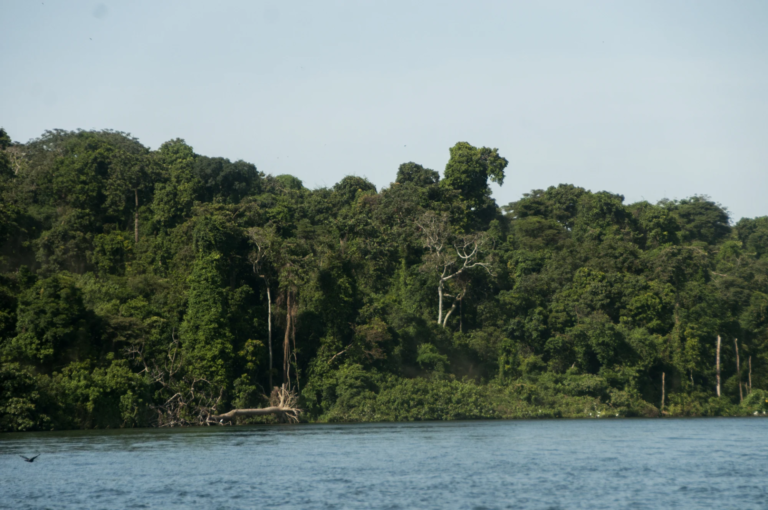
Days follow the animals. You set out at first light, when predators are still moving and the air is cool, and return to the lodge for breakfast and a midday rest. A second drive in the late afternoon catches the soft light and the return of activity at waterholes. Your driver-guide reads tracks and alarm calls, shares sightings with other guides by radio and decides how long to stay with each animal. Some parks add boat cruises, guided walks and night drives for a different view of the same landscape.
Choosing the right park
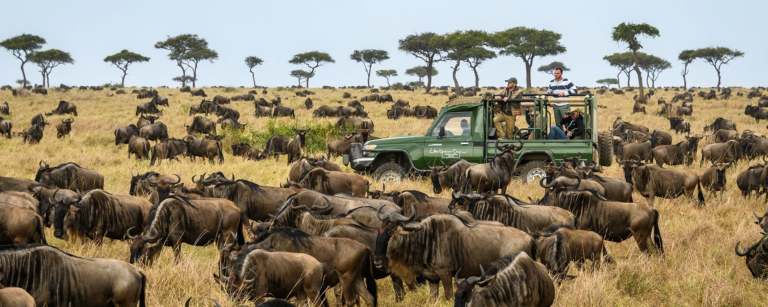
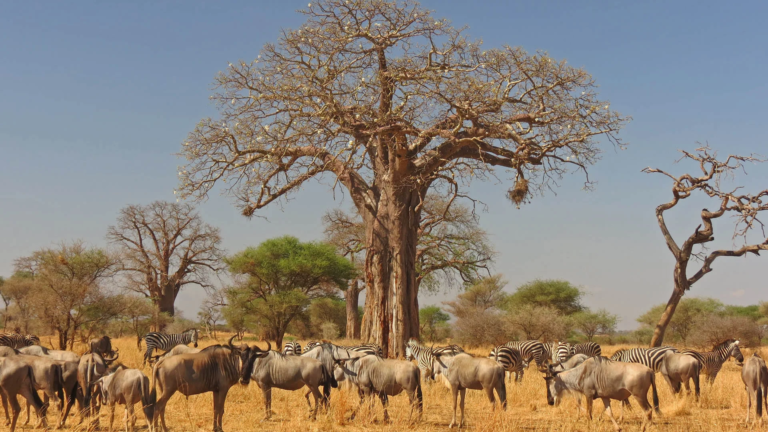
- Open plains and big herds: the Masai Mara and the Serengeti, where lions, cheetahs and the great migration share wide grassland.
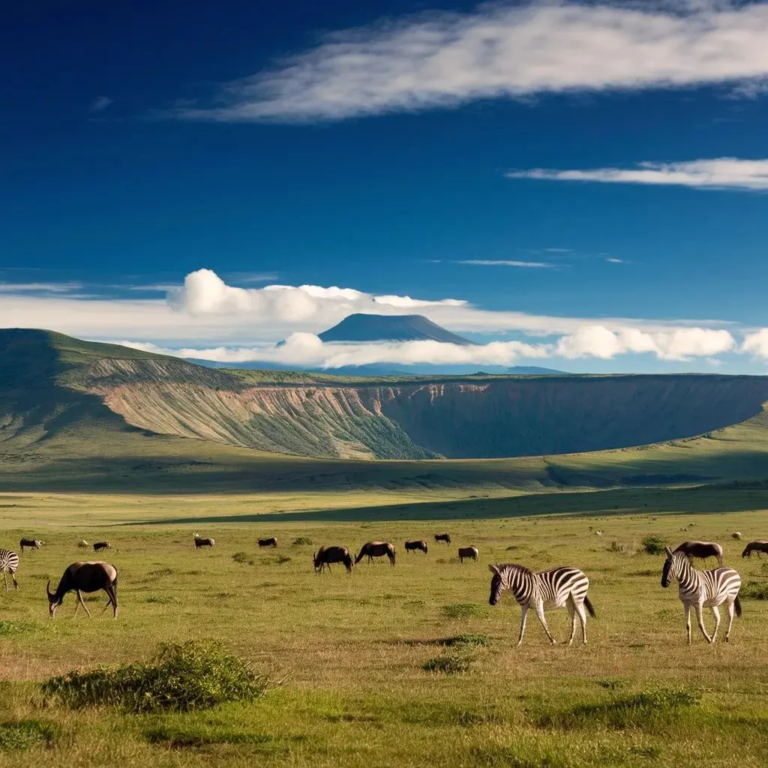
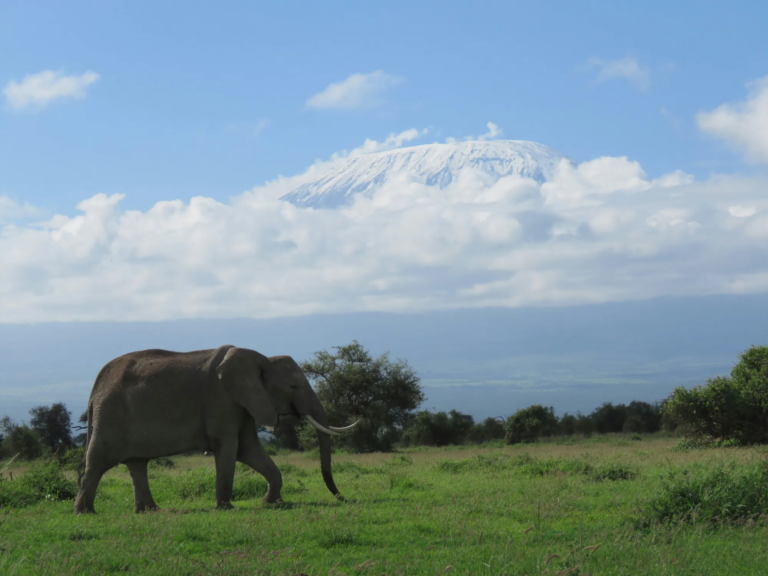
- Elephants and crater views: Amboseli, Tarangire and the Ngorongoro Crater, with dense wildlife in a small area.
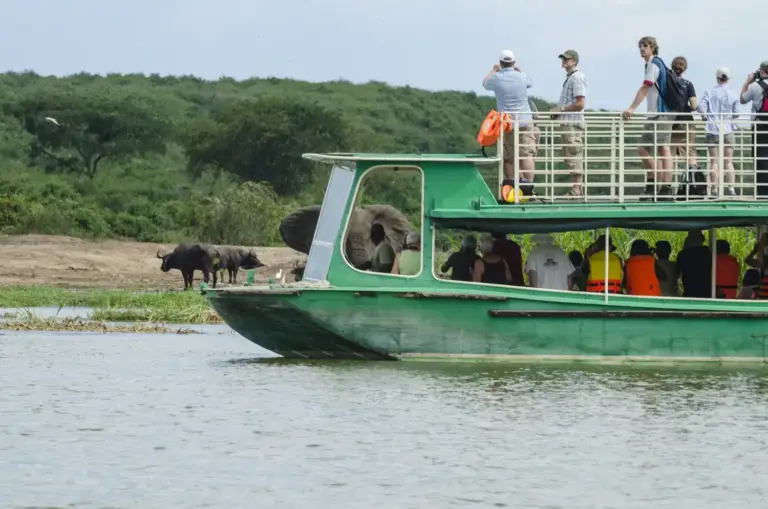
- Variety with water: Queen Elizabeth National Park and Murchison Falls in Uganda, where boat cruises on the Kazinga Channel and the Nile put hippos, crocodiles and elephants at close range.
- Quiet and remote: Kidepo Valley in north eastern Uganda, where few vehicles share the savannah.
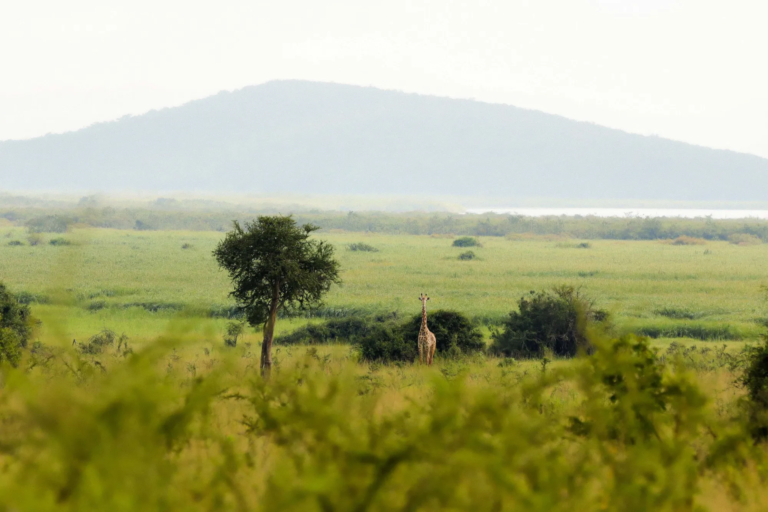
- Small and walkable: Lake Mburo National Park, with zebra, impala, eland and giraffe and walking and horseback options.
- Rwanda’s comeback story: Akagera National Park, where lions and rhinos have been reintroduced and the lakes and papyrus swamps add variety.
What you can see
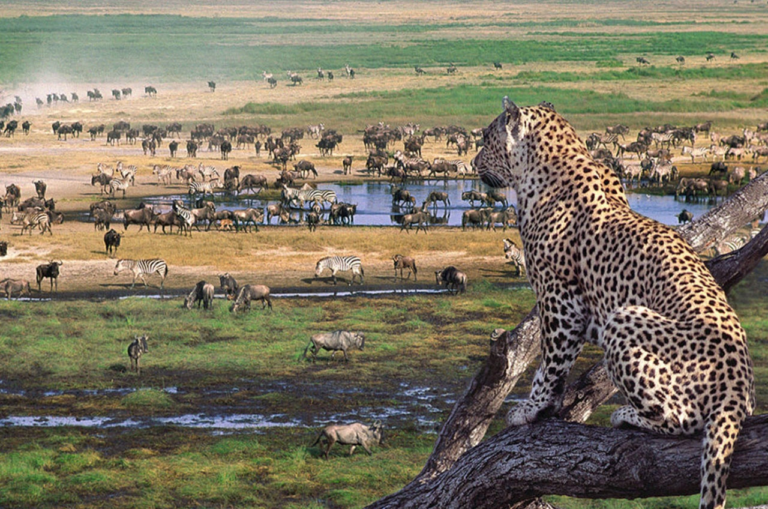
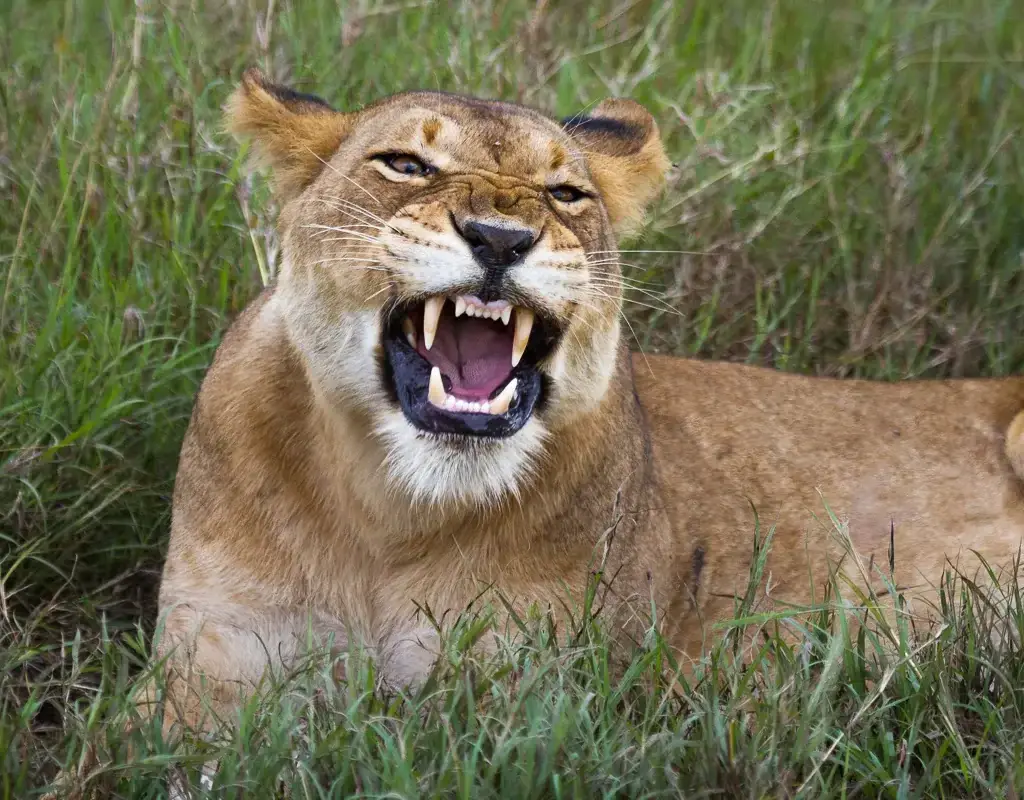
- Big cats: lions in every major park, leopards on rocky outcrops and riverine trees, and cheetahs on open plains in Kenya and Tanzania.
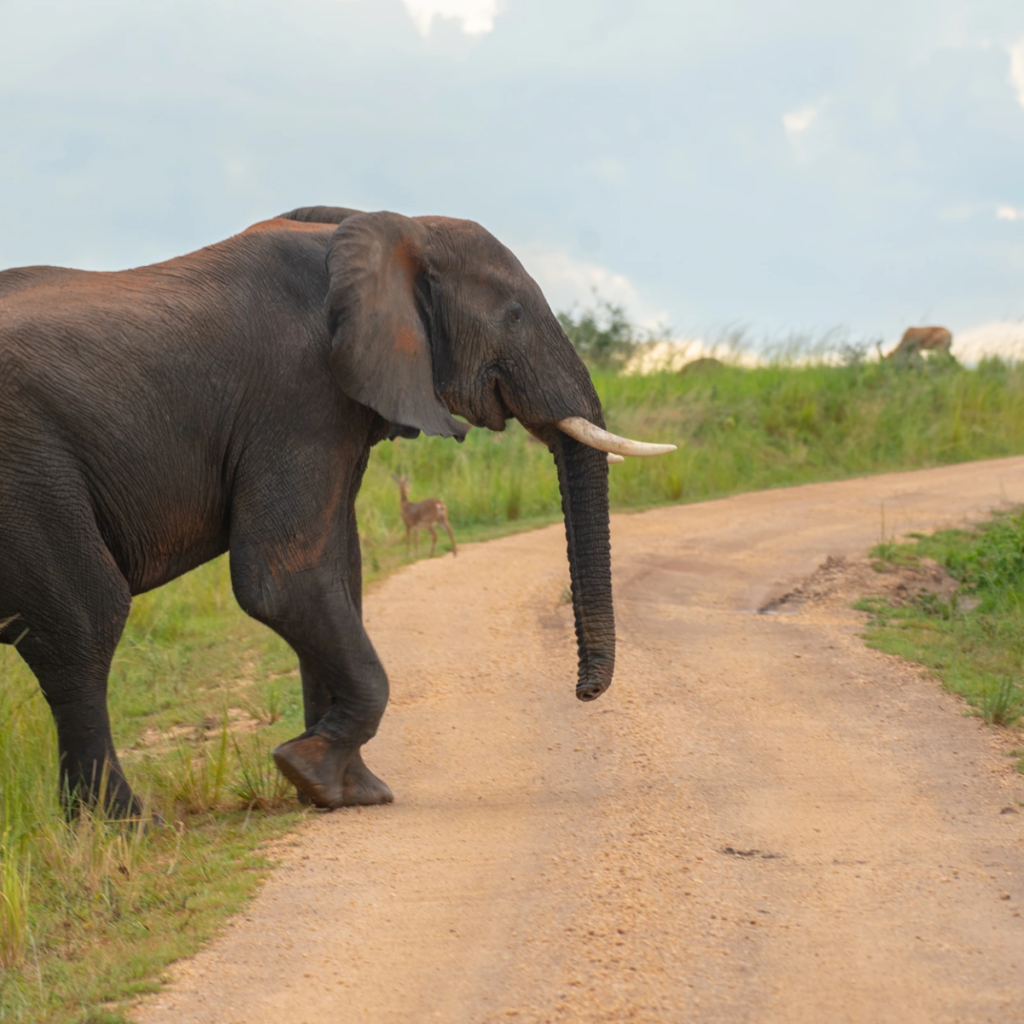
- Elephants and buffalo: large herds in Amboseli, Tarangire, Queen Elizabeth and Murchison Falls.
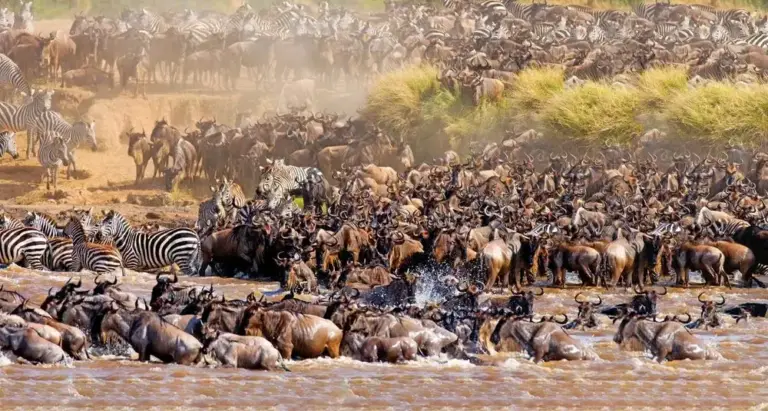
- Great herds: wildebeest and zebra on the Serengeti and Mara plains, with the river crossings from roughly July to October.
- Giraffe, hippo and antelope: widespread, with Uganda kob, topi, oribi and many more.
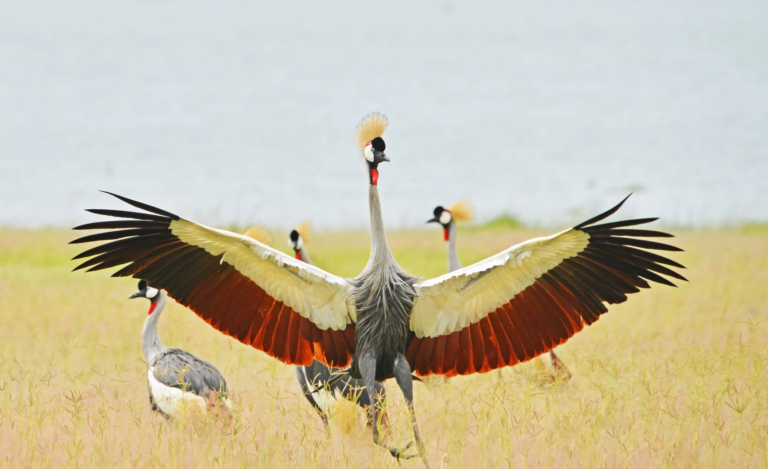
- Rare and special: white rhino in Uganda and Rwanda, tree-climbing lions at Ishasha in Queen Elizabeth National Park and at Lake Manyara, and shoebill storks in the wetlands.
Ways to see wildlife beyond the vehicle
A game drive is the core, but the best safaris add variety. A boat cruise brings you to eye level with hippos and elephants drinking at the water’s edge. A guided walk reveals tracks, insects and plants that a vehicle passes. A night drive, offered in some conservancies and parks, shows civets, bushbabies and genets. A dawn hot air balloon flight over the Mara or the Serengeti shows the scale of the plains. Each format has its own rhythm, and we choose a mix that fits your energy.
When to go
Wildlife is rewarding all year, but the dry seasons make animals easier to find as they concentrate near water. In Kenya and Tanzania, the great migration is generally strongest from July to October, when herds cross the Mara River, while the calving season on the southern Serengeti plains runs roughly from January to March. In Uganda and Rwanda, the drier months of June to September and December to February are the most comfortable. The wetter months bring green scenery, newborn animals and fewer visitors.
A good guide changes everything
Two vehicles in the same park can have very different days. A skilled driver-guide knows where a leopard rests in the heat, reads the body language of a lion pride, and positions the vehicle for light and safety. We work with guides who are trained, patient and happy to answer questions, and we brief them on your interests, whether that is photography, birds or families with children.
Families, first timers and seasoned travellers
First timers often do best with a classic route of two or three parks, so that each has time to unfold. Families benefit from shorter drives, a base with a pool and a guide who involves children by spotting tracks and birds. Seasoned travellers often prefer smaller, quieter areas such as conservancies and remote parks where fewer vehicles share each sighting and walking or night drives are available. Tell us who is travelling and what each person hopes to see, and we shape the days around them.
What to pack for a wildlife safari
Neutral coloured clothes in layers, a warm jacket for early drives, a sun hat, sunglasses, sunscreen, insect repellent and comfortable closed shoes are the core list. Bring binoculars, ideally one pair each, and a charged phone or camera with spare memory. A small day bag keeps water and snacks within reach. We send a full packing list with your confirmation.
Photography and etiquette
Keep your voice low and your movements slow. Do not leave the vehicle except where your guide says it is safe. Never feed animals or ask a guide to drive too close, and follow park rules on distance. If you photograph, a lens of at least 200 millimetres is useful, and a beanbag steadies it on the vehicle roof. Dust and heat are part of the day so protect your equipment.
Combining wildlife with gorillas, culture and rest
Many travellers pair a wildlife safari with gorilla trekking in Rwanda or Uganda, a few days on the coast of Zanzibar, or an adventure such as rafting on the Nile. We space the days so that long drives are balanced by rest days, and we place nights near the action so that you spend more time looking and less time on the road.
How we plan it
We choose parks to match what you want to see and how much driving you are happy to do, and we place each night to reduce long transfers. Because every safari is private, your vehicle and guide move on your schedule, which changes the quality of every sighting. Prices are quoted in US dollars after we plan your route, with every inclusion confirmed in writing.
Explore further
See our wildlife safaris, read about Uganda, Kenya, Tanzania and Rwanda, explore game drives and adventure experiences, or start your plan at Plan My African Safari.