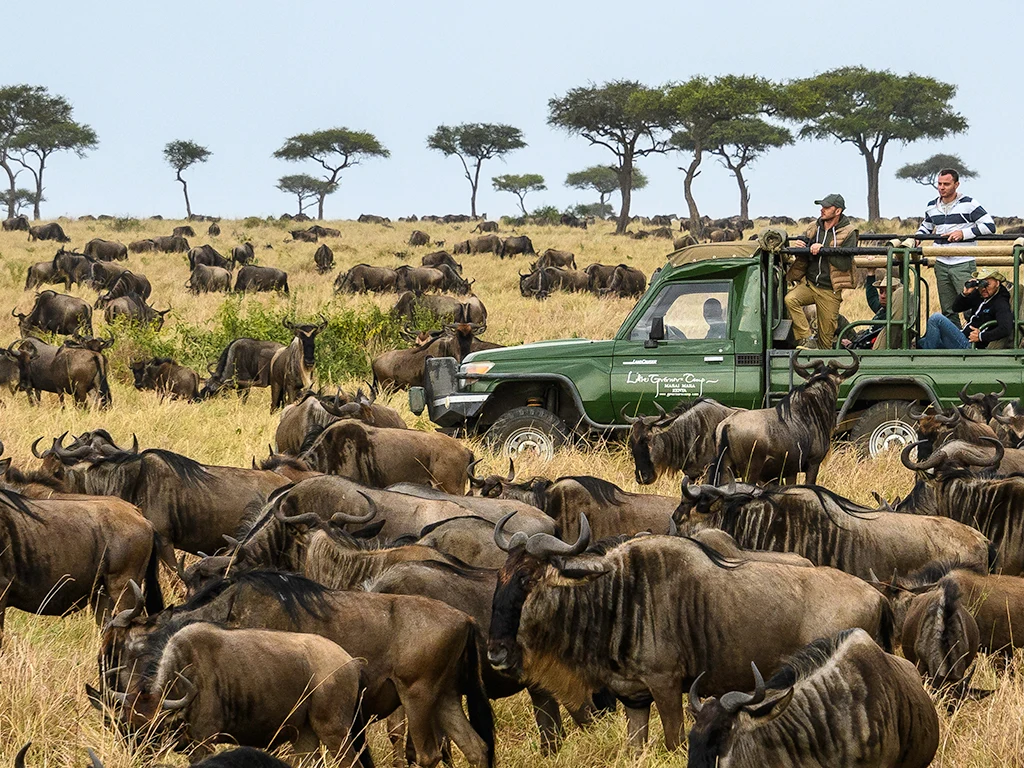
For a few months each year, Kenya’s Maasai Mara becomes the stage for the final act of the largest overland movement of animals on Earth: hundreds of thousands of wildebeest and zebra pouring across an unfenced, international border from Tanzania’s Serengeti, drawn north by grass the southern plains have already run dry.
What’s actually happening when the herds “arrive”
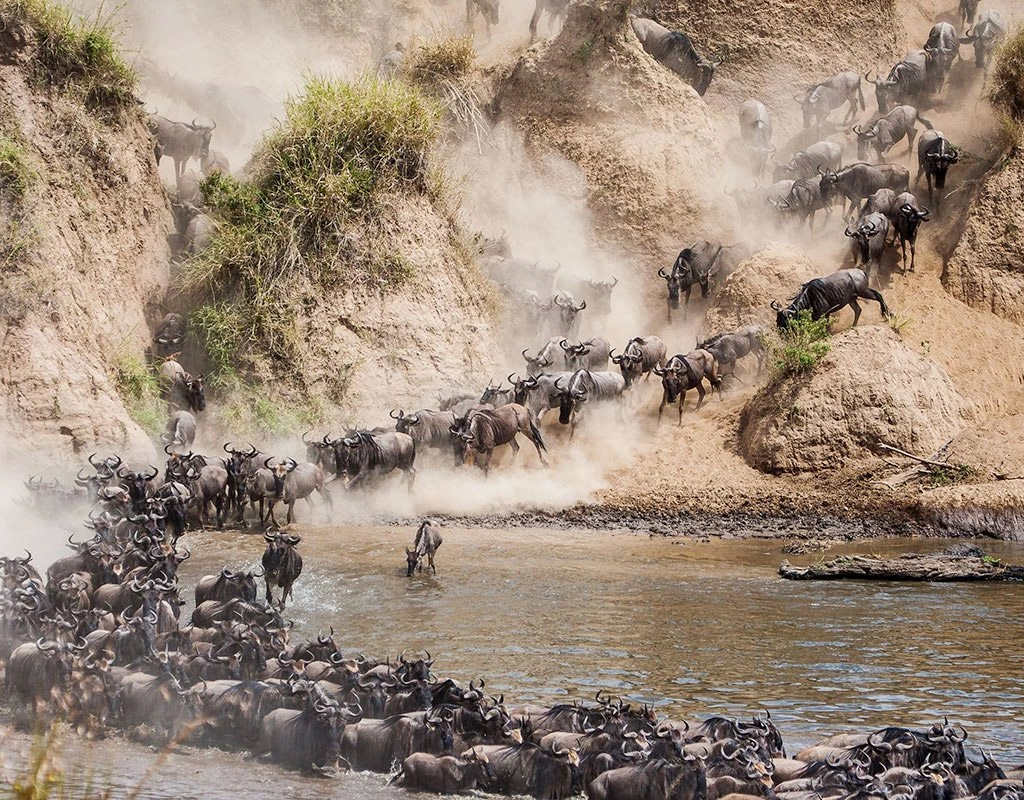
The Maasai Mara and the Serengeti are not two separate ecosystems. They are one continuous system that happens to straddle a national border, with no fence to mark the line. What looks, from Kenya’s side, like the herds “arriving” is really the northern edge of one enormous, continuously moving population, shifting into Kenyan territory as grazing in southern Tanzania is exhausted. Getting there means crossing the Mara River at least once; the single moment covered in full on our Mara River Crossings page.
When to expect them
The herds’ presence in the Mara is most likely from around July to October, though the exact timing shifts from year to year with rainfall patterns rather than a fixed calendar; a guide who reads conditions on the ground, not a date on a brochure, is what actually gets you there at the right moment. By November, the herds typically begin moving back south as the short rains return to the Serengeti.
The Mara isn’t only about the migration
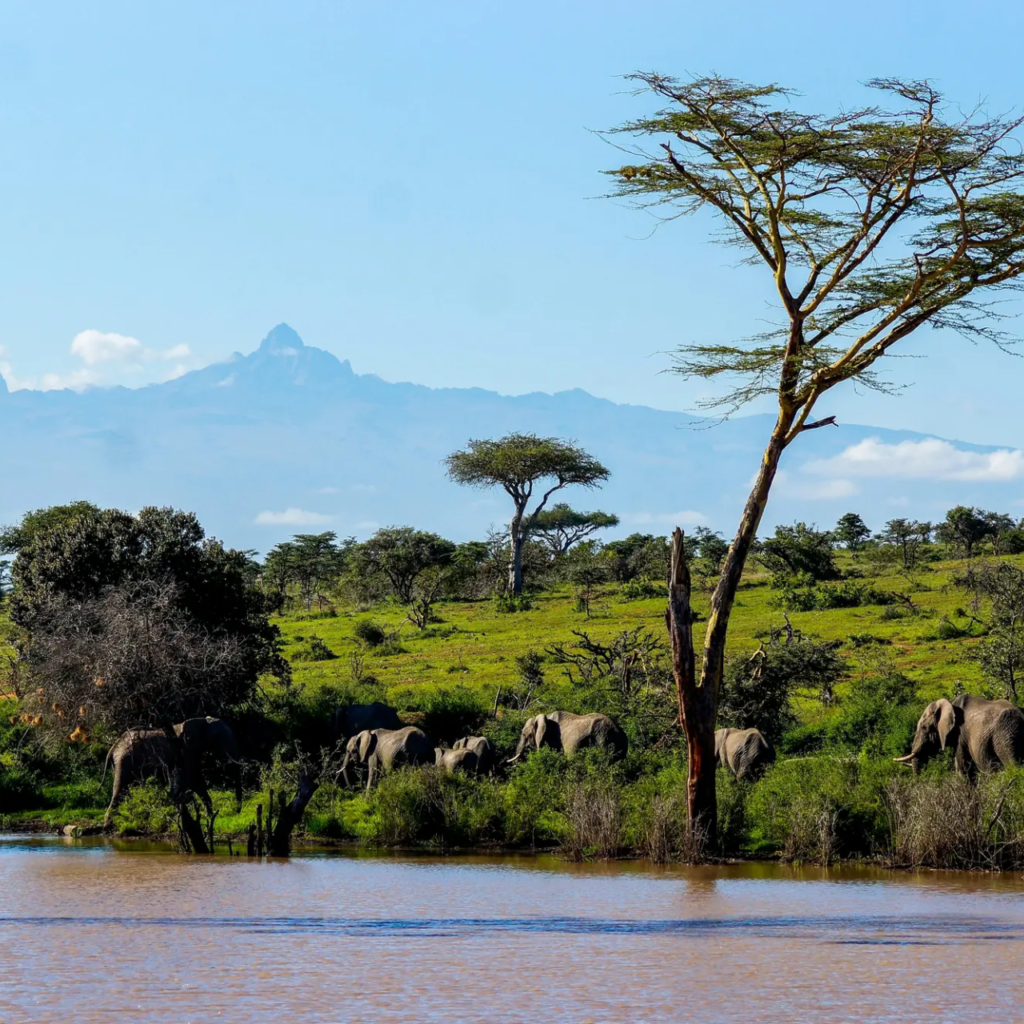
It’s worth remembering that the Maasai Mara holds resident lion, leopard, elephant and the full Big Five year-round, along with some of Africa’s healthiest cheetah populations. So a Mara safari outside migration season is still a genuinely strong one, not a consolation prize. Over 3,000 lions are estimated to live across the wider Serengeti-Mara ecosystem, drawn to the herds but entirely capable of a good sighting on an ordinary day too.
Where to watch from
Camps and lodges inside the Mara’s private conservancies sit closer to the river and typically allow earlier starts and off-road positioning that the national reserve itself restricts: see our Accommodation in Kenya guide for how the conservancies compare to reserve-based camps. Flying in via one of the Mara’s own airstrips (see Airstrips in Kenya) cuts a 5–6 hour road transfer from Nairobi down to around 45 minutes, which matters when migration timing is tight.
Planning around the migration
See our National Parks of Kenya guide for how the Mara fits alongside Amboseli, Samburu and Kenya’s other parks, and our Great Migration in Tanzania page if you’re weighing up which side of the border, or both, to build your safari around.
Plan a safari around The Great Migration in Kenya: When the Mara Comes Alive
Tell us your dates and what you most want to see, and we’ll time your safari to match it as closely as nature allows. Talk to us, or browse our safari packages to see how a migration-timed itinerary is put together.