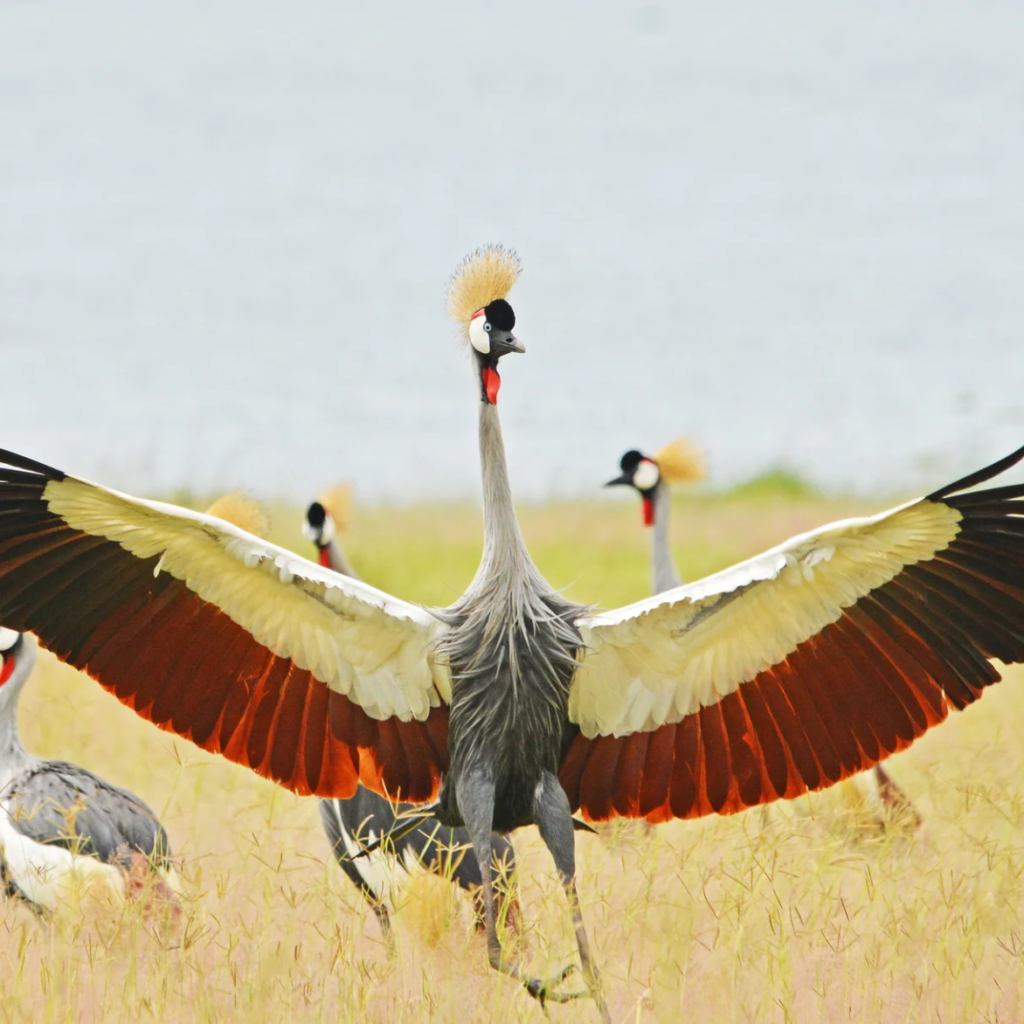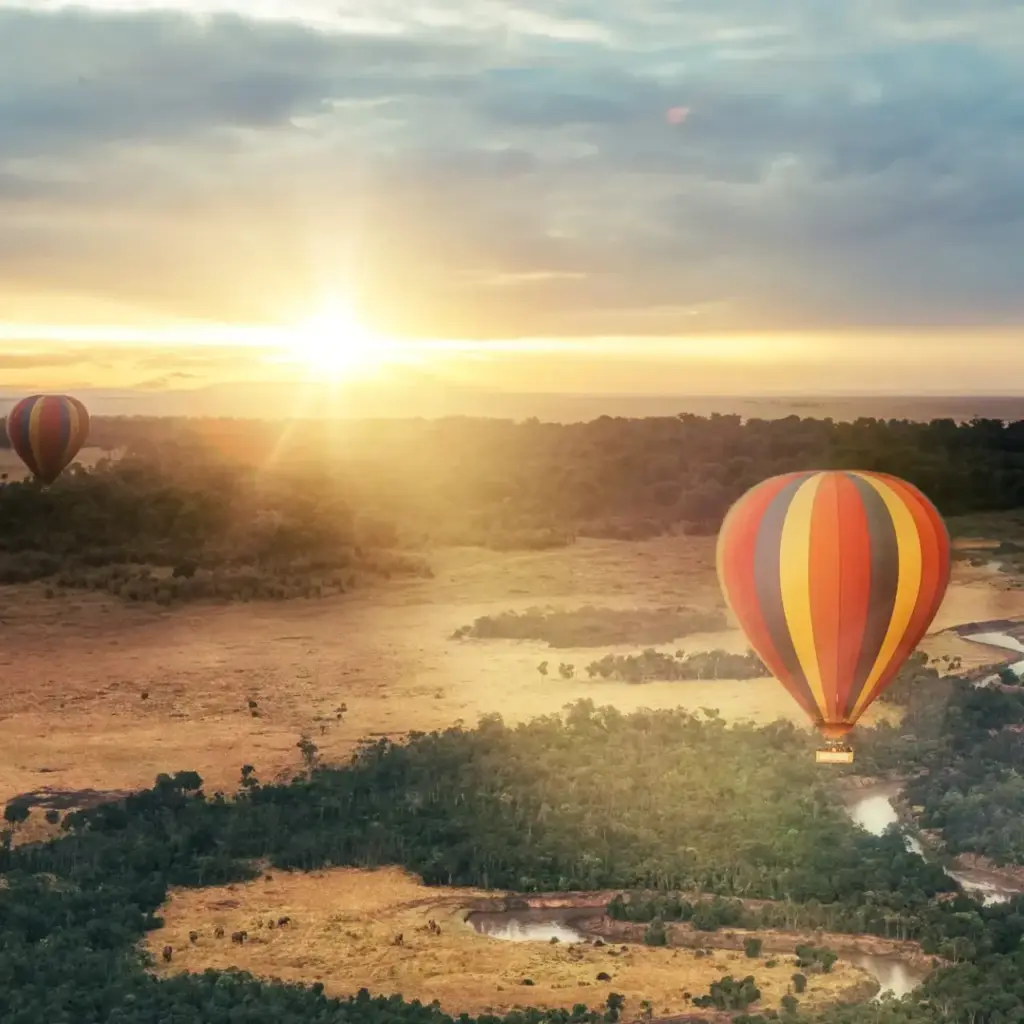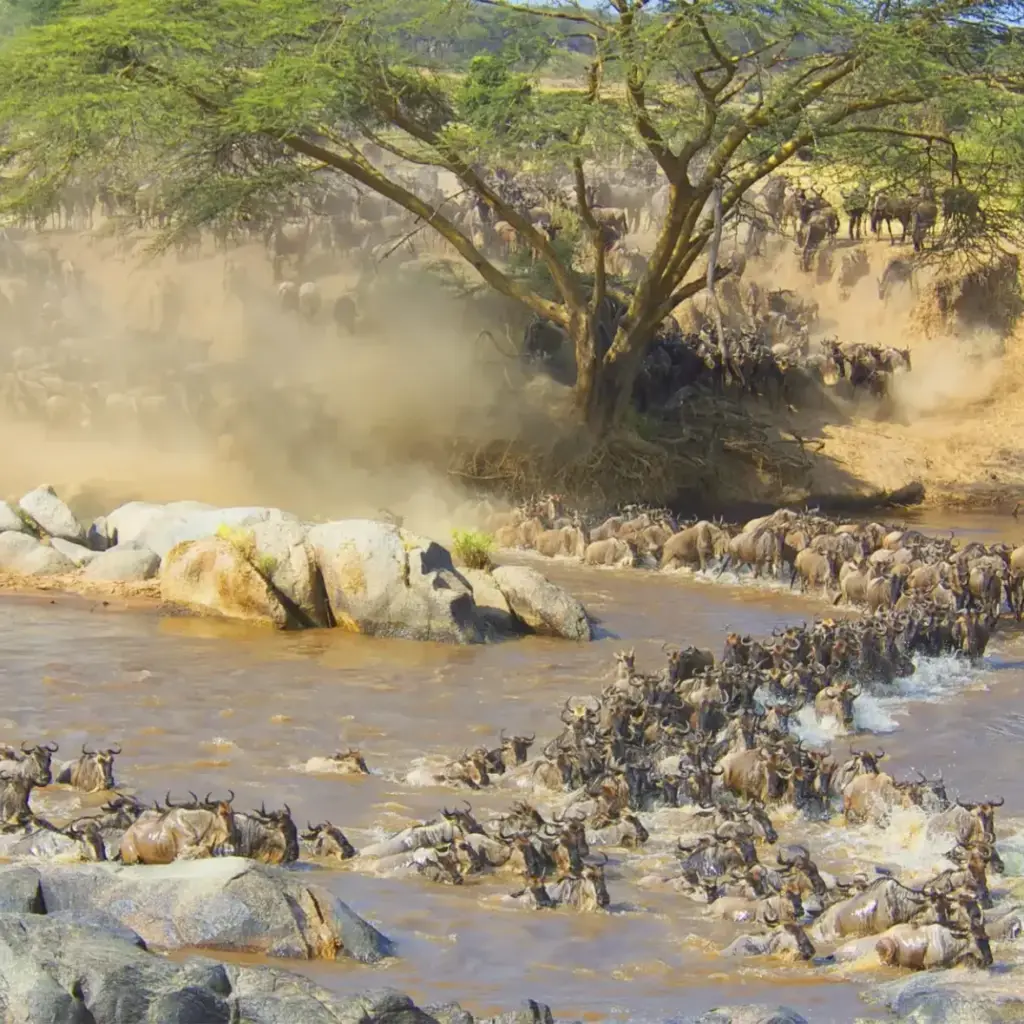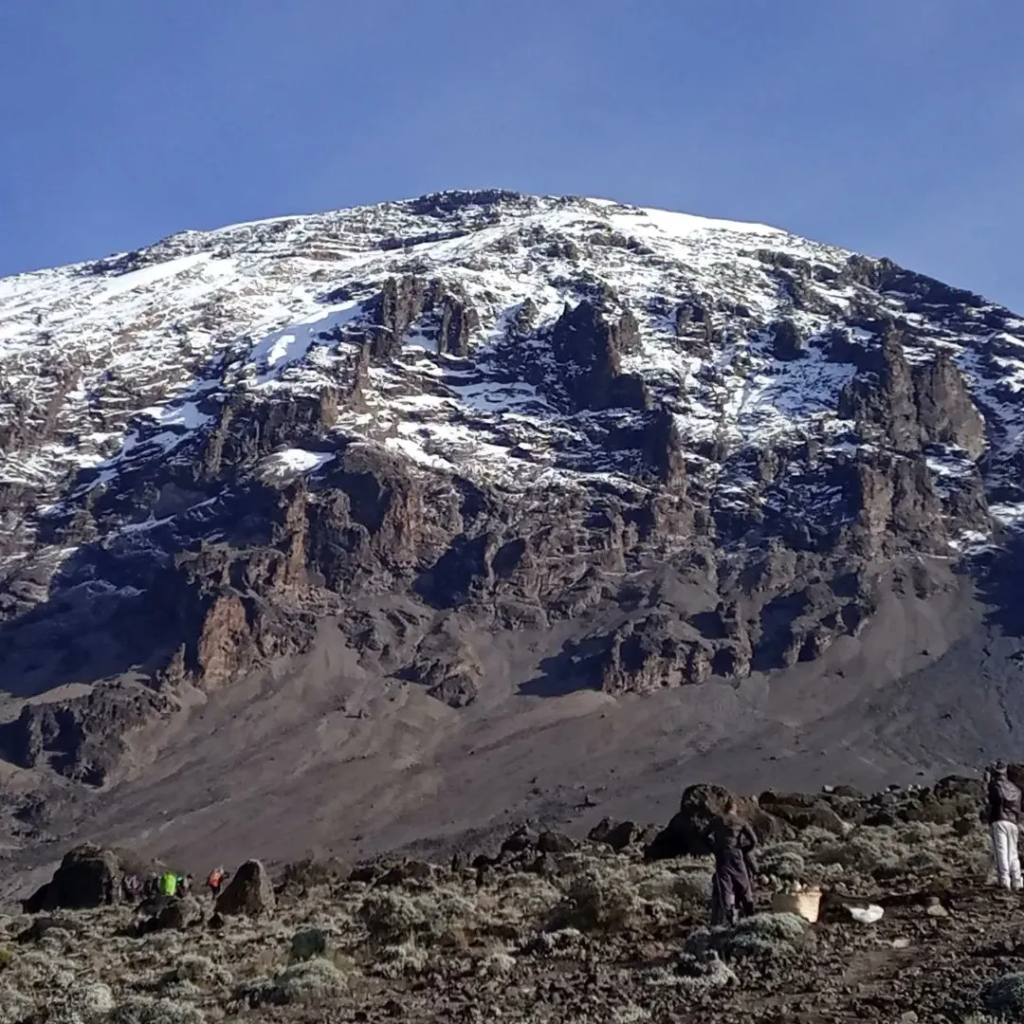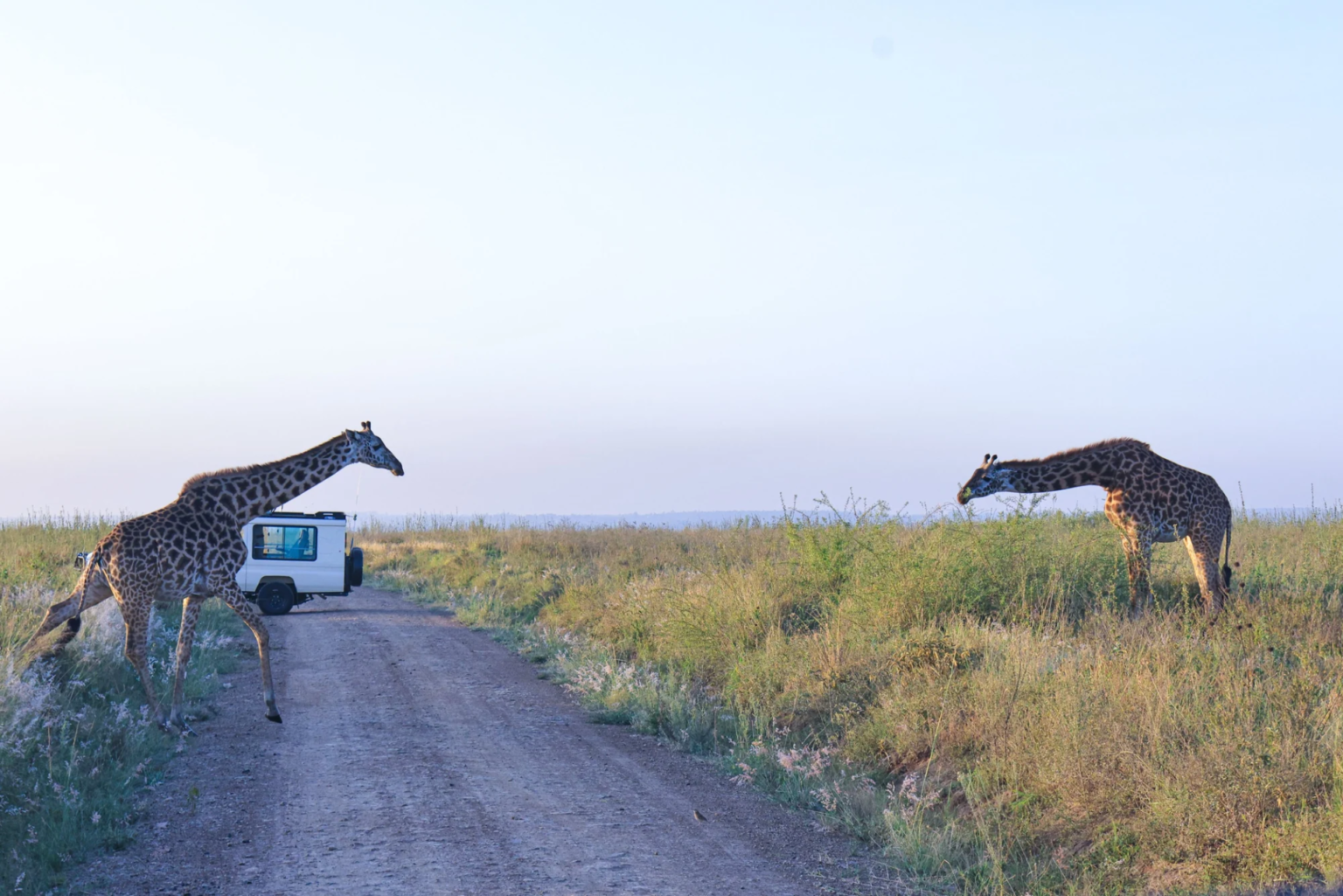
Mikumi is the easiest big-game park in southern Tanzania to reach, and it rewards the effort many times over. Only about four hours by road from Dar es Salaam, Mikumi National Park spreads across a wide floodplain framed by mountains, where lions lie on termite mounds, giraffes cross the horizon and elephants wander past baobab trees. It is often called the Serengeti of the south, and though it is smaller and quieter than its northern namesake, it is a genuine safari in its own right.
The park at a glance
- Size: about 3,230 square kilometres, one of the larger national parks in Tanzania.
- Established: 1964, and enlarged in 1975.
- Location: Morogoro Region, roughly 280 to 290 kilometres west of Dar es Salaam, between the Uluguru Mountains to the north-east and the Lumango range to the south-east.
- Ecosystem: Mikumi forms the northern edge of the enormous Selous-Nyerere ecosystem, so animals move between the park and its neighbour to the south.
- The road: the main highway between Dar es Salaam and Iringa, and on to Zambia, runs through the park for about 50 kilometres, so you can see animals from the road, and should drive carefully.
The Mkata Floodplain
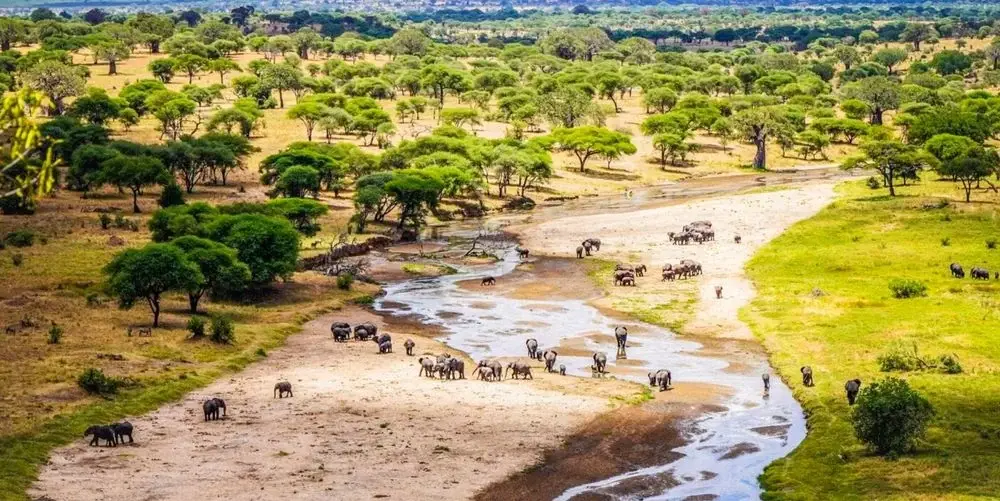
The heart of the park is the Mkata Floodplain, an open grassland with palms, baobabs and acacia, crossed by a good network of tracks. Its wide views recall the Serengeti, with distant mountains on the horizon. Herds of buffalo, wildebeest, zebra and impala graze here, and giraffe are abundant. Mikumi is also considered one of the most reliable places in Tanzania to see eland, the world’s largest antelope.
Wildlife
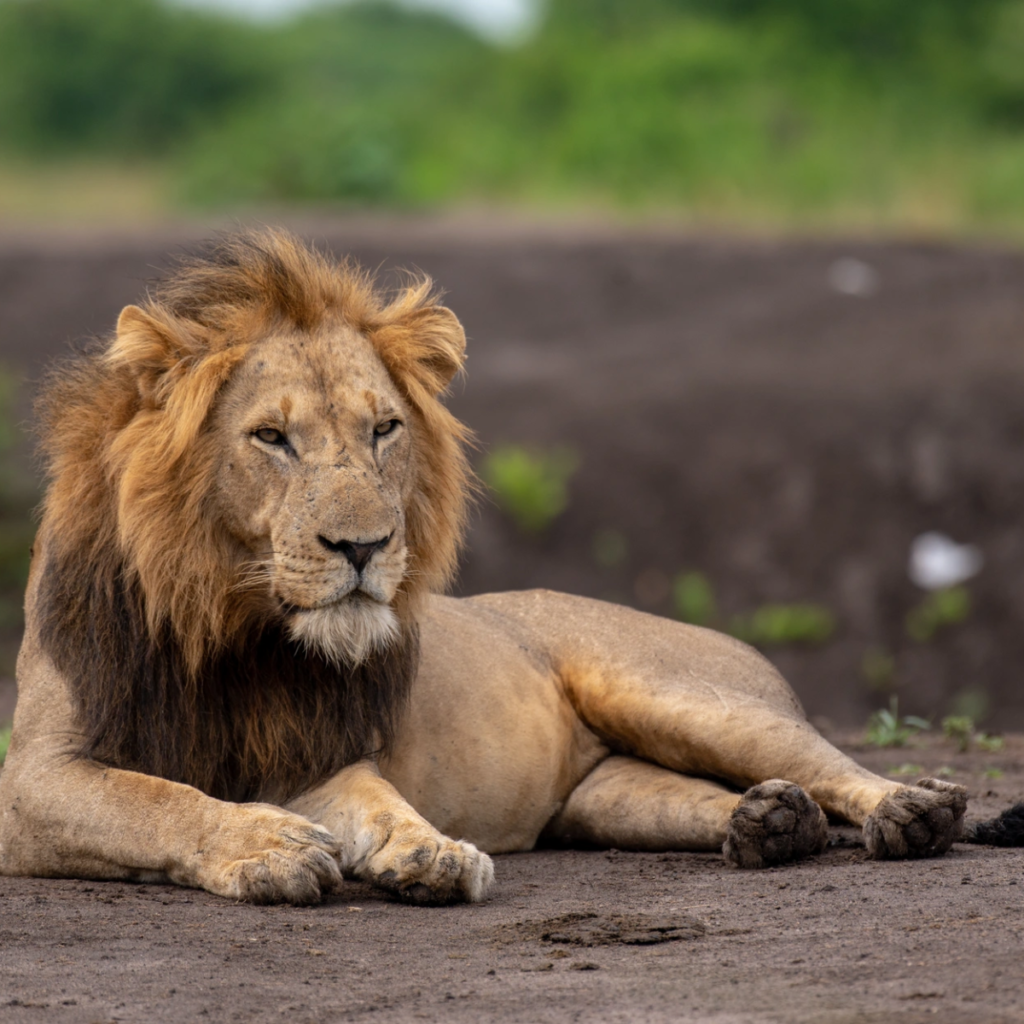
- Lions are frequently seen, often on the plains and near the hippo pools.
- Elephants move through the park regularly, and can be seen along the road and river.
- Leopards live in the woodlands; sightings are rarer.
- Hippos gather in pools along the Mkata River, where you can watch them from a safe distance.
- Greater kudu and sable antelope live in the miombo woodland of the foothills.
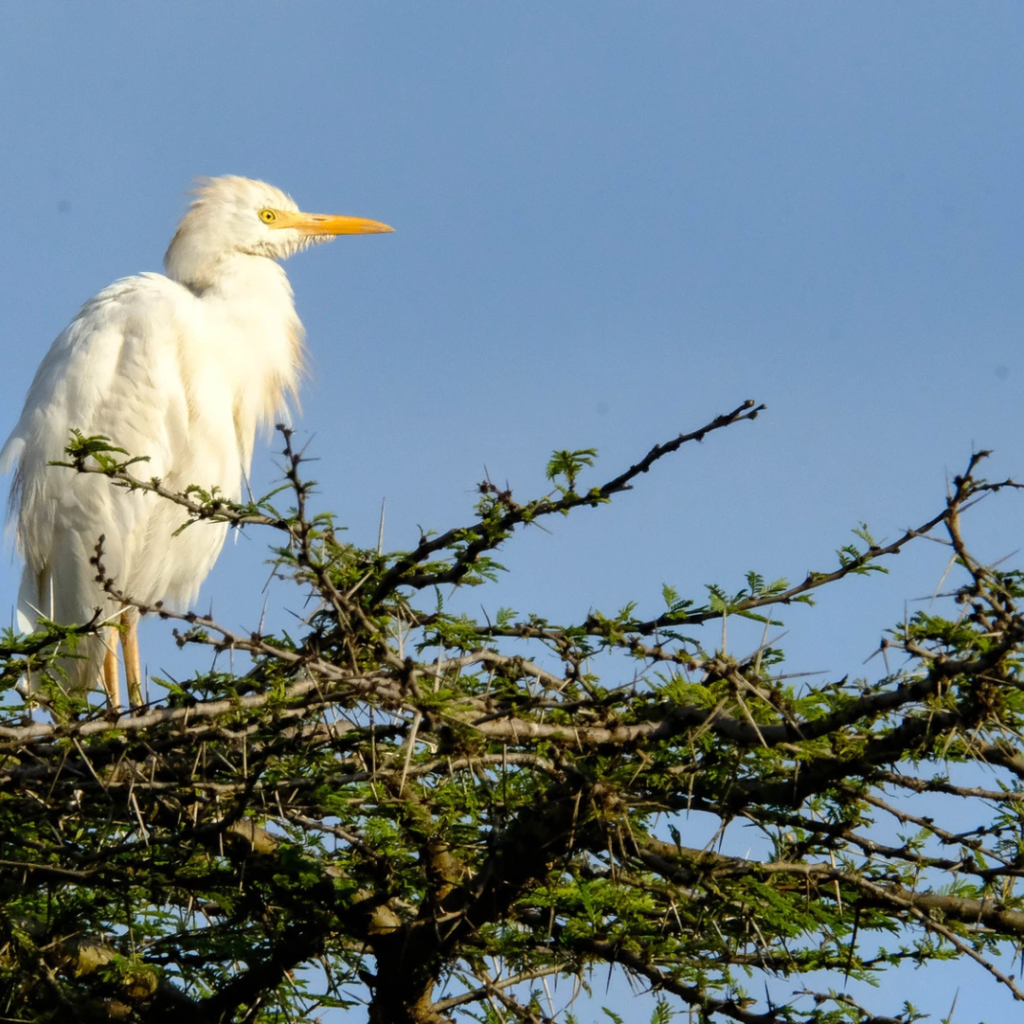
- Birds: over 400 species, including lilac-breasted rollers, yellow-throated longclaws, bee-eaters and martial eagles.
Look for the giant baobabs, some of the largest in the area, and the Hyphaene and Borassus palms that dot the plains.
Where to drive
- The Mkata Floodplain circuits: the most visited area and the best for general game viewing.
- Kisingura Circuit: rewarding drives in the north-west.
- The Hippo Pools: a reliable place to see hippos and birds.
- Vuma Hill: a viewpoint over the plains, good for sunset.
Early morning and late afternoon are best, when the light is soft and the animals are active.
Combining Mikumi with other parks
Mikumi is the gateway to Tanzania’s southern circuit. It pairs naturally with:
- Udzungwa Mountains National Park next door, for rainforest walks, waterfalls and rare primates.
- Nyerere National Park (Selous), for boat safaris on the Rufiji and much wilder country.
- Ruaha National Park, further along the same highway, for a remote big-game experience.
- Zanzibar, by short flight from Dar es Salaam, for a beach finish.
Practical information
- Getting there: about four to five hours by road from Dar es Salaam on a good tarmac highway, or a short charter flight.
- Time needed: a minimum of two nights; three lets you enjoy game drives and a visit to Udzungwa.
- Best time: the dry season, about June to October, is the classic time for game viewing. January to March is green, with fewer visitors and good birdwatching.
- Accommodation: lodges and tented camps inside and outside the park.
- Fees: park fees are charged per person per 24 hours and change, so we confirm them when booking.
- Health: malaria is a risk; see our Health & Safety page.
Mikumi with Offmap Safaris
We use Mikumi as an accessible first stop on southern Tanzania routes, often with Udzungwa, Ruaha and Nyerere, or as a short safari from Dar es Salaam. Plan your safari, message us on WhatsApp +256 701 243 304 or email [email protected]. See Visa & Entry Requirements for Tanzania’s visa and compulsory insurance.