Skip to content
UGANDA • RWANDA • KENYA • TANZANIA • PRIVATE & TAILOR-MADE SAFARIS
OFFMAPSAFARIS: Home

The Great Migration, Tanzania side

Where It All Begins

Half a million calves born within weeks of each other on the Serengeti's short-grass plains. Here is how the migration starts.

If Kenya’s Maasai Mara is where the Great Migration puts on its most famous show, Tanzania is where the whole thing actually begins: on the short-grass plains of the southern Serengeti, where half a million wildebeest calves are born within weeks of each other every year.

The calving season: the migration’s real starting point

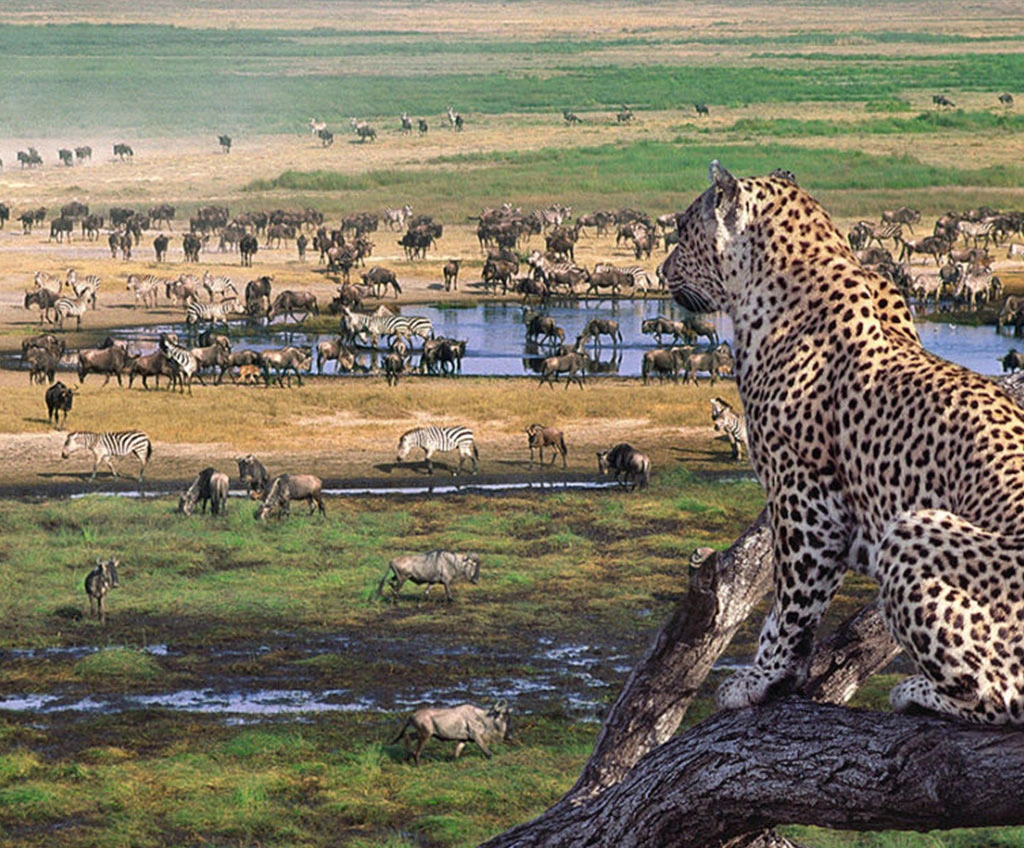
From roughly January to March, the herds gather on the nutrient-rich short-grass plains around Ndutu and the southern Serengeti to give birth. Around half a million calves are born each year, and remarkably, about 80% of all females give birth within the same two-to-three-week window, typically in February; a deliberate survival strategy: with so many vulnerable newborns on the ground at once, predators simply cannot eat them all, and most calves survive by sheer weight of numbers rather than individual luck. It is also, unavoidably, one of the most intense predator-prey periods anywhere in Africa, with lion, hyena and cheetah all concentrating around the plains.

The long move north

As the southern plains dry out, the herds begin moving: through the western corridor around May and June, where smaller but still dramatic crossings of the Grumeti River happen with a fraction of the Mara’s visitor numbers, and then on through the central and northern Serengeti toward the Kenyan border, arriving at the Mara River around July. The reverse move south begins around November as the short rains return, closing a circuit that covers 800 to 1,600km a year.

Ngorongoro: the year-round backdrop

The Ngorongoro Conservation Area, bordering the southern Serengeti, holds dense resident wildlife year-round regardless of migration timing, making it a natural pairing with a calving-season safari, or a strong standalone choice at any time of year. See our National Parks of Tanzania guide for how it fits alongside the Serengeti and Tarangire.

Planning around the calendar

Because where the herds are depends on the time of year, your camp or lodge choice should follow the calendar rather than the other way around: see our Accommodation in Tanzania guide for how lodges across the Serengeti map to each season, and Airstrips in Tanzania for how quickly you can move between areas as the herds do. For the river crossings themselves, see our Mara River Crossings page, and for how Kenya’s side of the same migration compares, see Great Migration in Kenya.

Plan a safari around The Great Migration in Tanzania: Where It All Begins

Tell us your dates and what you most want to see, and we’ll time your safari to match it as closely as nature allows. Talk to us, or browse our safari packages to see how a migration-timed itinerary is put together.
Related safaris

Safaris in Tanzania

All Tanzania safaris →

Travel Guide

Read more about Tanzania

More Tanzania stories →

Need to know?

Questions about The Great Migration in Tanzania: Where It All Begins

View all FAQs →
Can I see both the calving season and the Mara river crossings on one safari?

Not on a single safari, since they happen roughly six months apart in different parts of the ecosystem, but both are realistic to plan separate safaris around, and we can help you decide which better matches what you want to see.

What is the difference between the Grumeti and Mara river crossings?

Both are migration river crossings, but the Grumeti River crossing happens in Tanzania’s western Serengeti around May and June on a smaller scale, while the Mara River crossing happens in Kenya from around July to October with far more visitor traffic.

When is the wildebeest calving season in Tanzania?

Roughly January to March, concentrated on the short-grass plains around Ndutu and the southern Serengeti, with around half a million calves born within a few weeks of each other.

Can I combine a Tanzania safari with Zanzibar?

Yes, this is one of the most popular East African combinations; a Serengeti or Ngorongoro safari followed by several days on Zanzibar’s beaches, connected by a short flight.

Do I need a visa to visit Tanzania?

Most nationalities need a visa for Tanzania, commonly available as an e-visa applied for online before travel. Requirements vary by nationality, so confirm current guidance for your passport ahead of your safari.

How many national parks does Tanzania have?

Tanzania protects its landscapes across more than twenty national parks, alongside conservation areas and game reserves that together cover roughly a third of the country’s total area; one of the highest proportions of protected land of any country in the world.

Is climbing Kilimanjaro part of a normal safari?

Kilimanjaro is usually planned as its own multi-day trek (typically 6–9 days depending on route) either before or after a separate safari itinerary, rather than combined into the same days, since it requires its own acclimatisation schedule.

Is Tanzania or Kenya better for a first safari?

Both offer excellent safaris across largely the same ecosystem, and the choice often comes down to which side of the Serengeti-Mara border better fits your dates and interests: we’re happy to talk through the trade-offs for your specific safari.