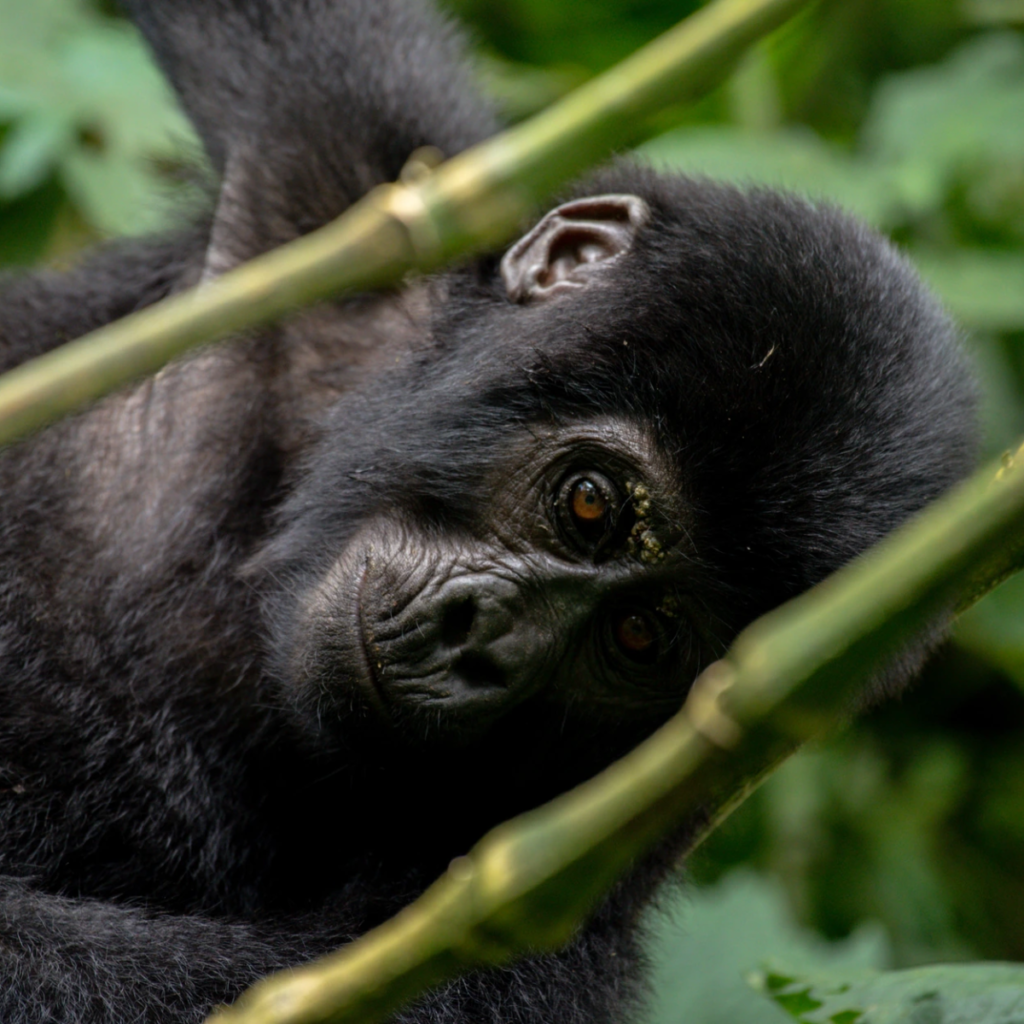
Uganda holds roughly half of the world’s remaining mountain gorillas, split across two forests on opposite sides of the country’s southwest: Bwindi Impenetrable National Park, home to the great majority of Uganda’s habituated gorilla families, and the smaller Mgahinga Gorilla National Park in the Virunga range on the Rwanda and DR Congo border. Gorilla trekking here is the country’s single best-known experience, and for many travellers the reason the whole safari gets planned.
Bwindi’s four trekking sectors
Bwindi is divided into four trekking sectors (Buhoma, Ruhija, Rushaga and Nkuringo) each with its own habituated gorilla families and its own access town, so which sector a permit is issued for genuinely shapes the day: Buhoma in the north is the most established and generally easiest terrain, Ruhija sits at higher altitude with cooler conditions, and Rushaga in the south holds the largest number of habituated families, including the option of gorilla habituation experience permits (several hours with a family still being habituated, rather than the standard one-hour visit).
Mgahinga and the Virunga range
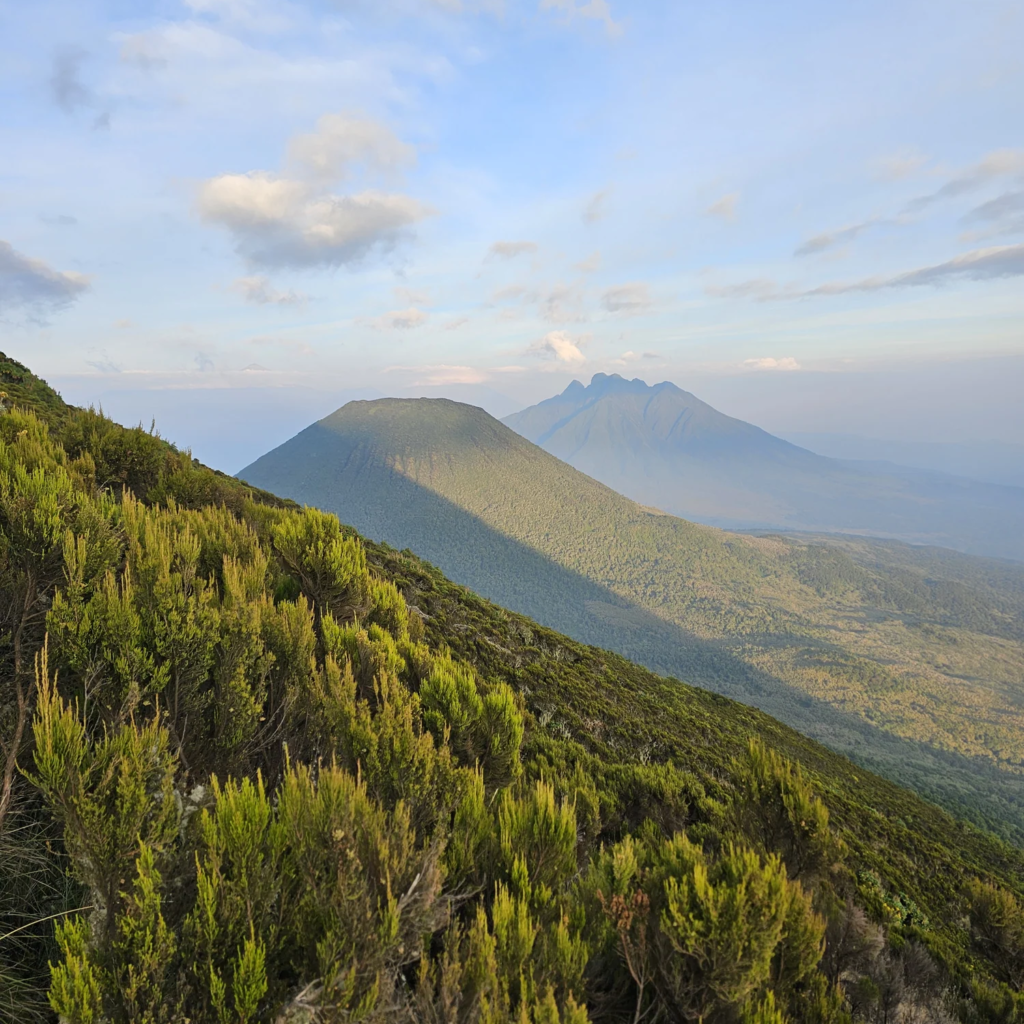
Mgahinga sits within the same volcanic Virunga range as Rwanda’s Volcanoes National Park, and typically has a single habituated gorilla family available for trekking, the Nyakagezi group, known for ranging across the Uganda-Rwanda-DR Congo border area. When Nyakagezi has moved out of Uganda for a period, as gorilla groups occasionally do, Mgahinga’s trekking activity pauses until they return: worth checking at the time of booking.
What a trekking day involves
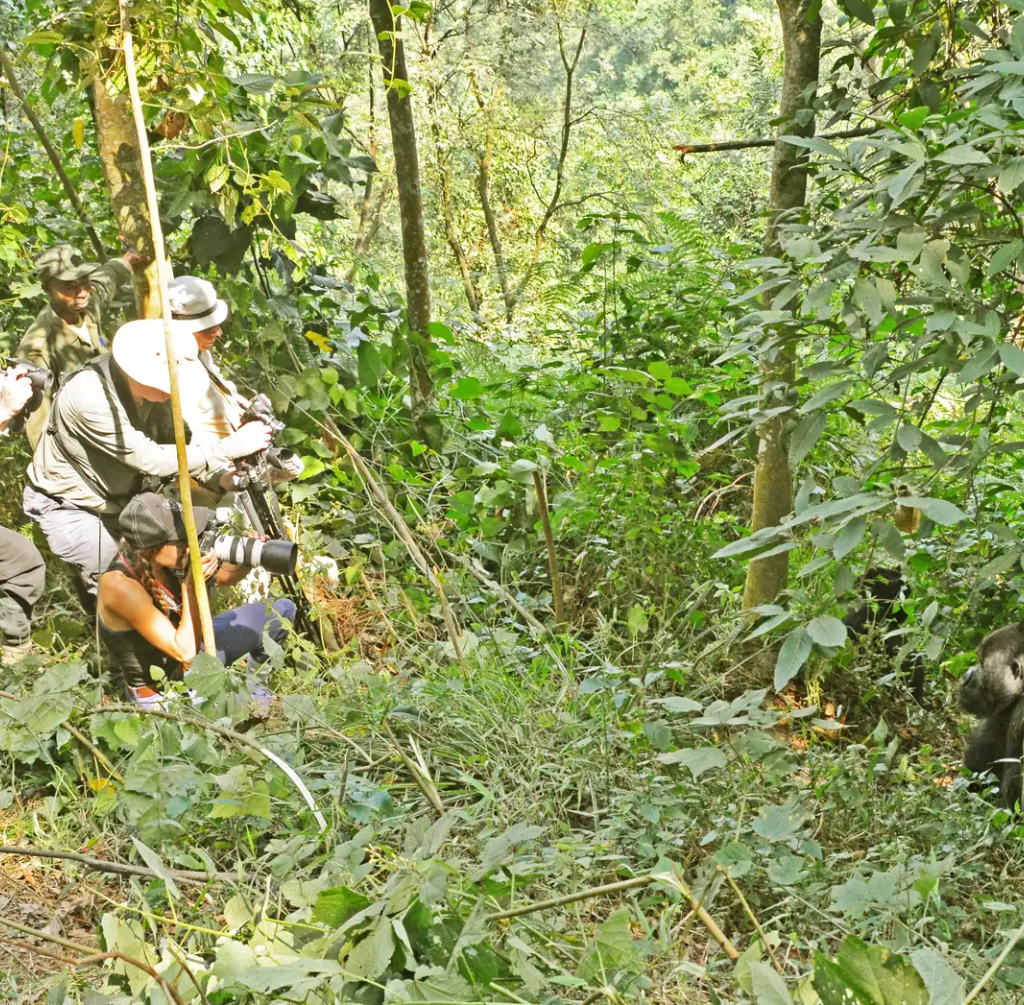
Trekking starts with an early morning briefing at the park headquarters, where trackers already in the forest radio back a gorilla family’s overnight location before groups of up to eight permit holders set out with an armed ranger-guide and, optionally, a hired porter. The hike itself varies enormously by day and family (anywhere from under an hour to six hours or more of hiking through steep, often muddy rainforest terrain) followed by a strictly enforced one hour with the gorillas once found, and the return hike after.
Permits and timing
Permits are issued by the Uganda Wildlife Authority, priced separately from the rest of a safari and limited in number per day per sector, which is why booking well ahead of travel dates matters, especially for peak months. Gorilla trekking runs year-round since it happens inside rainforest regardless of season, though the drier months (roughly December to February and June to September) generally mean easier underfoot conditions.
Fitness and what to pack
A reasonable level of fitness helps, since terrain can be steep and slippery regardless of which sector is assigned, though porters are available to carry daypacks and assist with the climb, and trekking poles are provided at most trailheads. Sturdy, broken-in hiking boots, gardening-style gloves for pushing through vegetation, long trousers and sleeves, and a rain jacket are all genuinely useful rather than optional extras.
Combining gorilla trekking with the rest of Uganda
Bwindi and Mgahinga sit in Uganda’s far southwest, making a natural pairing with chimpanzee tracking in Kibale National Park on the way, or a savannah park such as Queen Elizabeth for a genuinely varied itinerary rather than a single-purpose safari. A focused gorilla trekking safari can work in as few as 4-5 days; combining it with other parks generally calls for 8-12.
Plan your Uganda gorilla trekking safari
Tell us your travel dates and how much time you have, and we’ll secure the right permits, sector and itinerary around it. To start planning, visit Plan My African Safari, message us on WhatsApp at +256 701 243 304, or email [email protected].
Uganda gorilla trekking Safaris
7-Day Uganda Gorillas & Wildlife Safari
 Multi-Country
5 Day Kigali to Bwindi: Gorillas, Golden Monkeys and Batwa
 Multi-Country